

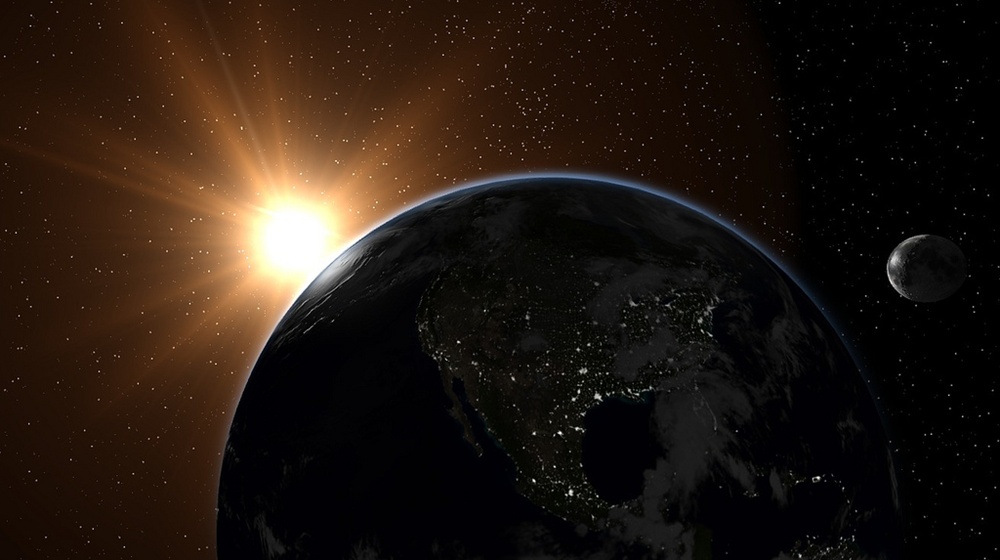
God made a home in the sky for the sun;
(Psalms 19:4b-6) Good News Translation
it comes out in the morning like a happy bridegroom,
like an athlete eager to run a race.
It starts at one end of the sky
and goes across to the other.
Nothing can hide from its heat.
We love our trolls. They help in so many ways. The first is by boosting our engagement stats. The second is the encouragement that we get from them. A troll said the nicest thing that anyone has said to us in a long time:
If all the village idiots left their villages and made their own village, @matty_lawrence would be the village idiot.
– A member of the Twitter community
It warms our heart. Yet by far the most important and valuable feature of trolls is that they continually test our ideas and present new problems for us to solve. All problems can be solved, of course, that’s the beauty of being on the side of truth. But we don’t even know the existence of many of the issues that trolls bring to our attention. We were asked how Matty’s Paradigm accounts for the ecliptic.
The ecliptic is a) noun Astronomy: a great circle on the celestial sphere representing the sun’s apparent path during the year, so called because lunar and solar eclipses can occur only when the moon crosses it. b) adjective: of an eclipse or the ecliptic. In Matty’s Paradigm sun has a path, so the ecliptic is empirical. In heliocentricity the sun doesn’t have a path, so the ecliptic is theoretical.
– Ecliptic, definition
So here’s how Matty’s paradigm accounts for the ecliptic: The definition of ecliptic states that the ecliptic is: “the sun’s apparent path during the year.”
- In Matty’s Paradigm the sun has a path, so the ecliptic plane is empirical.
- In the heliocentric model the sun doesn’t have a path, so the ecliptic plane is theoretical.
Can it be any more simple than that? Our trolls won’t understand it.

October 13th – Corollary V
Kepler’s Laws
 Matty (Headwind)