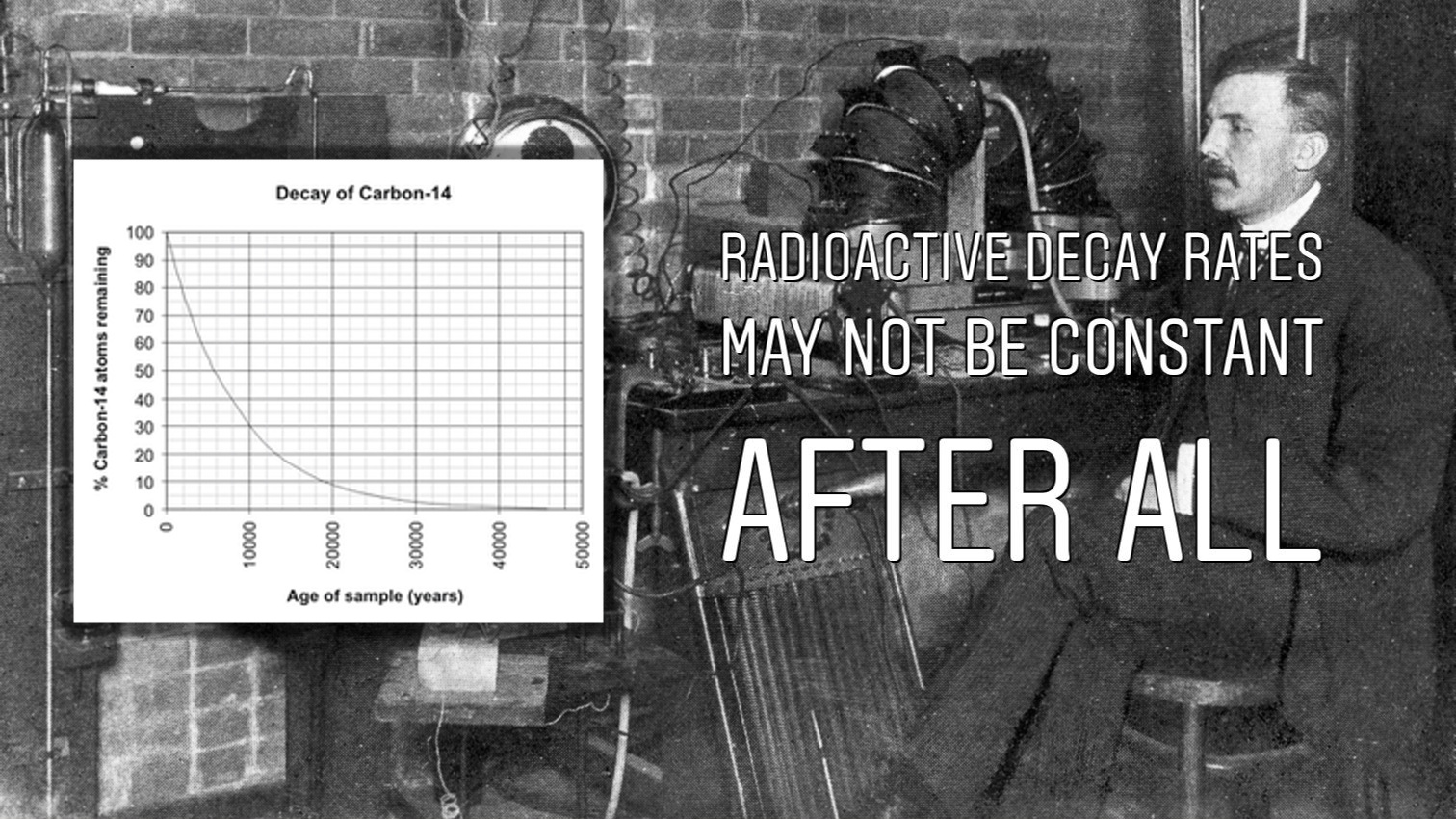
Radioactive Decay Rates May Not Be Constant After All

Alex Knapp Forbes Staff I write about the future of science, technology, and culture.

Read original article here.

We already knew this folks. Assuming that radioactive isotopes decay at a constant rate the the first step in establishing the technique of radiometric dating.

Radiometric dating that can produce dates older than the actual age of the earth is necessary to build the scientific backing for the theory of evolution.

Since the earth is only about 6,000 years old and evolution is not the origin of humanity, then it is obvious that radioisotopes don’t decay at a constant rate.

It’s simple logic.

What Is Life?

And God said, Let the waters bring forth abundantly the moving creature that hath life, and fowl that may fly above the earth in the open firmament of heaven. And God created great whales, and every living creature that moveth, which the waters brought forth abundantly, after their kind, and every winged fowl after his kind: and God saw that it was good. And God blessed them, saying, Be fruitful, and multiply, and fill the waters in the seas, and let fowl multiply in the earth. And the evening and the morning were the fifth day. ( Genesis 1:20-23 )

The biological definition of life and what the Bible describes as living are not the same thing. This is important to know as we see how the process of creation unfolded. Biology is the foundation of secular humanism.

Read more…

What is Creation?

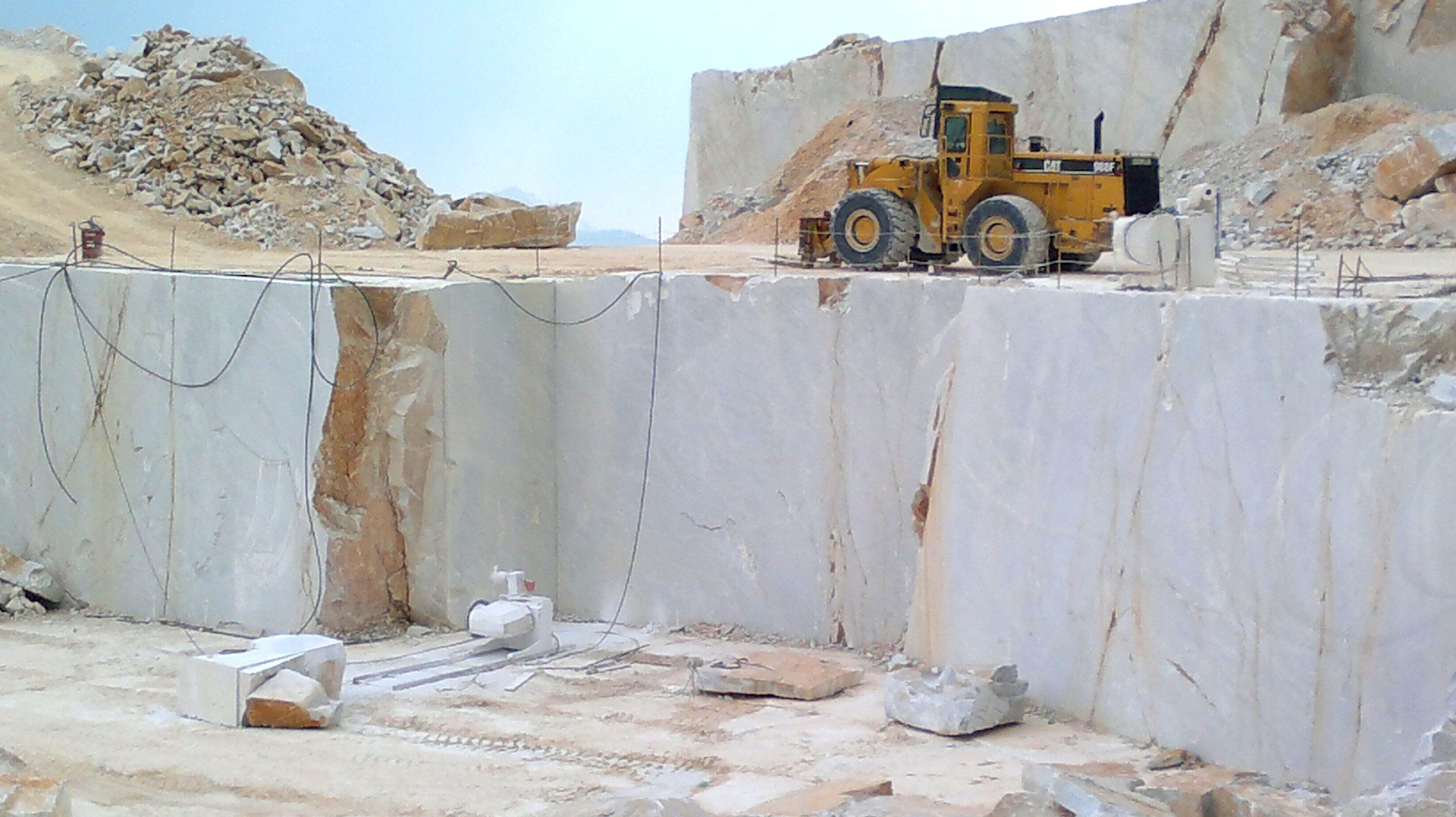
Bulldozer in a marble quarry

Declaring the end from the beginning, and from ancient times the things that are not yet done, saying, My counsel shall stand, and I will do all my pleasure:

(Isaiah 46:10) KJV

What is creation the verb, not creation the noun? The act of creation. Maybe we should say creating? Where does creating start? From nothing? Or is it the transformation of one form into another?

Continue reading “What is Creation?”

The Wisdom Of Their Wise Men Shall Perish

Wherefore the Lord said, Forasmuch as this people draw near me with their mouth, and with their lips do honour me, but have removed their heart far from me, and their fear toward me is taught by the precept of men:
Therefore, behold, I will proceed to do a marvellous work among this people, even a marvellous work and a wonder: for the wisdom of their wise men shall perish, and the understanding of their prudent men shall be hid.
Woe unto them that seek deep to hide their counsel from the LORD, and their works are in the dark, and they say, Who seeth us? and who knoweth us?
Surely your turning of things upside down shall be esteemed as the potter’s clay: for shall the work say of him that made it, He made me not? or shall the thing framed say of him that framed it, He had no understanding? ( Isaiah 29:13-16 )

IF science is right
THEN there is no God.
THEREFORE there is no judgment for sin,
THEREFORE I can live an immoral life and have no guilt.
For some reason the logic doesn’t work.

Science Falsely So Called

O Timothy, keep that which is committed to thy trust, avoiding profane and vain babblings, and oppositions of science falsely so called: Which some professing have erred concerning the faith. Grace be with thee. Amen. {The first to Timothy was written from Laodicea, which is the chiefest city of Phrygia Pacatiana.} ( 1 Timothy 6:20-21 )

The theoretical foundation of modern science is a belief system, or paradigm, so ingrained in our collective consciousness that people believe that they don’t have to believe it, it just is.
Believing it is a choice.

Read more…

Is The Bible Literal Or Figurative?

John 4:7-14

There cometh a woman of Samaria to draw water: Jesus saith unto her, Give me to drink. (For his disciples were gone away unto the city to buy meat.) Then saith the woman of Samaria unto him, How is it that thou, being a Jew, askest drink of me, which am a woman of Samaria? for the Jews have no dealings with the Samaritans. Jesus answered and said unto her, If thou knewest the gift of God, and who it is that saith to thee, Give me to drink; thou wouldest have asked of him, and he would have given thee living water. The woman saith unto him, Sir, thou hast nothing to draw with, and the well is deep: from whence then hast thou that living water? Art thou greater than our father Jacob, which gave us the well, and drank thereof himself, and his children, and his cattle? Jesus answered and said unto her, Whosoever drinketh of this water shall thirst again: But whosoever drinketh of the water that I shall give him shall never thirst; but the water that I shall give him shall be in him a well of water springing up into everlasting life.

Both. The literal parts should be taken literally, but the figurative parts should not.
So how do we know what parts of the Bible are literal and which are figurative?

Read more…

Is the Bible Literal or Figurative?

But whosoever drinketh of the water that I shall give him shall never thirst; but the water that I shall give him shall be in him a well of water springing up into everlasting life.

(John 4:14) KJV

What is this living water? And if Jesus said that there is such a thing as living water, does that mean that there is dead water? These are the kinds of things that I contemplate, it helps to ease my mind. This puts me in good company I believe, as Isaiah seems to have thought the same thing.

Thou wilt keep him in perfect peace, whose mind is stayed on thee: because he trusteth in thee.

(Isaiah 26:3) KJV

One of the things that I truly love about the Bible is the way that it explains itself. When you find a passage, like this one of the conversation that Jesus had with the Samaritan woman, and it raises an intriguing idea like that of living water, diligent study will find out the other parts of the Bible that help to bring you to its full understanding. So if the living water wells up in the person who believes in Jesus Christ, then what? What does it do? We turn to another passage in the Gospel of John for help understanding it.

In the last day, that great day of the feast, Jesus stood and cried, saying, If any man thirst, let him come unto me, and drink. He that believeth on me, as the scripture hath said, out of his belly shall flow rivers of living water.

(John 7:37-38) KJV

So now I know that the stream of living water will come out of my belly. Now, technically speaking, there isn’t actually a stream of water coming out of my belly, and so therefore this is a figure of speech that is being used as a picture of something else. The passage goes on to explain this too, and what it tells us is that the indwelling of the Holy Spirit in the believer enables the believer to share the gospel of Jesus Christ like a river of living water. However, the practical manifestation of this is not actual water coming out of an actual belly, but an out-flowing of the Spirit of God through words and deeds.

There is a point to this, trust me.

I believe that the Bible gives us an accurate account of the physics of creation, the history of the world to the present time, and what is going to take place in the future. Because of this some people ask me if I think the Bible should be taken literally. Unfortunately there is not a simple yes/no answer. I believe that the literal parts should be taken literally, but the figurative parts should not. So how do we know what parts of the Bible are literal and which are figurative?

We have to examine the context of the passage to see if it is referring to or describing an actual physical phenomenon. I know that Jesus in today’s passage is speaking figuratively because there isn’t a stream of water coming out of my belly. I also know that when God said, “Let there be light,” the physical conditions necessary to cause light to appear were present, and so this is literal.


We can test the Bible against itself, and we can test the Bible against physical evidence and scientific knowledge. This is also how we can test whether scientific knowledge is real or imaginary.


Is science describing something that, interpreted correctly, can be accounted for by the Bible? This again should cause us to examine the evidence carefully, not what science says about the evidence, but we should be examining the evidence for ourselves.


All Prayer

Praying always with all prayer and supplication in the Spirit, and watching thereunto with all perseverance and supplication for all saints;

( Ephesians 6:18 ) KJV

Yesterday we considered Ephesians 6:13-17, in which the Bible describes us as being like well equipped soldiers ready to face the spiritual battles ahead. The passage goes on into the verse above. I have heard different people talk about this in different ways and I have always wondered:


Is all prayer a thing? As in, a noun?


I knew a brother in Christ many years ago who spoke of all prayer as if it was a thing that somehow stands alone from regular prayer. I’m not so sure. I tend to think that it means that we should be doing regular prayer all the time. The thing is, whether it is one or the other isn’t as important as the realization that the time we just spent thinking about it our mind was engaged in something of a positive spiritual nature which is along the lines of what Paul is telling us in this passage:

Finally, brethren, whatsoever things are true, whatsoever things are honest, whatsoever things are just, whatsoever things are pure, whatsoever things are lovely, whatsoever things are of good report; if there be any virtue, and if there be any praise, think on these things. (Philippians 4:8)

So we may not understand all of the Bible all of the time, but if we are thinking about it then our mind is being kept from being distracted by other worldly things. I have to admit that I have a problem with covetousness. I desire things that I don’t need, things that are only ever going to be problematic rather than problem solving. Jaguar cars are the thing that comes to mind. I want a Jaguar. There are times when the desire is so powerful that I have taken myself off to a dealership to go drive one, and gotten into the discussion of buying it. Buying and maintaining a car like that would squander the resources I have that I’m using to get this ministry started, and possibly saddle me with debt again when I just got out of it. And for what? An unreliable and inefficient car. If I could have diverted my mind into something of a more spiritual nature I wouldn’t have wasted my time.

What else do I find my mind spending excessive amounts of time on? I’d rather not say. You may find that your mind spends a good part of the day caught up in thoughts which are not particularly helpful, useful, clean, spiritual or godly. If we allow our minds to wander unfettered it will not be long before our bodies follow right after them and we end up making bad decisions. What are we to do about this? Follow the advice above.

Are you allocating time for daily Bible reading yet? That is where a healthy mind starts folks.

Till I come, give attendance to reading, to exhortation, to doctrine. Neglect not the gift that is in thee, which was given thee by prophecy, with the laying on of the hands of the presbytery. Meditate upon these things; give thyself wholly to them; that thy profiting may appear to all. Take heed unto thyself, and unto the doctrine; continue in them: for in doing this thou shalt both save thyself, and them that hear thee. (1 Timothy 4:13-16)

Read the Bible and meditate on it. You may not understand it. Meditating on it is how the Holy Spirit is able to form and shape it in you mind so that it will make sense.