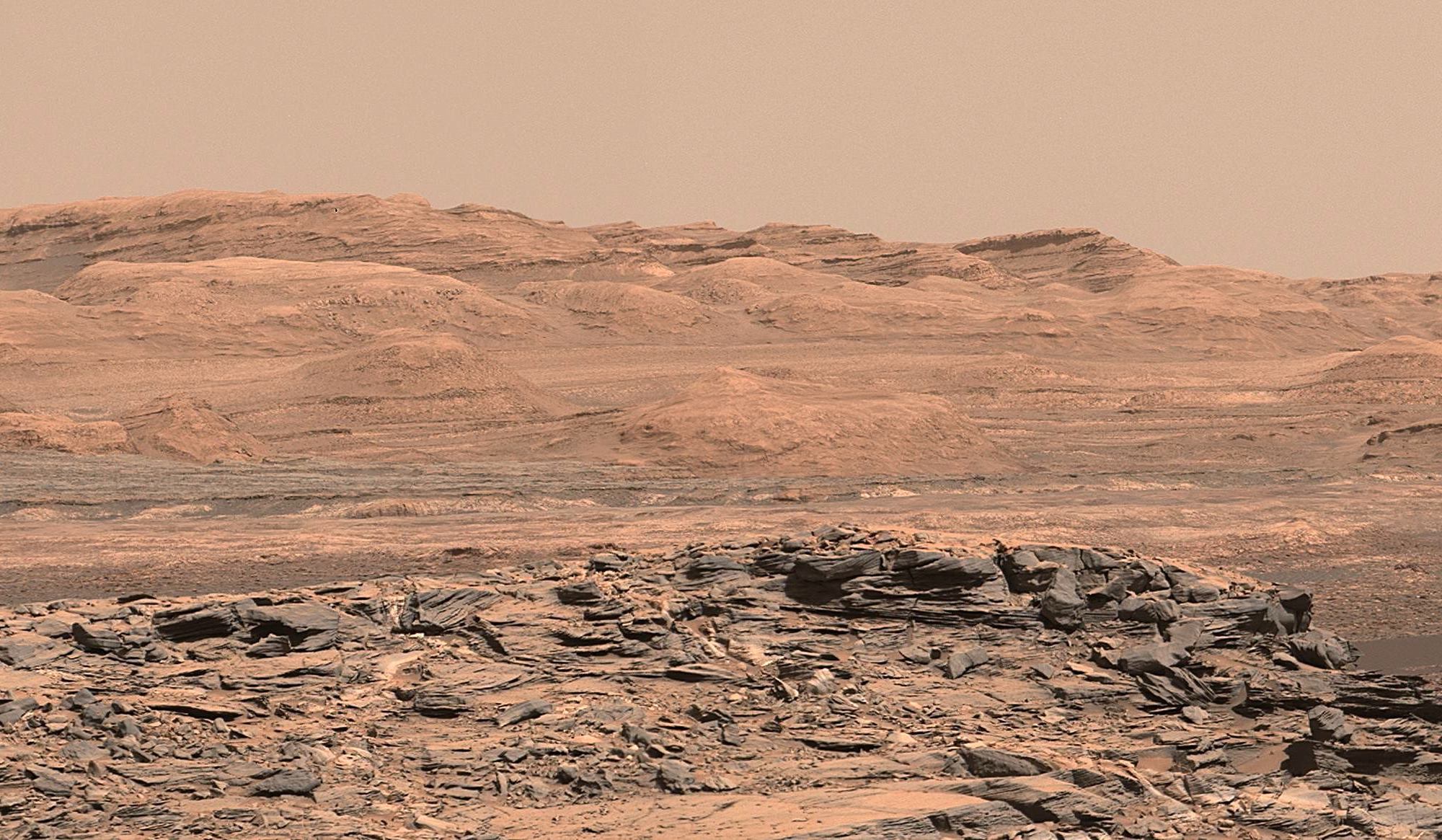
Researchers have found that mile-high mounds in Mars were created by strong winds and climate change.
Because of climate change, water on Mars dried up and allowed massive winds to carve out large mounds over a billion years, according to University of Texas researchers. The process highlighted the role of wind in creating the landscape of the red planet.
“On Mars there are no
plate-tectonics, and there’s no liquid water, so you don’t have anything
to overprint that signature and over billions of years you get these
mounds, which speaks to how much geomorphic change you can really
instigate with just wind,” said graduate student Mackenzie Day of the University of Texas at Austin Jackson School of Geosciences.
She said that the process is something that cannot occur on Earth because of other processes that overpower wind.
“Wind could never do this on Earth because water acts so much faster, and tectonics act so much faster,” Day explained.
The research was conducted in association with researchers David Mohrig and Gary Kocurek, also of the Jackson School of Geosciences, and William Anderson of the Department of Mechanical Engineering, University of Texas at Dallas. The study was publshed in the American Geophysical Union journal Geophysical Research Letters on March 31.
The
mounds, first observed in the 1970s during NASA’s Viking program, were
found to be at the bottom of Mars’ craters. An additional investigation
by the Curiosity rover of Mount Sharp inside the Gale Crater showed the
mounds were more than 3 miles high.
Layered sedimentary rocks make
up the thickest part of the mounds, with the bottom parts showing
sediments brought by water that was previously present in the crater.
The top part is made up of sediments carried by wind.
The
researchers are clueless about the how the mile-high mounds were able to
form inside the craters considering that these were once filled with
sediments. However, they are positive that they will be able to figure
out the wind dynamics that made it possible.
To find out if wind
could indeed form a mound, the research team created a model crater that
measured 30 centimeters (11.8 inches) in width and 4 centimeters (1.5
inches) high and filled it with damp sand. They then placed the
miniature crater in a wind tunnel and observed the movement of the sand.
The
elevation and distribution of the sand were carefully monitored until
all of it was blown away. The erosion present in the miniature crater’s
sediment was found to be similar with those seen in the Martian craters.
The erosion also created a moat shaped like a crescent that widened and
deepened around the crater’s edge.
To get a better understanding
of the wind dynamics, the study authors built a computer model that
replicated the flow of wind at different phases of erosion.
The
mound’s composition – bottom created during a wet period, and top
created and mound shaped during a dry period – significantly helps in
establishing the effects of climate change on Mars, Kocurek said.
“Overall,
we are seeing the complete remaking of the sedimentary cycle on Mars to
the one that characterizes the planet today,” Kocurek said.
By
studying the location of more than 30 mounds and identifying them to be
only present on terrain during the Noachian period, a geological era
about 3.7 billion years ago, the researchers concluded that it was
during this period that Mars shifted from a wet planet to a dry one.
To
compare, they examined five examples of mounds in craters formed during
Mars’ Amazonian period. The deposits were not similar with the
sedimentary deposits, which means the erosion came from a recent
activity.
The study showed that global climate change and strong winds, not some alien like the alleged giant mouse, caused the mounds on the Martian surface.
This is a direct copy of a SciPop or news article preserved here because things on the internet have a bad habit of disappearing when you try to find them again. Full credit is given to the original authors and the source.
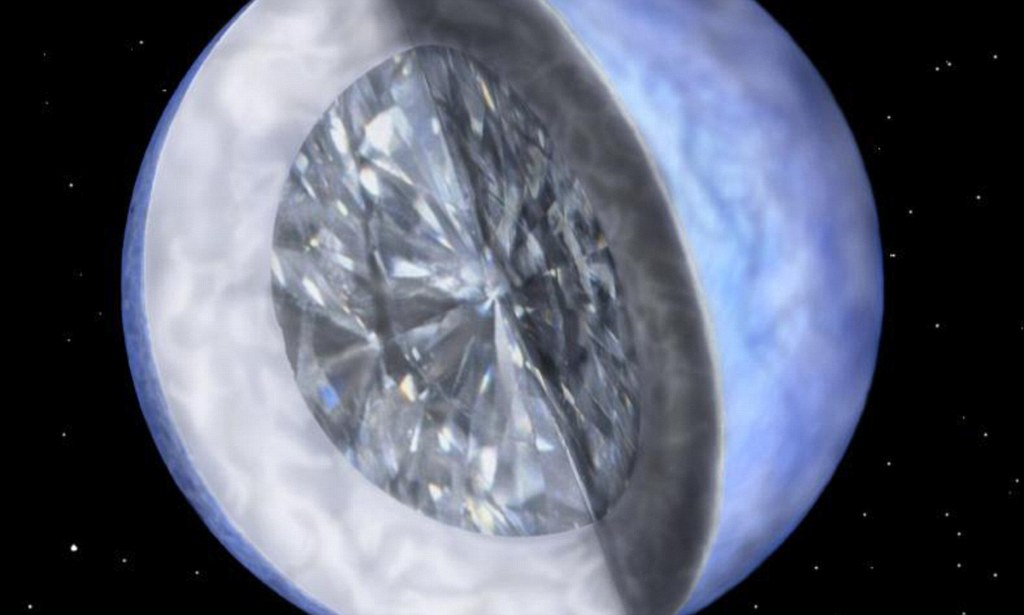
When choosing a Valentine’s Day gift for a wife or girlfriend, you can’t go wrong with diamonds. If you really want to impress your favorite lady this Valentine’s Day, get her the galaxy’s largest diamond. But you’d better carry a deep wallet, because this 10 billion trillion trillion carat monster has a cost that’s literally astronomical!
Finding exoplanets starts with choosing to believe that they exist. Inductive reasoning, where you use your premise to supply evidence for your conclusion, does the rest.
A handful of ingenious methods have been used to detect the planets too far away for us to see.
A generation ago, the idea of a planet orbiting a distant star was still in the realm of science fiction. But since the discovery of the first exoplanet in 1988, we’ve found hundreds of them, with the discoveries coming at a faster rate over time.
But the vast majority of all these distant planets have one thing in common—with a few exceptions, they’re too far away for us to see, even with our most powerful telescopes. If that’s the case, how do astronomers know they’re there?
Over the past few decades, researchers have developed a variety of techniques to spot the many planets outside our solar system, often used in combination to confirm the initial discovery and learn more about the planet’s characteristics. Here’s an explanation of the main methods used so far.
Transit
Imagine looking at a small planet orbiting a star far, far away. Occasionally, the planet might pass in between you and its star, briefly blocking some of the starlight. If this dimming happened with enough frequency, you might be able to infer the presence of the planet, even if you can’t see it.
This, is essence, is the transit method of
detecting exoplanets, responsible for the majority of our exoplanet
discoveries so far. Of course, for distant stars, there’s no way the
naked human eye would be able to reliably detect a dimming in the amount
of light we see, so scientists rely on telescopes (notably, the Kepler
space telescope) and other instruments to collect and analyze this data.
Thus, for an astronomer, “seeing” a distant exoplanet via the transit method generally ends up looking something like this:
The amount of light from a distant star, graphed, dips as a planet transits in between it and us. (Image via Wikimedia Commons/Сам посчитал)
In some cases, the amount of dimming caused by the planet passing in between its star and us can also tell astronomers a rough estimate of the planet’s size. If we know the size of a star and the planet’s distance from it (the latter determined by another detection method, radial velocity, lower down on this list), and we observe that the planet blocks a certain percentage of the star’s light, we can calculate the planet’s radius based solely on these values.
There are, however, disadvantages to the
transit method. A planet has to be lined up correctly to pass in between
us and its star, and the farther out it orbits, the lower the chance of
this alignment. Calculations indicate that for an Earth-sized planet
oribiting its star at the same distance we orbit ours (about 93 million
miles), there’s just a 0.47 percent chance that it’d be aligned properly to cause any dimming.
The method can also lead to a high number of false positives—episodes of dimming that we identify as transiting planets but are ultimately caused by something else entirely. One study found that as much as 35 percent of the large, closely orbiting planets identified in Kepler data could in fact be nonexistent, and the dimming attributed to dust or other substances situated between us and the star. In most cases, astronomers attempt to confirm planets found via this method with other methods on this list.
Orbital Brightness
In some cases, a planet orbiting its star
causes the amount of light reaching Earth to rise, rather than dip.
Generally, these are cases in which the planet orbits very closely in,
so that it’s heated to the degree that it emits detectable amounts of
thermal radiation.
Although we’re not able to distinguish this radiation from that of the star itself, a planet that’s orbiting in the right alignment will be exposed to us in a regular sequence of stages (similar to the phases of the moon), so regular, periodic rises in the amount of light that space telescopes receive from these stars can be used to infer the presence of a planet.
Similar to the transit method, it’s easier
to detect large planets orbiting close to their stars with this
technique. Although only a handful of planets have been discovered using
solely this method so far, it may end up being the most productive
method long-term, because it doesn’t require an exoplanet to pass
directly in between us and the star for us to detect it, opening up a
much wider range of possible discoveries.
Radial Velocity
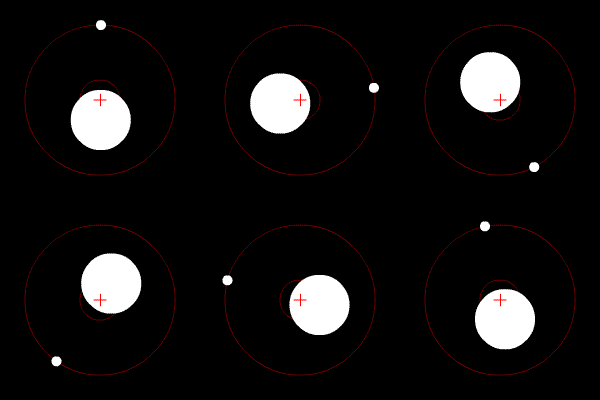
In elementary school, we’re taught that a solar system is a stationary star surrounded by slowly orbiting planets, asteroids and other debris. The truth, though, is slightly more complicated: Due to the gravitational pull of the planets, the star wobbles away from the system’s center of gravity ever so slightly as well:
The phenomenon goes something like this: a
large planet, if it has enough mass, might be able to pull the star
toward it, causing the star to move from being the exact center of the
far-away solar system. So periodic, predictable yet still minute shifts
in the star’s position can be used to infer the presence of a large
planet near that star.
Astronomers have taken advantage of this phenomenon to detect hundreds of exoplanets. Until recently, when it was surpassed by transit, this method (called radial velocity) was responsible for the majority of exoplanets discovered.
It might seem difficult to measure slight
movements in stars hundreds of light years away, but it turns out that
astronomers can detect when a star accelerates towards (or away from)
Earth at velocities as low as one meter per second because of the Doppler effect.
The effect is the phenomenon of waves (whether sound, visible light
or other forms of electromagnetic energy) appearing to be slightly
higher in frequency when the object emitting them is moving towards an
observer, and slightly lower when it’s moving away. You’ve experienced
firsthand if you’ve ever heard the high whine of an
approaching ambulance’s siren replaced with a slightly lower tone as it
drives away.
Replace the ambulance with a distant star and the sound of a siren
with the light it emits, and you’ve pretty much got the idea. Using spectrometers,
which measure the particular frequencies of light emitted by a star,
astronomers can search for apparent shifts, indicating that the star is
moving slightly closer to us or drifting slightly away.
The degree of movement can even reflect the mass of the planet.
When combined with the planet’s radius (calculated via the transit
method), this can allow scientists to determine the planet’s density,
and thus its composition (if it’s a gas giant or a rocky planet, for
instance).
This method is also subject to limitations: it’s much easier to find a bigger planet orbiting a smaller star, because such a planet has a higher impact on the star’s movement. Relatively small, Earth-sized planets would likely be hard to detect, especially at far distances.
Direct Imaging
In a few rare cases, astronomers have been able to find exoplanets in the simplest way possible: by seeing them.
Three massive planets—likely larger than Jupiter—were directly imaged orbiting the star HR8799 in 2010. (The star itself is blocked with a coronagraph. (Image via NASA/JPL-Caltech/Palomar Observatory)
These cases are so rare
for a few reasons. To be able to distinguish a planet from its star, it
needs to be relatively far away from it (it’s easy to imagine that
Mercury, for instance, would be indistinguishable from the Sun from far
away). But if a planet is too far from its star, it won’t reflect enough
of the star’s light to be visible at all.
Exoplanets that can most reliably be seen by telescopes are large
(like Jupiter) and very hot, so that they give off their own infrared
radiation, which can be detected by telescopes and used to distinguish
them from their stars. Planets that orbit brown dwarfs
(objects that aren’t technically classified as stars, because they’re
not hot or massive enough to generate fusion reactions, and thus give
off little light) can also be detected more easily.
Direct imaging has also been used to detect a few particularly massive rogue planets—those that float freely through space, instead of orbiting a star.
Gravitational lensing
All the previous methods on this list make some sense to a non-scientist at some intuitive level. Gravitational lensing, used to discover a handful of exoplanets, requires some more abstract thought.
Imagine one star very far away, and another star about half way between it and Earth. In rare moments, the two stars might nearly line up, almostoverlapping one another in the night sky. When this happens, the force of the closer star’s gravity acts like a lens, magnifying the incoming light from the distant star as it passes near it to reach us.
A simulation of gravitational lensing, showing the light coming from a distant galaxy briefly being magnified by a black hole in the middle ground. (Image via Urbane Legend)
If a star that has a planet in near orbit serves as the gravitational lens, that planet’s gravitational field can add a slight but detectable contribution to the magnification event. Thus, in some rare cases, astronomers have been able to infer the presence of distant planets by the way that they magnify the light of even more distant stars.
A graph of exoplanet discoveries by year, with detection method represented by color. Green = transit, blue = radial velocity, red = direct imaging, orange = gravitational lensing. (Image via Wikimedia Commons/Aldaron)
This is a direct copy of a SciPop or news article preserved here because things on the internet have a bad habit of disappearing when you try to find them again. Full credit is given to the original authors and the source.
– Matty
If confirmed, the shiny new worlds may help astronomers better understand how strange planets known as hot Jupiters are created.
MOUNTAIN VIEW, California – Planets orbiting other stars are running out of ways to hide. For the first time, astronomers have used reflected starlight to tease out the possible presence of 60 large, roasted worlds.
This is a direct copy of a SciPop or news article preserved here because things on the internet have a bad habit of disappearing when you try to find them again. Full credit is given to the original authors and the source.
– Matty
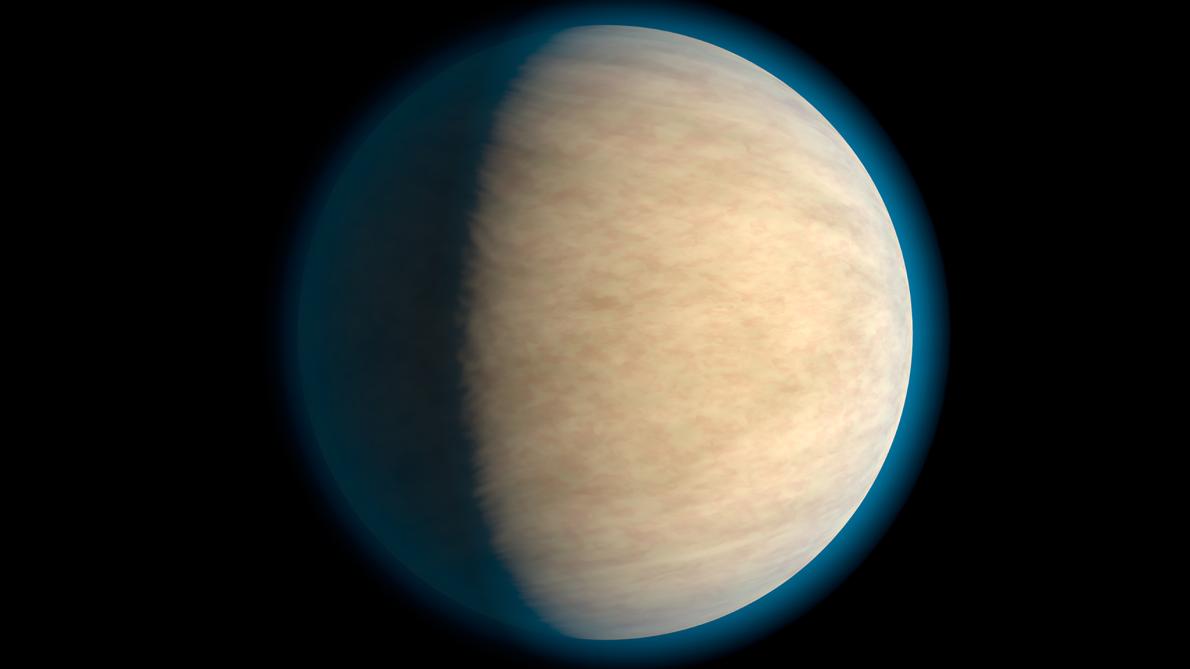
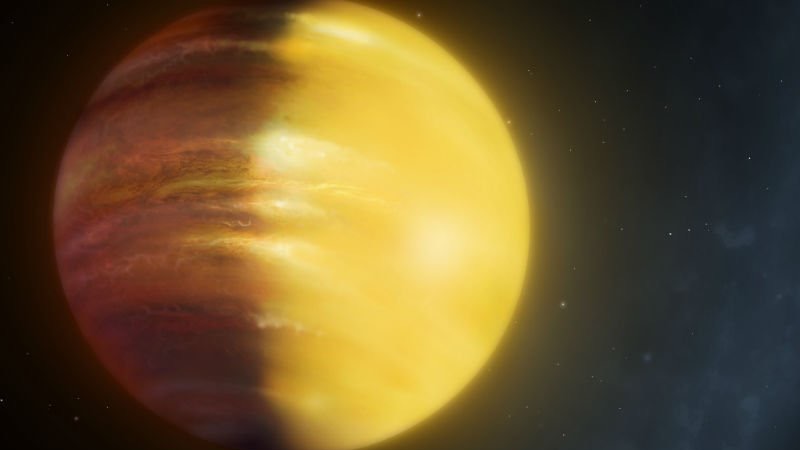
Powerful Winds Detected On Gas Giant Outside The Solar System For The First Time






 Matty (Headwind)