And God made two great lights; the greater light to rule the day, and the lesser light to rule the night: he made the stars also.
(Genesis 1:16) KJV
It’s ironic that April 1st is April Fools’ Day and that today we’ll begin making the case that the cosmos is Geocentrospheric, but this isn’t a joke. We’re going use the Bible to understand empirical observations.
The Lord provides the sun for light by day, the moon and the stars to shine at night. He stirs up the sea and makes it roar; his name is the Lord Almighty. He promises that as long as the natural order lasts, so long will Israel be a nation. If one day the sky could be measured and the foundations of the earth explored, only then would he reject the people of Israel because of all they have done. The Lord has spoken.
(Jeremiah 31:35-37) Good News Translation
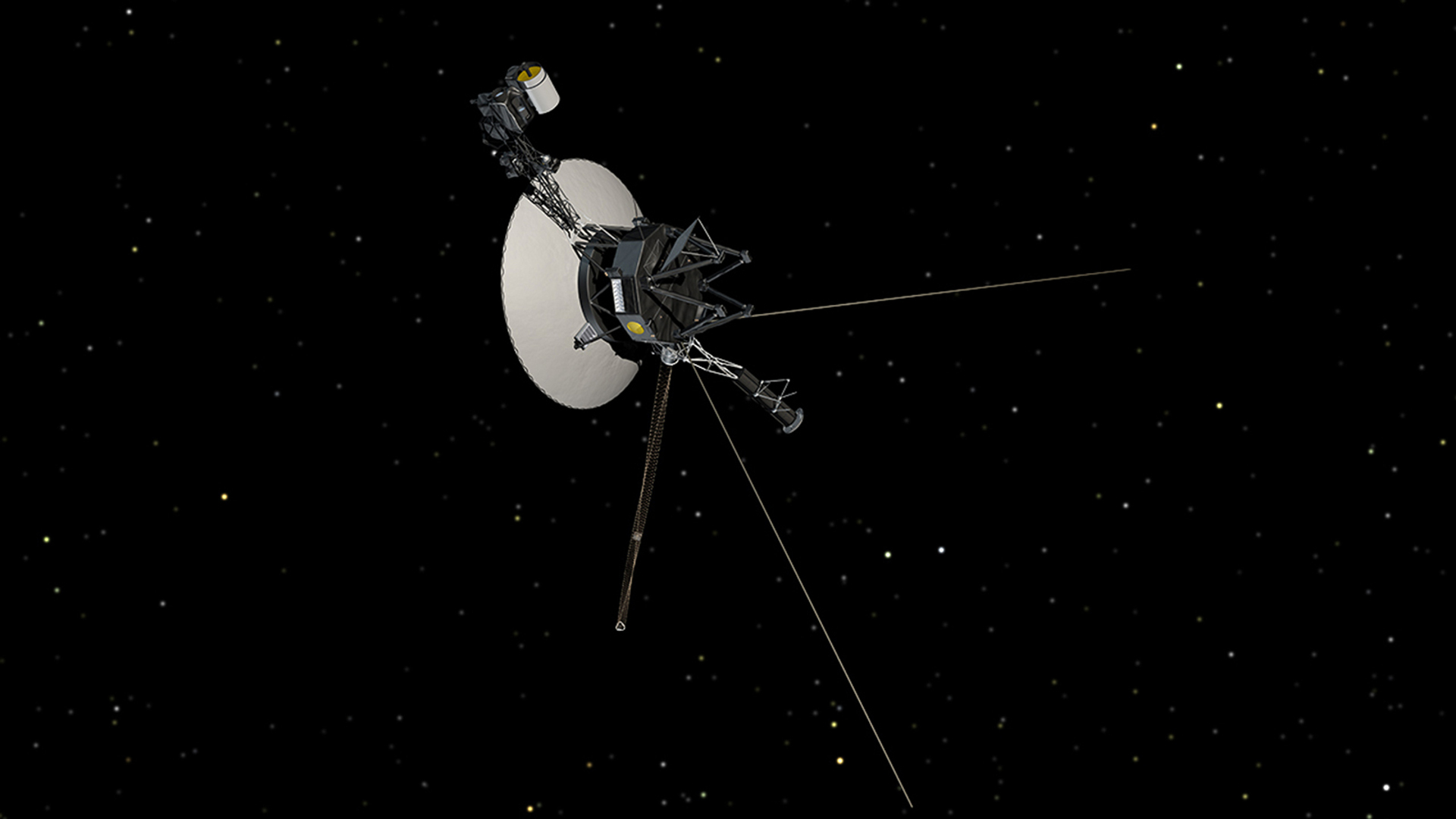
We can’t prove heliocentricity, nor do we have an absolute value for the mass of the Earth. Despite this we have a working model of our solar system so accurate that it can land a space vehicle on a comet.
So God made the two larger lights, the sun to rule over the day and the moon to rule over the night; he also made the stars.
(Genesis 1:16) Good News Translation
It’s ironic that today is April Fools’ Day because today we (that’s me and the Holy spirit) begin to make the case that the universe is Geocentrospheric, but this isn’t a joke.
The sun still rises, and it still goes down, going wearily back to where it must start all over again.
(Ecclesiastes 1:5) Good News Translation
There’s no observable difference between heliocentric and Geocentrospheric models because they’re two frames of reference in the same system. They coexist.
“We know that the difference between a heliocentric theory and a geocentric theory is one of relative motion only, and that such a difference has no physical significance.”
— Sir Fred Hoyle in Astronomy and Cosmology, 1975, p. 416.
Then God commanded, “Let lights appear in the sky to separate day from night and to show the time when days, years, and religious festivals begin; they will shine in the sky to give light to the earth”—and it was done. So God made the two larger lights, the sun to rule over the day and the moon to rule over the night; he also made the stars. He placed the lights in the sky to shine on the earth, 18to rule over the day and the night, and to separate light from darkness. And God was pleased with what he saw. Evening passed and morning came—that was the fourth day.
(Genesis 1:14-19) Good News Translation
Now is the fun part. Yep I’m going to show you that the Bible describes a cosmological system that has the earth at the center. A spherical earth that doesn’t rotate. Yee Haw!
Geocentricity
Our Bible-based model of the creative process requires that the Earth is at the center of the universe, and that the cosmos is enclosed in a crystalline firmament. This is the continued development of Matty’s Paradigm, so named that you can feel okay about ignoring it.
Most people dismiss the geocentrospheric system out of hand, convinced as they are that the Earth orbits the Sun. Those who will stick around long enough for an argument usually use the fact that we landed a satellite on a comet as proof that the solar system is heliocentric, since, they think the gravitational equations involved in the space flight are based on the heliocentric model. This isn’t the case. NASA and other space agencies use geocentrospheric equations for space flights such as these.
As to the difference between the geocentrospheric and heliocentric models Fred Hoyle, who developed the idea of nucleosynthesis and who received a knighthood for his knowledge of astronomy, said this:
“We know that the difference between a heliocentric theory and a geocentric theory is one of relative motion only, and that such a difference has no physical significance.”
— Sir Fred Hoyle in Astronomy and Cosmology, 1975, p. 416.
Astronomy
Nothing speaks so clearly of a creator than if the earth is at the center of the creation. This is why people since Copernicus have been so determined to rationalize the heliocentric model. Today we live in the Star Trek universe, where spaceship earth is a tiny speck that flits through a vast cosmos full of habitable worlds, alien cultures, and anything you want.
Tycho Brahe was the last person to actually describe what he saw in the heavens. Everyone else has described WHAT THEY WANTED. Tycho Brahe’s system may not be exactly right, but it was an accurate description of observable phenomena before telescopes.
There are some myths that have to be dispelled:
The Earth having an elliptical orbit of the sun. This isn’t true. Earth’s orbit is a near perfect circle. In which case, how can we tell what’s orbiting what?
Stars are distant suns. No, they are not. We don’t know what the stars are. There’s only one Sun.
Celestial Navigation
Support for our geocentrospheric model comes from an unlikely place, celestial navigation. For centuries navigators on ships used simple apparatus to be able to chart their locations. The instruments they used depended on being able to see celestial bodies, but they only worked when an important assumption is made: The Earth is at the center of the observable universe. It’s like a clock.
The center of the Earth is the center of the dial, the sun and moon move around the Earth like the large and small hands of a clock.
Biblical Prophesy
Immediately after the tribulation of those days shall the sun be darkened, and the moon shall not give her light, and the stars shall fall from heaven, and the powers of the heavens shall be shaken:
(Matthew 24:29) KJV
There is even more proof that the Earth is the center of the cosmos, this time from Biblical prophesy. Two passages record Jesus foretelling that the stars will fall from heaven. This same situation is also recounted in Mark’s gospel.
And the stars of heaven shall fall, and the powers that are in heaven shall be shaken.
(Mark 13:25) KJV
And where are the stars going to fall to?
And the stars of heaven fell unto the earth, even as a fig tree casteth her untimely figs, when she is shaken of a mighty wind.
(Revelation 6:13) KJV
Why would the stars fall to earth if it weren’t at the center?




 Matty (Headwind)