The Arctic is the “frontline” for climate change, scientists said.
This is a direct copy of a SciPop or news article preserved here because things on the internet have a bad habit of disappearing when you try to find them again. Full credit is given to the original authors and the source.
If there is any doubt about climate change, look no further than the coldest regions of the planet for proof that the planet is warming at unprecedented rates, experts say.
This is a direct copy of a SciPop or news article preserved here because things on the internet have a bad habit of disappearing when you try to find them again. Full credit is given to the original authors and the source.
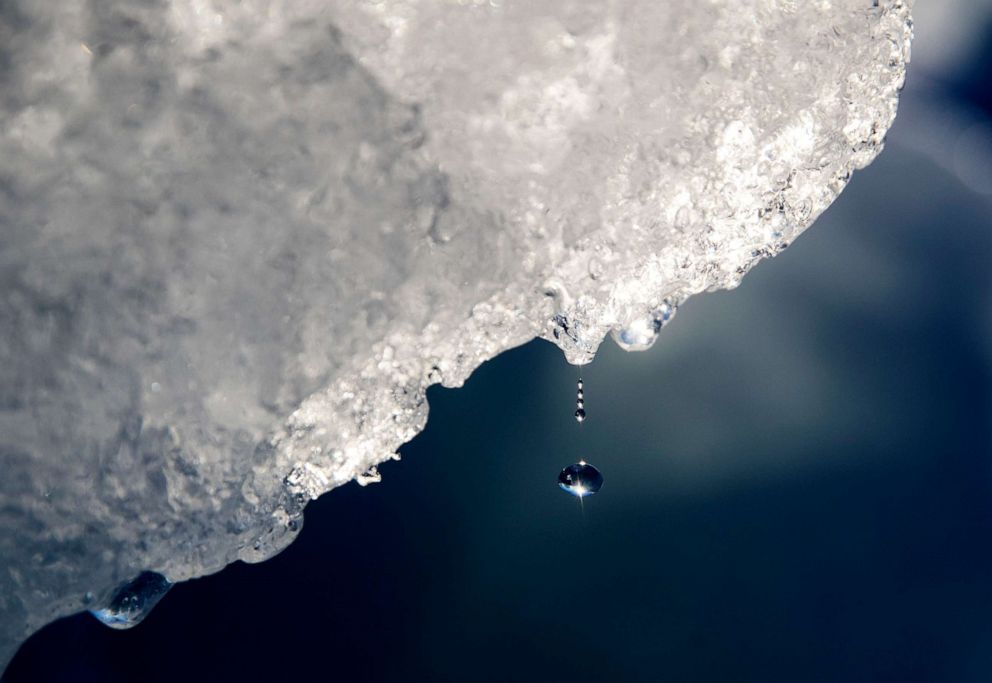
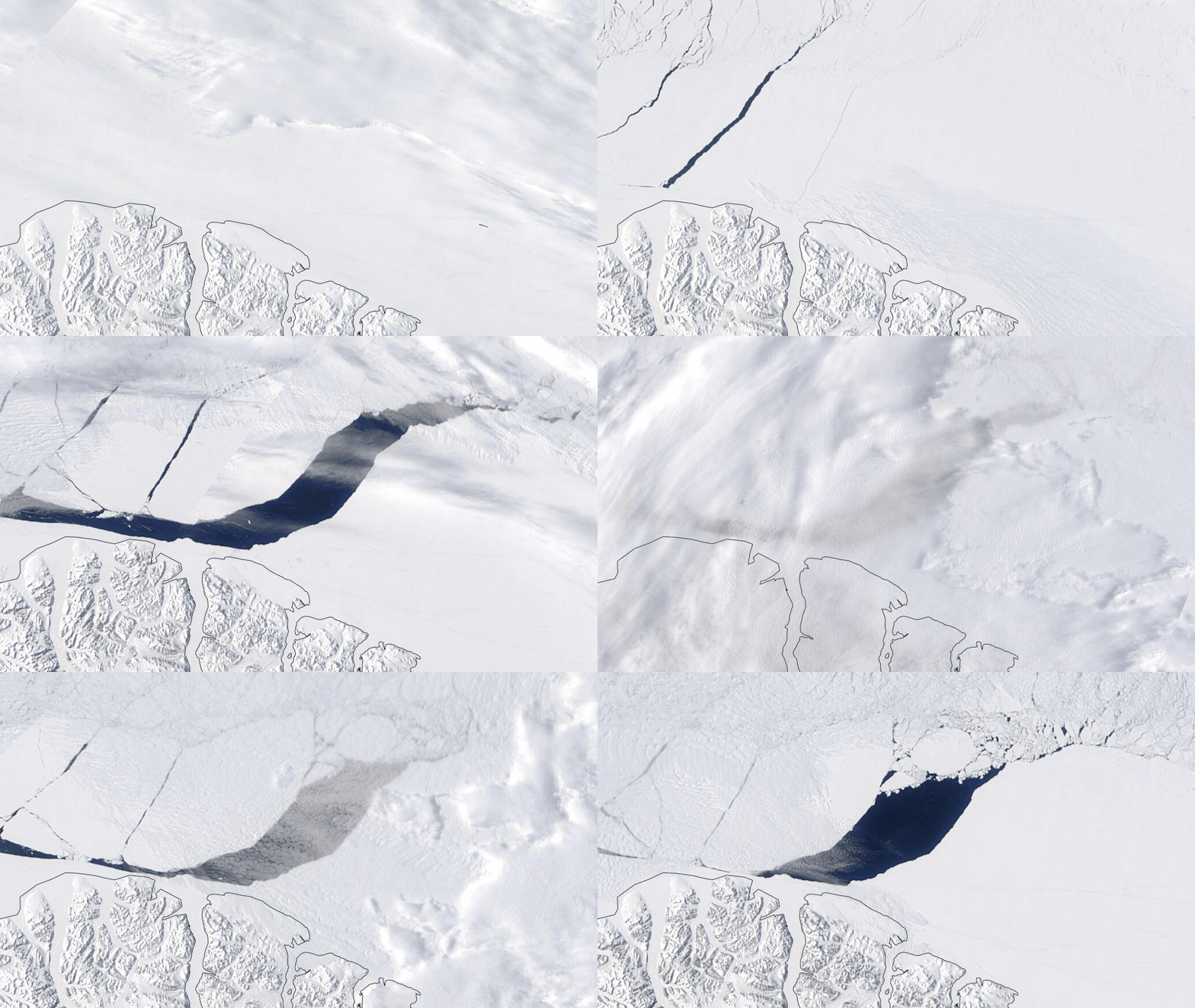
A huge hole opened in the Arctic’s oldest, thickest ice in May 2020, a new study revealed. Scientists previously thought that this area of ice was the Arctic’s most stable, but the giant rift signals that the ancient ice is vulnerable to melt.
This is a direct copy of a SciPop or news article preserved here because things on the internet have a bad habit of disappearing when you try to find them again. Full credit is given to the original authors and the source.
As the polar ice sheets melt, the process is not just raising sea levels – it’s also warping the underlying surface of Earth, a new study reveals, and some of the effects can be seen across thousands of miles.
This is a direct copy of a SciPop or news article preserved here because things on the internet have a bad habit of disappearing when you try to find them again. Full credit is given to the original authors and the source.
This is a direct copy of a SciPop or news article preserved here because things on the internet have a bad habit of disappearing when you try to find them again. Full credit is given to the original authors and the source.
– Matty
A study combining astronomical and geologic data hints at an extraterrestrial cause for extreme climate change 56 million years ago.
A two-story residential building broke apart as layers of permafrost thawed during a summer heatwave in Yakutsk, Russia—often referred to as the “world’s coldest city.”
Winter temperatures in Yakutsk, in east Siberia, regularly plummet to below minus 40 degrees Fahrenheit, with the record low standing at minus 83 degrees Fahrenheit.
But while the city, the largest in the world built on continuous permafrost, is no stranger to relatively hot weather at this time of year, climate change is contributing to warmer winters, longer summers, and more extreme heat waves in the region, and Siberia as a whole.
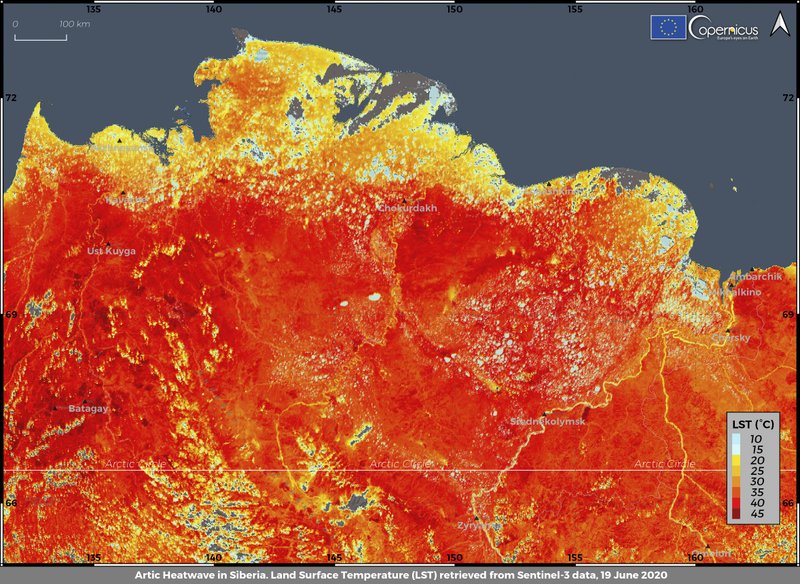
In fact, Siberia has been experiencing abnormally high temperatures for several months and the region saw an early start to summer during which a staggering measurement of 100.4 degrees Fahrenheit recorded on Saturday, June 20 in the small town of Verkhoyansk, according to Russian weather data that has yet to be verified.
This warming climate—the average annual temperature in Yakutsk has risen more than four degrees over the past few decades—is leading to increased melting of the highest permafrost layers on which the city lies, threatening the very foundations of its buildings as the ground subsides.
“The change of landscape tremendously affects any kind of buildings or roads or structure that you have,” Amber Soja, from NASA’s Langley Research Center, told Newsweek.
The building in Yakutsk, located in the city’s outskirts, started breaking apart in the early hours of June 24, when a roughly 4-inch crack appeared inside three flats and on the outer walls, The Siberian Times reported. Fortunately, residents realized what was happening and rushed out of the building.
“The situation caught us completely off guard, none of us had time to pick up documents or to take any other of our belongings with us. People ran in such a rush they didn’t even have time to shut doors,’ one resident of the building told The Siberian Times.
Most buildings in Yakutsk are built on deep concrete piles that sink deep into the permafrost in order to provide a solid foundation. But emergency workers who inspected the building after the cracks appeared found that one of the piles was broken. And beneath the building itself, they found a pool of meltwater, which they say could have played a role in the damage to the pile.
As Yakutsk and the wider region experiences rising air and ground temperatures, increased permafrost melting can cause the ground to subside, which can lead to the collapse of buildings.
In December, Russian President Vladimir Putin himself expressed concern over the potentially severe impact heat waves could have for the various Russian cities that are built on permafrost.
“As you know, Russia is a northern country, and 70 percent of our territory is located in the north latitudes,” Putin said. “Some of our cities were built north of the Arctic Circle, on the permafrost. If it begins to thaw, you can imagine what consequences it would have. It’s very serious.”
Simultaneous heat waves scorched land areas all over
the Northern Hemisphere last summer, killing hundreds and hospitalizing
thousands while intensifying destructive and deadly wildfires.
A study published this week
in the journal Earth’s Future concludes that this heat wave epidemic
“would not have occurred without human-induced climate change.”
The
alarming part? There are signs record-setting heat waves are beginning
anew this summer — signaling, perhaps, that these exceptional and
widespread heat spells are now the norm.
In the
past few days, blistering, abnormal heat has afflicted several parts of
the Northern Hemisphere, including major population centers.
On
the other side of the hemisphere, the temperature in San Francisco shot
up to 100 degrees (37.8 Celsius) Monday, its highest temperatures ever
recorded in the months of June, July or August, or this early in the
calendar year.
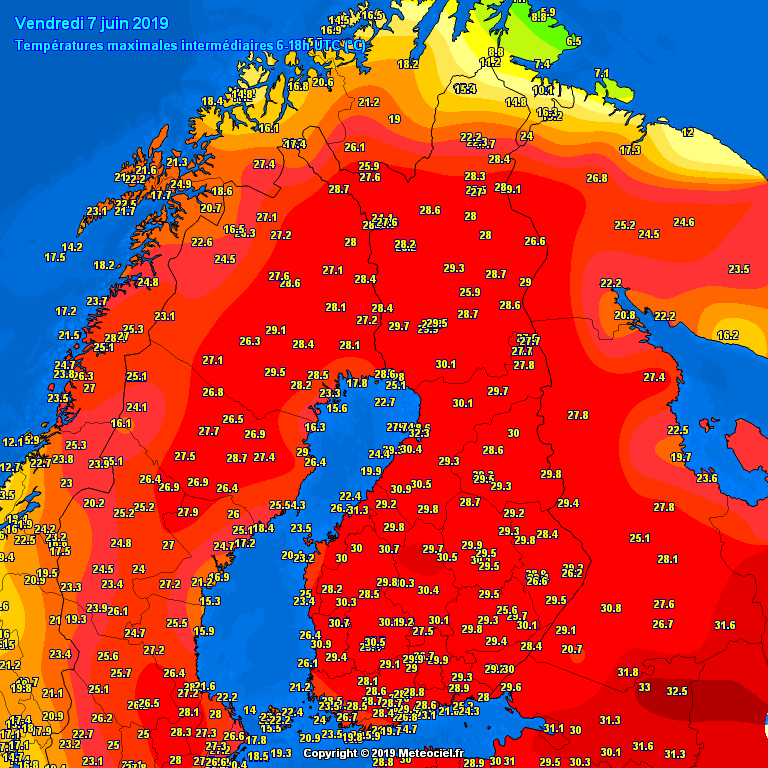
Heat spread unusually far north, even up into the northern reaches of Scandinavia. Mika Rantanen, a meteorologist at the University of Helsinki, tweeted last Friday that there “are no known cases in Finland’s climate history when it has been hotter than now so early in the summer.” Temperatures above 86 degrees (30 Celsius) penetrated inside the Arctic Circle, he noted.
While some scientists hesitate to attribute
individual heat spells to climate change, Daniel Swain, a climate
scientist at the University of California at Los Angeles, tweeted that
his research suggests that we’ve “reached the point where a majority
(perhaps a vast majority) of unprecedented extreme heat events globally
have a detectable human influence.”
Last
summer, exceptional heat affected 22 percent of the populated and
agricultural areas of the Northern Hemisphere between the months of May
and July, the Earth’s Future study said. The contiguous United States
witnessed its hottest May on record, California endured its hottest July
and numerous European cities notched their highest temperatures ever
recorded, while cities in Asia, the Middle East and Africa also
established new heat milestones.
It remains to be seen whether heat waves this summer become as pervasive and intense as last summer. That said, the Earth’s Future study concluded we’ve entered “a new climate regime,” featuring “extraordinary” heat waves on a scale and ferocity not seen before.
The study’s modeling analysis, conducted by
researchers in Switzerland and the United Kingdom, found heat events
like last summer’s do “not occur in historical simulations” and “were
unprecedented prior to 2010.”
As the climate warms, the study projects that the area affected by heat waves like last summer’s will increase 16 percent for every 1.8 degrees (1 Celsius) of warming.
“Heat waves will likely reach highly dangerous levels for ecosystems and societies over the coming decades,” the study said.
Heat
events like those last summer are predicted to occur two every three
years for global warming of 2.7 degrees (1.5 Celsius) and every year for
warming of 3.6 degrees (2 Celsius).
So far, Earth has warmed by approximately 1.9 degrees
(1.05 Celsius) since 1880. The goal of the Paris agreement on climate
change is keep the global temperature rise to 3.6 degrees (2 Celsius) or
less.
Last week, a study in the journal Science Advances
found that keeping warming to 2.7 degrees (1.5 Celsius), compared with
5.4 degrees (3 Celsius), could avoid between 110 and 2,720 heat-related
deaths annually in 15 different U.S. cities.
“A strong reduction in fossil fuel emissions is paramount to reduce the risks of unprecedented global-scale heat-wave impacts,” the Earth’s Future study concluded.
Jason Samenow Jason
Samenow is The Washington Post’s weather editor and Capital Weather
Gang’s chief meteorologist. He earned a master’s degree in atmospheric
science and spent 10 years as a climate change science analyst for the
U.S. government. He holds the Digital Seal of Approval from the National
Weather Association. Follow
A new generation of scientific instruments has begun scouring ocean depths for temperature data, and the evidence being pinged back via satellite warns that the consequences of fossil fuel burning and deforestation are accumulating far below the planet’s surface.
More than 90 percent of the heat trapped by greenhouse gas pollution since the 1970s has wound up in the oceans, and research published Monday revealed that a little more than a third of that seafaring heat has worked its way down to depths greater than 2,300 feet (700 meters).
Plunged to ocean depths by winds and currents, that trapped heat has eluded surface temperature measurements, fueling claims of a “hiatus” or “pause” in global warming from 1998 to 2013. But by expanding cool water, the deep-sea heat’s impacts have been indirectly visible in coastal regions by pushing up sea levels, contributing to worsening high-tide flooding.
“The heat’s going in at the surface, so it’s getting down pretty deep,” said Glen Gawarkiewicz, a Woods Hole Oceanographic Institution scientist who was not involved with the study. “With 35 percent of the heat uptake going below 700 meters, it really points out the importance of continued deep ocean sampling. It was a surprise to me that it was that large of a fraction.”
The research, published in Nature Climate Change, was led by Lawrence Livermore National Laboratory. It compared modeling results with data from a mishmash of sources, most notably from a nascent fleet of monitoring devices called deep Argo floats.
The researchers concluded that half of overall ocean warming has occurred since 1997—a date that they noted in their paper was “nearly coincident with the beginning of the observed surface warming hiatus.”
Percentage of global ocean heat content change
A combination of climate pollution, a recent change in a long-running cycle of the Pacific Ocean and the current El Niño has led to a spike in warming rates recorded at the surface of the planet. That followed a surface warming slowdown; 2014 and 2015 were the warmest years on record globally.
Research groups from around the world have deployed thousands of Argo floats to measure since around the year 2000 to take temperature, salinity and other measurements. Technological advances have allowed a small fleet of deeper-diving floats to be deployed more recently. Some of those have been built to dive as deep as 20,000 feet.
“Knowing how much the ocean is warming and how fast and where are all important for knowing how much the atmosphere is going to warm and how much seas are going to rise,” said Gregory C. Johnson, a National Oceanic and Atmospheric Administration scientist who works on that agency’s Argo float program.
Monday’s paper used the new deep-sea Argo data to expand on a paper published in 2014 by Lawrence Livermore and other researchers, which revealed high levels of warming in the ocean’s surface layer.
“The oceans as an energy store are really doing a lot of the work,” said Lawrence Livermore researcher Paul Durack, who helped produce the studies that were published Monday and in 2014. “The actual temperature change is relatively small, but due to the huge heat capacity of the oceans this equates to a very, very large heat content change.”
The extent of sea ice surrounding the Arctic and Antarctic regions are both at record lows for this time of year — marking the first time scientists have simultaneously tracked record low ice levels around each of the planet’s poles.
Scientists say the below-normal sea ice extent — a rough measurement of the surface area of ice-covered ocean — in the Arctic is particularly worrisome because it is a strong indication of the effects of climate change.
Experts said they were also shocked by the decrease in sea ice in the Antarctic, but were not as concerned by that development.
The Arctic
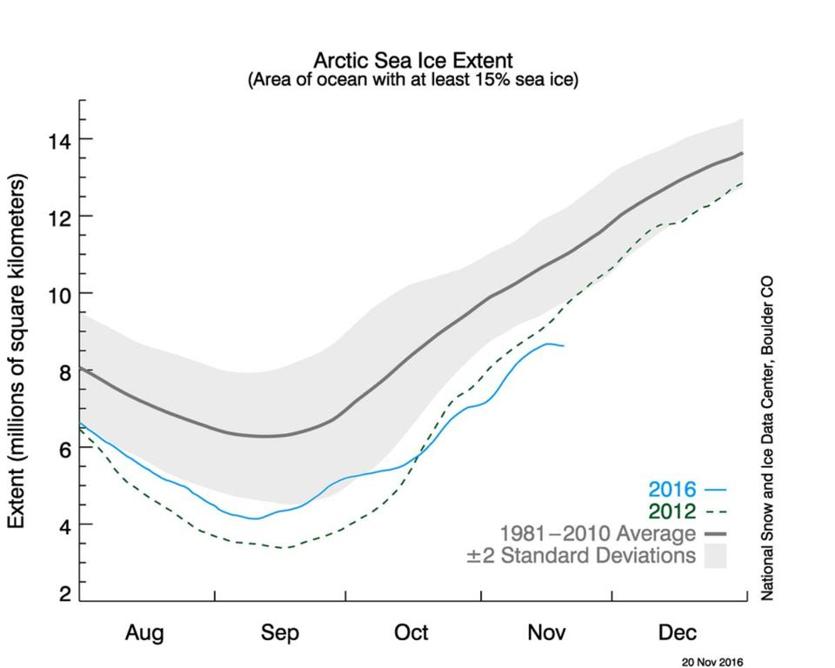
In the Arctic, sea ice extent measured 8.625 million square kilometers, as of Nov. 20, according to data from the National Snow & Ice Data Center, which measures sea ice extent as areas of ocean being covered by at least 15 percent sea ice.
The previous record low at that point in the year, based on satellite records dating back to 1979, was 9.632 million square kilometers in 2012.
Arctic Sea Ice Extent
Around this time of year, the sea ice extent in the Arctic is normally increasing as wintry conditions start to set in. But in the last several days the seasonal growth of sea ice there hascome to a near halt due to above-normal temperatures there that experts said they believed to be caused by warmer-than-usual ocean temperatures left over from the summer and winds from the south driving warmer air into the region.
Claire Parkinson, a climatologist at NASA’s Goddard Space Flight Center, said that above-average temperatures and below-normal sea ice extents in the Arctic, while concerning especially for the longterm, are not entirely surprising.
“The Arctic has been decreasing for many years now in terms of overall trend,” she said.
Since 1979, winter Arctic ice extent has decreased by about 3 percent per decade, records show.
“The Arctic is kind of a nothing new here story — what’s going on now is extreme and a record low — but we’ve seen record lows in the past couple of decades,” said Walt Meier, a scientist from the Goddard center’s Cryospheric Sciences Laboratory.
But “from a climate perspective, the Arctic changes are much more significant,” he said.
The years of diminishing sea ice extent has been caused by temperature increases scientists have attributed to greenhouse gas emissions from humans.
The shrinking sea ice extent is problematic because ice cover in the Earth’s cool polar regions — particularly the Arctic which maintains much more ice through the summer months — help moderate global temperatures.
“It acts as a refrigerator or cooler for the planet, if you will,” Meier said.
Sea ice has a bright surface that reflects about 80 percent of the sunlight that strikes it, helping to maintain cool temperatures. When that ice is lost, it exposes a dark ocean surface, which has the opposite effect absorbing about 90 percent of sunlight causing both sea and air temperatures to warm.
Melting sea ice does not cause sea levels to rise — melting land ice causes that. But because melting sea ice leads to warmer temperatures, it indirectly contributes to sea level rise that’s threatening coastal communities around the planet.
The Antarctic
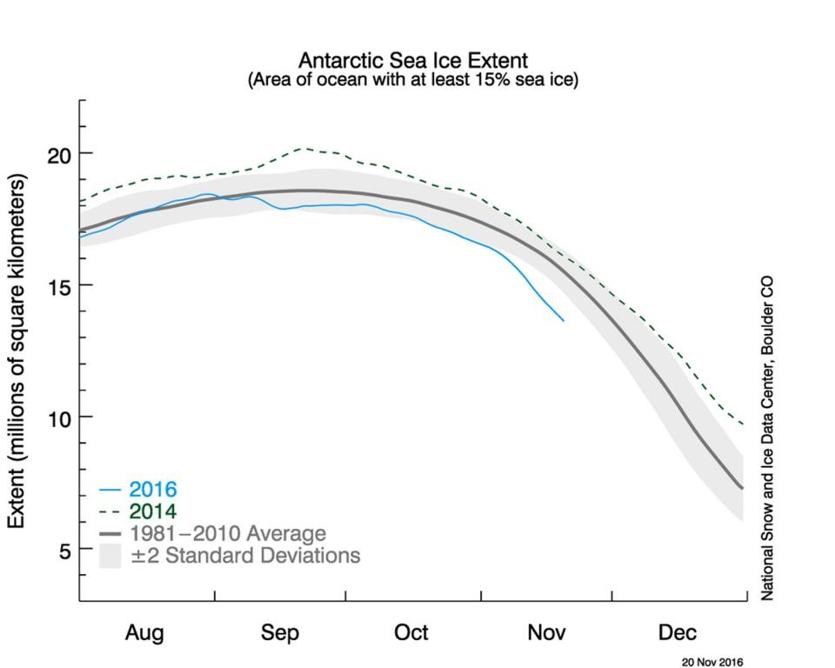
The sea ice extent in the Antarctic covered 13.616 million square kilometers, as of Nov. 20, data show.
The previous record low sea ice extent at that point in the year was 14.7 million square kilometers in 1986.
Antarctic Sea Ice Extent
In the Antarctic, the sea ice extent there is normally shrinking around this time of year as summer starts to set in. But this year, the drop in sea ice coverage has been much more dramatic.
“It’s been quite striking,” said Parkinson.
The trend is also a remarkable reversal from what had been going on in the Antarctic.
The sea ice extent in the Antarctic had actually risen in recent years, even hitting record highs in 2014.
Something threw that trend off course recently.
“It’s a little mysterious,” said Meier.
Both he and Parkinson noted the Antarctic is much more prone to large swings in sea ice extent than the Arctic. And they said they suspected the sudden shift happening now is being caused primarily by weather conditions and patterns.
It would be unlikely that a more worrisome potential cause — climate change — could explain all of the recent, sharp and sudden decline in Antarctic sea ice.
But experts said they expect the Antarctic’s sea ice extent will eventually start to lose sea ice extent due to global warming, albeit more gradually.
Even though sea ice extent had increased there in recent years, scientists believe that climate change has been affecting the Antarctic. But various factors in that region have managed to largely cancel out the warming, including the Antarctic’s geography, geometry, and wind and ocean currents that somewhat insulate the region to global weather patterns.
“It’s expected that, eventually, warming will catch up and become a significant player in the Antarctic,” Meier said.
Scientists also noted that losses in Arctic ice extent in recent years have far exceeded the gains in Antarctic ice extent.
Does it matter that both poles are seeing historic lows in sea ice extent at the same time?
Not really.
“The fact that they are both record lows is interesting, but from a climate perspective, it may not mean that much,” Meier said. ”It may simply be coincidence or chance in some sense.”









 Matty (Headwind)