A NASA Spacecraft May Have Detected A Giant Wall At The Edge Of The Solar System

This is a direct copy of a SciPop or news article preserved here because things on the internet have a bad habit of disappearing when you try to find them again. Full credit is given to the original authors and the source.

– Matty

Original Article

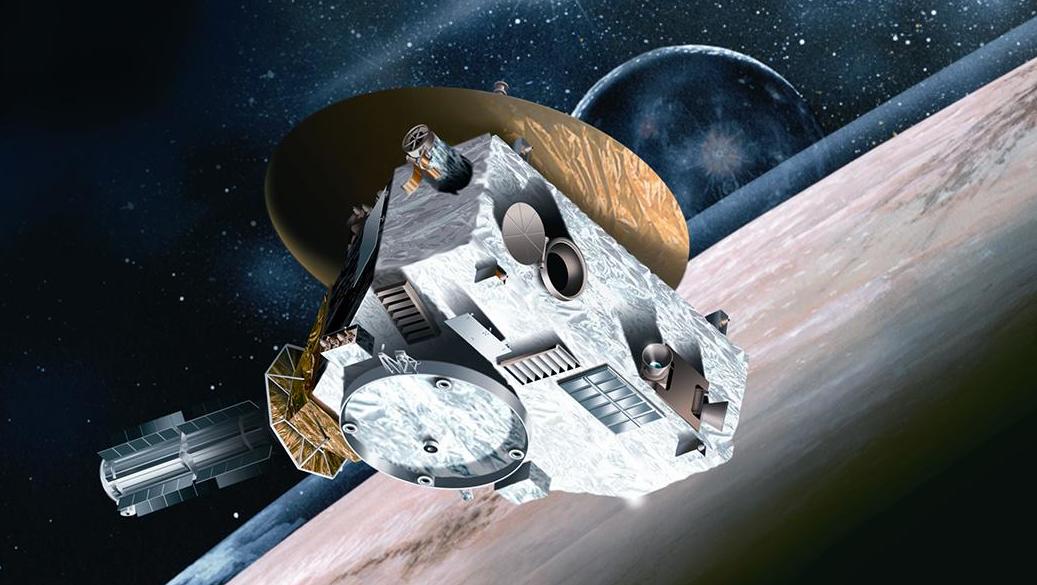
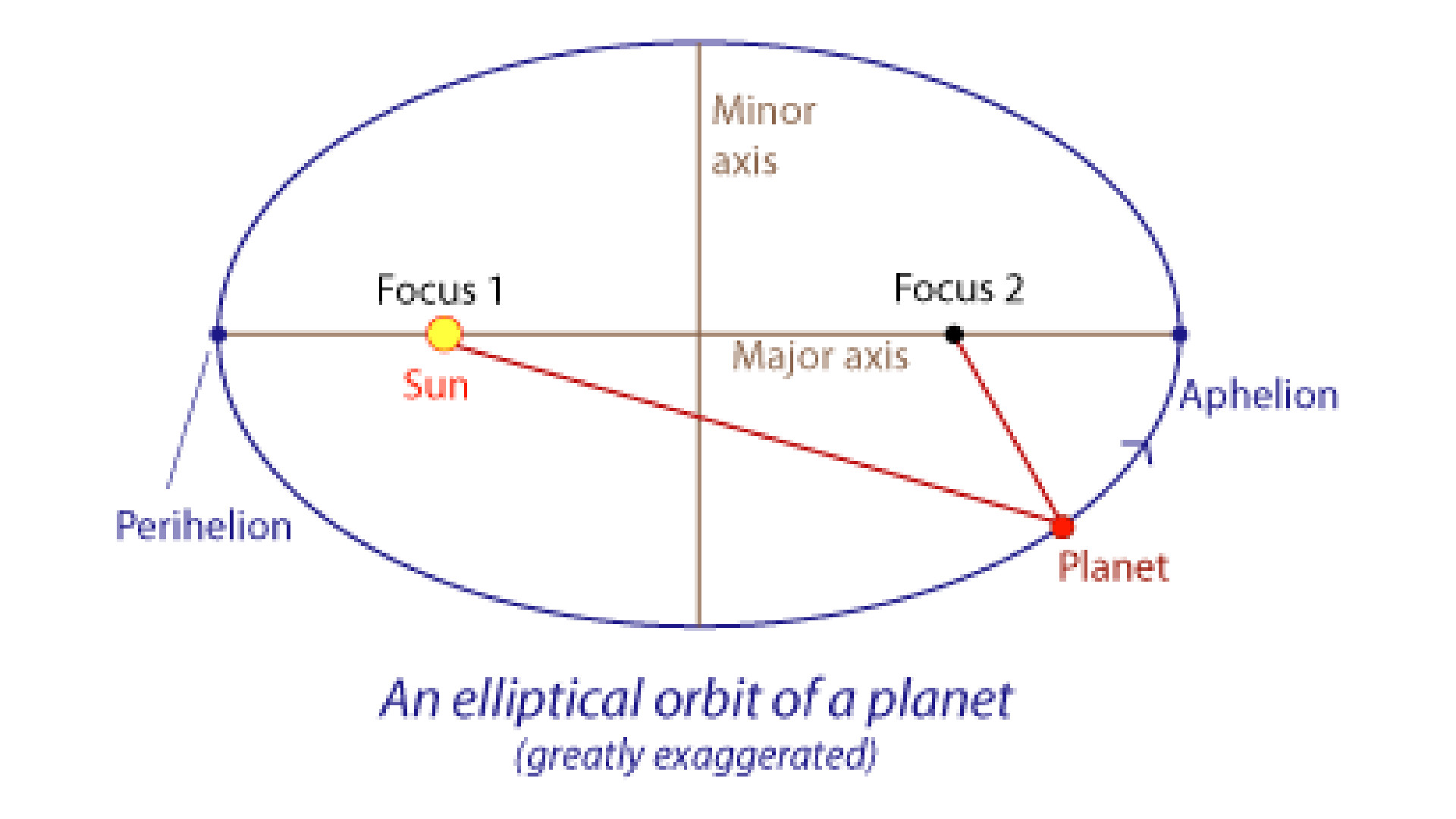
NASA‘s New Horizons spacecraft has helped scientists study a mysterious phenomenon at the edge of the Solar System, where particles from the Sun and interstellar space interact.

Continue reading “A NASA Spacecraft May Have Detected A Giant Wall At The Edge Of The Solar System”

New Horizons Spacecraft Sees Possible Hydrogen Wall at the End of the Solar System

This is a direct copy of a SciPop or news article preserved here because things on the internet have a bad habit of disappearing when you try to find them again. Full credit is given to the original authors and the source.

– Matty

As it speeds away from the Sun, the New Horizons mission may be approaching a “wall.”

Continue reading “New Horizons Spacecraft Sees Possible Hydrogen Wall at the End of the Solar System”

Antarctic Bottom Water Warming and Freshening

Abstract

Freshening and warming of Antarctic Bottom Water (AABW) between the 1980s and 2000s are quantified, assessing the relative contributions of water-mass changes and isotherm heave. The analysis uses highly accurate, full-depth, ship-based, conductivity–temperature–depth measurements taken along repeated oceanographic sections around the Southern Ocean. Fresher varieties of AABW are present within the South Pacific and south Indian Oceans in the 2000s compared to the 1990s, with the strongest freshening in the newest waters adjacent to the Antarctic continental slope and rise indicating a recent shift in the salinity of AABW produced in this region. Bottom waters in the Weddell Sea exhibit significantly less water-mass freshening than those in the other two southern basins. However, a decrease in the volume of the coldest, deepest waters is observed throughout the entire Southern Ocean. This isotherm heave causes a salinification and warming on isobaths from the bottom up to the shallow potential temperature maximum. The water-mass freshening of AABW in the Indian and Pacific Ocean sectors is equivalent to a freshwater flux of 73 ± 26 Gt yr−1, roughly half of the estimated recent mass loss of the West Antarctic Ice Sheet. Isotherm heave integrated below 2000 m and south of 30°S equates to a net heat uptake of 34 ± 14 TW of excess energy entering the deep ocean from deep volume loss of AABW and 0.37 ± 0.15 mm yr−1 of sea level rise from associated thermal expansion.

When I tell people that ocean water is warming from the bottom up a common response that I get is:


“Do you mean that the hottest waters are at the bottom?”


This is a great illustration of the intellectual bankruptcy of atheism. Atheists can’t comprehend simple logic, and one of the ways that they cope with it is to instinctively warp whatever you said into something that they can understand. Since atheists automatically assume that everyone who disagrees with them is idiotic, they intentionally misinterpret whatever you said into something idiotic.

My response is simple enough:


Water warms at the bottom, as this happens the water is displaced upward by colder water.


The article appears to confirm this. Bottom water is freshening because of an influx of water from melting polar ice. This is also driving ocean circulation.


Not only are ocean surface waters getting warmer, but so is water 1,500 feet below the surface.

This is a direct copy of a SciPop or news article preserved here because things on the internet have a bad habit of disappearing when you try to find them again. Full credit is given to the original authors and the source.

– Matty

Ocean Temperature

Warmer oceans put coastal communities at risk, increase infrastructure costs, endanger polar creatures and threaten coral reefs and fisheries. Perhaps most alarmingly, rising ocean temperatures accelerate the overall warming trend.

Continue reading “Not only are ocean surface waters getting warmer, but so is water 1,500 feet below the surface.”

Surprising Depth to Global Warming’s Effects

This is a direct copy of a SciPop or news article preserved here because things on the internet have a bad habit of disappearing when you try to find them again. Full credit is given to the original authors and the source.

– Matty

Sarah Purkey is a Ph.D. student in the University of Washington’s School of Oceanography. Gregory Johnson is an oceanographer with the National Oceanic and Atmospheric Administration (NOAA) Pacific Marine Environmental Laboratory. They contributed this article to LiveScience’s Expert Voices: Op-Ed & Insights.

Introduction

The oceans are the flywheel of the climate system. As atmospheric concentrations of greenhouse gases increase, the Earth system is warming, and over 90 percent of that increase in heat goes into the ocean. Knowing how much heat the ocean absorbs is vital to understanding sea level rise (the oceans expand as they warm), and predicting how much, and how fast, the atmosphere will warm.

Continue reading “Surprising Depth to Global Warming’s Effects”

Bottom Water Warming in the North Pacific Ocean

This is a direct copy of a SciPop or news article preserved here because things on the internet have a bad habit of disappearing when you try to find them again. Full credit is given to the original authors and the source.

– Matty

Abstract

Observations of changes in the properties of ocean waters have been restricted to surface1 or intermediate-depth waters2,3, because the detection of change in bottom water is extremely difficult owing to the small magnitude of the expected signals. Nevertheless, temporal changes in the properties of such deep waters across an ocean basin are of particular interest, as they can be used to constrain the transport of water at the bottom of the ocean and to detect changes in the global thermohaline circulation. Here we present a comparison of a trans-Pacific survey completed in 1985 (refs 4, 5) and its repetition in 1999 (ref. 6). We find that the deepest waters of the North Pacific Ocean have warmed significantly across the entire width of the ocean basin. Our observations imply that changes in water properties are now detectable in water masses that have long been insulated from heat exchange with the atmosphere.

Continue reading “Bottom Water Warming in the North Pacific Ocean”

Life before oxygen: Fossils of 2.5 billion-year-old bacteria reveal organisms thrived despite early Earth’s harsh conditions

This is a direct copy of a SciPop or news article preserved here because things on the internet have a bad habit of disappearing when you try to find them again. Full credit is given to the original authors and the source.

– Matty
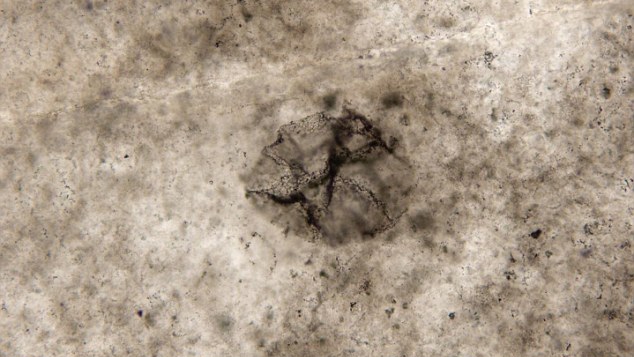
  • Geologists found large spherical fossils thought to be from microbial life
  • Microbes lived in the ocean depths before Earth’s oxygen-rich atmosphere
  • Researchers claim they are the oldest bacteria of their kind to be found
  • It is thought they got energy from sulfur compounds seeping out from the Earth’s crust, similar to bacteria found at hydrothermal vents today
Continue reading “Life before oxygen: Fossils of 2.5 billion-year-old bacteria reveal organisms thrived despite early Earth’s harsh conditions”

Have Scientists Found the World’s Oldest Fossils

This is a direct copy of a SciPop or news article preserved here because things on the internet have a bad habit of disappearing when you try to find them again. Full credit is given to the original authors and the source.

– Matty

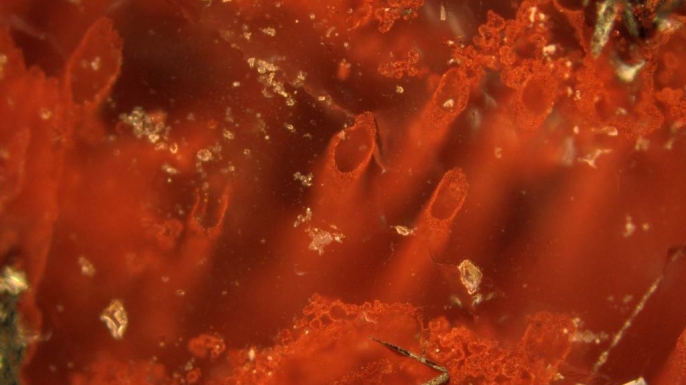
In a new study, a team of scientists announced it has discovered the world’s oldest fossils, dating back some 3.77 billion years (and possibly as far back as 4.28 billion years).

Continue reading “Have Scientists Found the World’s Oldest Fossils”