Chapter 22

The President of the United States was starting to loose it. He had been on the go for the entire weekend in New York attending galas, banquets, town hall meetings and rallys. He had been smiling and projecting his sparkling persona so much that he was close to biting someone’s head off. Now finally back at the White House in D.C., he was desperate to get into his private quarters and relax, but he knew he was not going to get there without having to deal with his Chief of Staff. He took a deep breath. Maybe it wouldn’t be so bad.

And there he was, with the grinning Mr. Smith. What was he doing here again?

“I know,” said the President, “you have a lot of things to catch me up on. You better make it quick, I’m not in the mood for this.”

“Just one thing really,” replied the Chief of Staff, “Mr. Smith?”

“Yes, Mr. President, Chief of Staff. I want to let you know that we are moving our units into position in the Salt Lake City area. A nuclear device is being delivered to the target area later in the week. We can have everything in place and timed for the clock tick that switches us over to world monetary union. Any delay beyond that in dealing with our situation in Southern Utah is going to lead to very difficult accounting for the resources that the, er, problem utilizes.”

“What a pleasant thought to end the day with.” The President shook his head.

“And here was me thinking that you had something important to tell me.” He looked at Mr. Smith who’s irritating smile didn’t even waver. He was pure evil. What makes a person like that? The tired President didn’t have the energy to argue, and the easiest way to make the two of them go away was to agree. He straightened himself up, tried to appear resolved and said,

“Very good. Proceed with the plan. Let me know as soon as you have all of our assets in position. Chief, make sure that Mr. Smith has all of the resources that he needs. Goodnight gentlemen, well done.”

They both seemed pleased with the outcome, and Mr. Smith’s smile managed to go up another notch.

The President detached himself from the group politely and made his way upstairs to his private suite. His wife was waiting with a knowing look on her face and open arms.

“Come here baby, you poor thing.”

He embraced her warmly and then released her. He tried a weak smile. He moved them inside the suite and made sure that the door was shut.

“There is something very, very bad happening. I don’t know what to do.”

His wife looked into his face with genuine concern. She scrutinized his forehead barcode.

“You’re starting to smudge baby. I need to work on your tattoo,” his wife said, “come tell me all about it.”

She led him into the bathroom, sat him down on the commode and got a bottle of rubbing alcohol, some cotton buds, and two Sharpie markers, one fine tip and one wider tip. He started to tell her about the plan to detonate a bomb on the Salt City domes, and the planned droid attack on the camp in Southern Utah. As he did, she carefully wiped the ink off the President’s forehead, dried the area, then began redrawing the barcode with the markers. She listened carefully and said nothing until she finished her task.

“There, good as new.”

“So, what do you think?” The President was still worried, but much relieved for having been able to tell his wife.

“My dad is in that camp. Other family too. You know that.”

“Yep.”

“So we have to do what we always knew we would have to do. Or we’re not the people that we always thought we were.”

“You’re right. I’m just wondering if there is way to save the camp too.”

“You’ll figure it out baby, you always do,” she gave him a warm smile.

“I love you. Thank you baby.”
Save

Chapter 20

Carlton had been productively absorbed in his work for a few hours when the intercom buzzed.

“Carlton? It’s Rachel, are you there?”

Carlton was brought out of his reverie, for once he hadn’t been thinking about her.

“Yes, Carlton here. What do you need?”

“Can you come to the circulation desk? I think we have a problem.”

“Be there right away.” How cool was that, to have to go and help Rachel!

He got up and walked to the elevator, pondering what Frank had said about this set up being rather odd. He pressed the call button and waited a moment. The elevator arrived with an odd flourish, if you could call it that, but Carlton didn’t think much of it and got in. The control panel had two rows of buttons. They started with the 3 above ground levels, then L for Lobby, 8 underground levels, the lowest of which he was at, and a B for basement. There was another red button at the bottom next to a key hole. The elevator tried to start a conversation but Carlton really wasn’t interested.

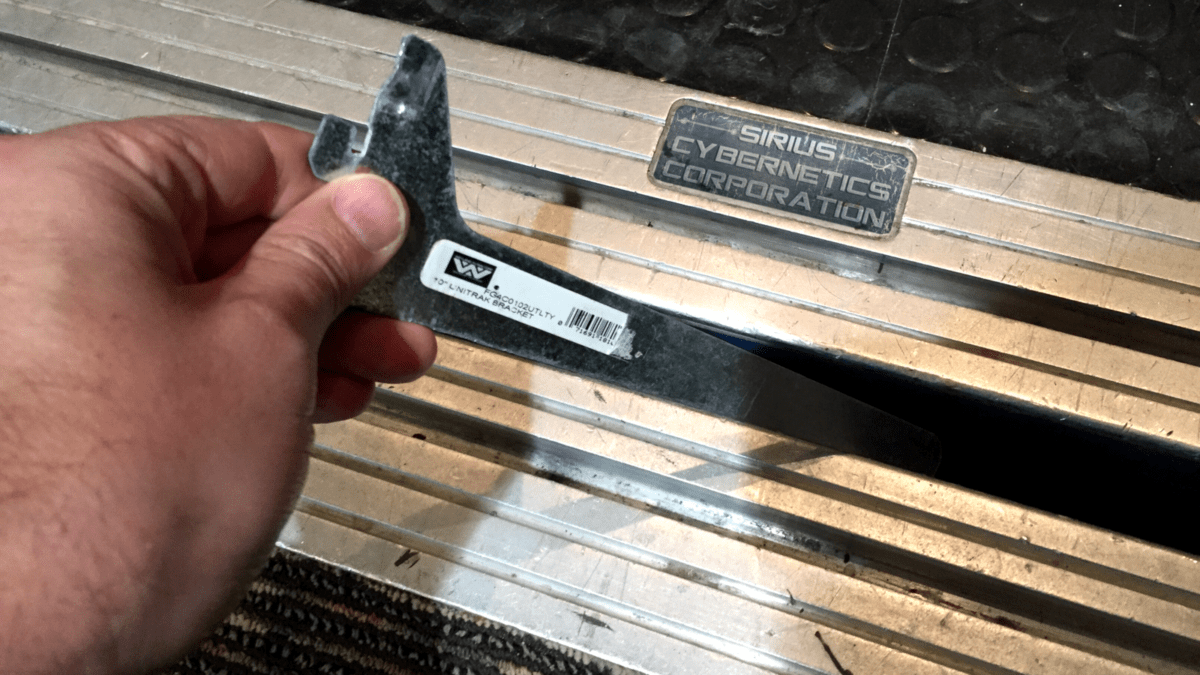
Frank had warned him that this was bigger than he thought. As the elevator door began to close he had an idea. Maybe he could test how big this thing was. He walked back into the conference room looking in the trash and on the floor until he found a thin strip of metal, a surplus shelf bracket. At the elevator again, he knelt down by the door and pressed the call button. When the door opened he tried to look down through the crack between the elevator tracks. There was an eerie red glow. He slid the piece of metal into the crack, put his ear close to listen, then let it go. One thousand, two thousand, three thousand, four thou.. there was a distant clatter. About four seconds. He got up, entered the elevator and hit the button for the Lobby. He did a quick calculation. Acceleration due to gravity is ten meters per second, per second. In four seconds the piece of metal would have fallen one hundred meters, over 300 feet.

At the circulation desk Rachel was flustered.

“Hey, Carlton. Sorry to bother you.”

“It’s no problem. What’s up?”

“I don’t know. It’s this software. Biblio can’t recognize the code and can’t run the software.” She was fidgeting, chewing her finger nails and shifting from foot to foot in agitation. As Carlton drew nearer she lowered her voice, “I hope you can figure this out, or I’m in trouble.” He glanced at her with obvious concern, but smiled and spoke reassuringly.

“Well, let’s not get too far ahead of ourselves. What software is it?”

She held up a small portable drive.

“It’s language comprehension software that I wrote for this system.”

“Language comprehension?” Carlton raised his eyebrows, “that’s a new one on me. I thought that the system here was rigged to the gills with translation capabilities, ‘The likes of which the world has never seen before.'” He had read that last part in some promotional literature that he had found lying around.

“Right, translation is one thing, but, based on how your units operate, with actual voice input, I er, wrote software that would let the computer to understand the words, and the real meaning of what it heard. It allows for the interpretation of different inflections and intonations, and how the way that words are spoken affects what they mean. It,” but then she caught herself as if she realized she had said too much, or was about to.

Carlton thought for a moment, and considered this remarkable turn of events. He had never heard of such software before. It made perfect sense, and it was logical application of the hardware capabilities he had built. Frank said the night before that there was more to Ruth than met the eye. If she had written software that could do what she said, anticipating the hardware features that he had built, then she was either a genius or she was working for one. Except it seemed that she, or whoever, had overlooked one minor detail.

“I think all we need is a device driver,” he said reassuringly.

“Really,” she was visibly relieved.

“Sure,” he continued. “Old Biblio here has never seen this software before, and though it’ll work with the user interface, it’s not calibrated to the right input/output format. The software doesn’t know how to run this hardware. Or the hardware doesn’t know how to run the software, however you want to look at it.”

Rachel looked worried again, “is it going to be a problem?”

“I don’t think so. If you would let me see the code for the software, I’ll work on a device driver tonight.”

“Why do you need to see the code?”

Carlton tried not to laugh. “I have to see the code, there’s no other way to design a driver for it.”

Rachel was getting in a worse tizzy than before, she had the portable drive in her hand, but something was stopping her from handing it to Carlton. He reached out slowly to take it from her.

“I’m not sure what’s going on, Rachel, but I’m sure that I can have this running by tomorrow. If I can see the code and design a driver.”

Rachel began to relax just enough to pass the portable drive into Carlton’s hand, “you’re sure. By tomorrow?”

Carlton gently put his hand on the drive, “no problem, it won’t take Frank and I any time at all to figure it out.”

“Who’s Frank?” Rachel snatched her hand back and stepped away. Then a new voice joined the conversation. Biblio spoke.

“Frank is my big brother.”

Carlton and Rachel both turned to the terminal, Carlton was puzzled, Rachel shocked. She put her free hand to her head and sat down.

“Biblio, what are you talking about?”

But Carlton spoke up, “Frank is my computer, at home.” Then he spoke to Biblio, “Frank told me that you two spoke yesterday. Did he say that he was your big brother?”

“Yes, he did.”

Carlton nodded, “well Biblio, after all this time building you I guess I forgot to introduce myself. I’m glad to meet you. Now do you know what is the problem with Ms. Robbin’s software?”

“You correctly determined the need for a software device driver.”

“Good, OK, Rachel?”

She had tuned out, rubbing her temples, it looked like she had a headache, “what?” she breathed heavily.

Carlton spoke as carefully as possible, “do you want me to work on the driver for you?”

Rachel sighed again, pushed the portable drive across the counter top and stood up. “Yes, take it. I’ve got to get out of here. Good bye. See you tomorrow.” She turned and left.

Chapter 17.5

As church wound down Rachel somehow got herself invited to lunch with the Pastor and his wife, along with the odd new-comer known only as K.D. She drove herself to the restaurant which was a cafeteria style place that was very popular with the Sunday after church crowd. When she got there it turned out that half of the church was there too: the Pastor and his wife brought K.D.; the Assistant Pastor, and his wife with their two children; one of the Deacons with his wife and an elderly widow; another elderly lady who hadn’t been in church but who evidently joined the group to eat; finally Kruger had gotten himself invited. Rachel narrowed her eyes at him threateningly but he mimed a yawn and rolled his eyes.

The restaurant staff were delighted to welcome the church members and guests. The falling away of church attendance as the deadline for World Monetary Union approached had been dramatic, and it had a big impact on the Sunday traffic. They made quick work of moving a few tables so the group could sit together, then enthusiastically ushered them all through the serving line. Rachel was very good at these kind of social events. It was second nature for her to smile, be polite, and engage in whatever conversation happened to strike up. She shared stories from her life, always being mindful of her cover and why she had just moved to Salt Lake City.

Kruger, on the other hand, looked ill-at-ease. Serve him right for not doing surveillance on her from the car with Dunning. She was fortunate to end up on the far end of the table from K.D., so she didn’t get to speak with him.

It was close to 3 O’clock before the party began to break apart, and Rachel excused herself with a promise that she would be at the Wednesday night service. She curtly told her car to be quiet and drove herself home, looking eagle-eyed for the unmarked sedan that was supposed to be following her. She began to get spooked when she thought she saw the same tinted-window black Mercedes pass her twice in a row. Dunning and Kruger were nowhere to be seen, but there was another black Mercedes drifting along effortlessly some way back. Something was not right. At her parking garage she caught a glimpse of movement on the roof of the building opposite. A sniper getting into position? There was an electrician’s panel van parked across the street too – on a Sunday? Not impossible, but weird. Then two deeply tanned women in Spandex sports gear jogged past, paying her a little too much attention. Where they checking her out, or another part of a security op that was happening around her? What else? What else would there be if this were a security op? She looked around for a surveillance camera. There it was, by the elevator, pointing right at her. Surprise, surprise. With all this going on there could only be one reason: Agent Smith was here.

In her experience Agent Smith was a misogynistic, leering, innuendo-laden pervert who had never quite crossed the line and done anything that could really hold the charge of sexual harassment, but which was close. Maybe today could be the day? “Look on the bright side,” she thought. Perhaps every cloud does have a silver lining? if he had come out here for an unscheduled visit it must be in response to something time sensitive, he might be really angry. He might be ready to pop and leave himself exposed, if not to a charge of sexual harassment, then at least some leverage to make him back off. She steeled herself and made her way to her apartment.

There was another new fragrance in the lobby. This one so expensive that she didn’t recognize it. Definitely Smith. She inhaled deeply but realized with a shock that she was already weaker than she thought, suddenly afraid. Her apartment door was open, normally that would be bad, but in this situation it was good because they would both be able to see the approach. It was intended to help put her at ease. It meant that he would be alone inside, with out any of his team of goons. That was good and bad, but Rachel could feel herself getting flustered already and the meeting hadn’t started yet. She hated the psychological chess game that this guy kept up. She resolved and breezed airily into the apartment as casually as possible. Smith was sitting in her favourite spot on her new couch, looking out the patio doors as she had last night. He stood up and turned to her with the warmest expression possible which stopped Rachel in her tracks.

“Rachel,” was all he said.

“Smith,” she looked away, unable to hold his gaze. “To what do I owe this pleasure?” In her peripheral vision she saw Dunning and Kruger move in behind her, cutting off her escape. “Drat,” she thought, “this is really bad.”

“The pleasure is all mine, I assure you,” the words dripped off Smith’s tongue.

A shiver went down Rachel’s spine. “That ought to be enough for sexual harassment right there,” she thought, knowing that it was not, and that Smith was too careful. He just somehow made her feel, dirty.

“I just wanted to check in with you. To make sure that you, the team,” he gestured to Dunning and Kruger, “are all on the same page.”

“You came out here from DC for that?”

“Not a special trip. I was,” he paused delicately, “somewhere close by. I am concerned that you are underestimating the seriousness of this situation?”

“No,” she replied boldly, “Whatever gave you that idea?”

He swept his had in the direction of Dunning and Kruger. “I heard that one of them had to spend time in a lingerie store yesterday?”

“Oh that!” Rachel took on a very friendly and sportsmanlike demeanour and moved in close between the two body guards. “Come on,” she playfully punched Dunning’s shoulder, “A girl has to get her, y’know, things somewhere.”

“You didn’t buy anything.” Kruger said flatly.

“Oh, come on, please. Boys,” she said playfully, grabbing both of their elbows. She looked at Smith, “We have a great time together, don’t we?” she looked at both of their hard faces, then back to Smith, “There is no way that you came all this way because I went to a panty store!”

“No indeed.” He dismissed the two men with a flick of his hand. They left immediately and closed the door. Rachel swallowed so hard she heard it, and closed her eyes for a momentary prayer.

Chapter 17

Carlton didn’t get far before he remembered that he had an appointment.  He had to make a service call on a unit at the University of Utah. He always enjoyed visiting campus.  Even though he had never been a student there he felt somehow connected to the youthful energy of the place.  That and the fact that from many parts of campus you could see Carlton’s neighborhood.

Every day when the library staff came to work they found that the computer was playing loud heavy metal music. Carlton recommended that his customers let their units listen to music, but rock ‘n’ roll, especially heavy metal, could be a problem. The units liked the pounding beat of rock because it increased performance.  The heavy vibrations generated so much electrical potential across the processor membranes that the speed was much faster. The problem was that the fast syncopated rhythms disrupted metabolic cycling rates. Chemical reactions that should run full course were continually interrupted, which caused hazardous by-products and free radicals to accumulate. These compounds wrought havoc on the membranes. Over time the units would become surly and uncooperative, just wanting to listen to more rock. It was like an addiction, plus unprofessional and embarrassing for Carlton.

This was the crux of Carlton’s innovation. The computer screen was the user interface, the lung, the power supply and a connection to other peripherals. It worked a bit like a speaker. The surface was a thin LED display. Layered behind this was the membrane that blood and water flowed on either side of. Sounds caused the whole structure to vibrate. This caused charged particles, sodium and other metal ions, to criss-cross the membrane, causing a change in electrical potential across it.  A host of other reactions then took place, it sped up the diffusion of oxygen and carbon dioxide, and it generated enough electrical current to charge a series of capacitors. In effect, when the terminal heard a sound, it powered the processor and charged the system.

The terminals not only heard sound, but could generate it. This was what the capacitors were for. In the opposite of what happened when the terminals heard sound, the capacitors charged the membrane to vibrate, and make sound. Information was input into the computer by simply having a conversation with it.

Behind each screen interface was another system, more like the synapses of nerves. This was also a membrane where electrically charged compounds, neurotransmitters, carried impulses from the user interface to a conventional computer and back. This could be any standard computer system connected to whatever hardware, peripherals and the bells and whistles that people needed. The whole structure was only 1/8 inch thick.  It was connected to a tower case which contained the artificial heart, liver and kidneys which kept the blood circulating.

Carlton set up a dialysis machine to clean the blood in the unit, administered a course of antioxidants, set up a music player to play soft classical music, and tried to console the customer.

“Classical music,” he was explaining, “not all, but most of it, is very helpful because of the ensembles of stringed instruments.” The customer was nodding appreciatively.

“Oh yes,” he went on, “sound complexity is very important.  A good symphony orchestra has so many violins and cellos going that there is much more stimulation to the membranes than with the heavy metal. But most importantly, the music is structured better, so you don’t get any build up of free radicals. Waltzes are the best. You know the one, two, three, one, two, three rhythm?  It’s like the beating of a heart.  Just let the unit have about a week of uninterrupted Strauss, and he’ll be good as new. Mendelssohn is pretty good, Fingal’s Cave, that sort of thing.” The customer was beaming.

“I’d stay away from Beethoven, though, it’s a short step from that to heavy metal. And definitely no Wagner. Call me if you need anything at all. I’ll check back in a couple of days.”

When Carlton left it was getting late. He had nothing to do though, so he drove south to check out the location of Rachel’s church.  It wasn’t much to look at, and he found himself instinctively driving to Salt City.  It was fully dark when he got there and checked in at the gate.  He figured on eating at a nice restaurant where he frequently ate lunch.  He would see what their dinner menu was like.  His route took him past the library. The lights on the ground floor were on. Someone was there, working. It bothered him that he didn’t know who it was or what was going on. What if Rachel were there doing something secret? He felt irritated and he knew he wouldn’t be able to enjoy a nice dinner out so he drove home via a fast food drive through.

The next day was bright and clear with an almost endless blue sky. A few clouds were moving in from the south but they were far away and not threatening. Being Sunday Carlton figured on sleeping late, so that he could say he missed church by accident. Instead he woke up early and spent the morning fretting about going or not going. His eagerness to have a chance to spend time with Rachel was equally balanced against his distaste for church. He shaved and tried three different outfits as he tormented himself over it. He dithered and fussed and preened and moped with his eye on the clock, until it was too late to get there on time. Eventually he wasted enough time to be able to say that he didn’t get up early enough. He hated the missed opportunity.

Chapter 16.5

The rest of the day was uneventful, though Dunning and Kruger were fuming over the mall escapade. That evening Rachel made a few phone calls to family, maintaining a facade of an easy-going life transition to a new job and home in Salt Lake City. She watched some TV but wasn’t interested in anything. She tried reading a book but it didn’t capture her imagination. Eventually she sat looking out the large balcony doors as the daylight faded and the city stretched out before her came alive with lights. Watching the activity of the city at night was vastly more interesting than TV, and before long she dozed off.

At some point later she woke up enough to put herself to bed.

Rachel was up again before the dawn arrived, wondering about her cat whom she had left with her mom and dad in Washington DC. She contemplated getting another one but that was pretty pointless given that she fully anticipated her life here in Utah to be either over or drastically different by the end of the week. She exercised, ate, showered and got ready for church.

Rachel went to Anchor Baptist Church in South Salt Lake, based on a recommendation from her Pastor in DC. It was only her second time going since she had only been in town for about a week. Sunday morning was usually a busy time at any church, but things were very different now with the looming deadline of World Monetary Union. The majority of Christians were convinced that this was indeed the Mark of the Beast as prophesied in the Bible, and this had led to a great falling away of people from the church. When it came right down to it, who in their right mind would give up the ability to function in society for the sake of dressing up and singing songs on a Sunday morning?

Still there were a faithful few, including the Pastor, Assistant Pastor, Piano Player and about a dozen others, including two deacons. They had been completely amazed when Rachel had shown up for a Wednesday evening service last week, dressed in her conservative professional attire, even more so when Dunning had arrived moments later pretending to be another completely random visitor. They sat far apart from each other, Rachel next to the Pastor’s wife, who had immediately adopted her, and Dunning in an aisle seat near the exit.

The tone had been very solemn as the Assistant Pastor welcomed them and began the service, but it picked up with the spirited singing and a rousing sermon from the tired old Pastor.

Today was much the same. There was some guarded chatter about who had renounced Jesus Christ and gotten their WMU tattoo, and who had renounced society and made their way to the refugee camp in Moab. The consensus was that everyone who was left in church would be making their way their shortly. The Pastor promising, like the Captain of a sinking ship, that he wouldn’t abandon his post in the pulpit until after the Wednesday night service.

This time it was Kruger who blundered in a minute before the service was about to start, making excuses about not knowing where to park, and avoiding any formal introductions as the Assistant Pastor got the service under way.

“Good morning everybody, and welcome to Anchor Baptist Church. It is great to see you in the house of the Lord today! I see our numbers are down again, I guess that’s not surprising, but we’re going to have a blessed time in the Lord. It’s very nice to see you here again, Miss?”

“Rachel,” she said, uncomfortable that now 12 pairs of eyes were all staring at her.

“Right, Rachel, thank you for coming back. And I see we have another visitor,”

Kruger simply raised his hand in greeting as all eyes turned to him.

“We can get to meet you later, sir. So, let’s all take a hymnal then and turn to page..”

Another visitor unexpectedly barged in at that moment, and Rachel and Kruger began reaching for their side arms. They both paused when they saw a very confused looking old man, standing blinking in the middle of the aisle. He shuffled to a seat mumbling that he was sorry about something, and the service continued.

Once the singing was over the Pastor got up and gave a full-throated blast through the  parts of the book of The Revelation that pertained to the present situation. He stumbled around the confusing technicalities regarding the timing. According to the scripture, the mark of the beast is something that takes place during the tribulation period. That was tricky because the tribulation is supposed to happen after something called the rapture, when all Christians are taken up into the sky by Jesus. Why is the mark of the beast here if the rapture hasn’t happened yet? And, is it really the mark of the beast? were serious questions. It gave everyone enough wiggle room to justify their decision about whether or not to receive the WMU tattoo, because if they did, it didn’t necessarily mean that they were going to hell. Right? A lot of people were very worried. Rachel was in the very small group that had decided not to take any chances on eternal damnation, preferring leave society and suffer whatever hardship it may bring.

Rachel listened as the Pastor fumbled on eschatology for a few minutes but soon enough he veered around to a Bible thumping condemnation of “the system,” and a rousing call for all lost souls to be saved. He did his job admirably, not in the least bit perturbed by the small crowd.

Once the service was over there was a lot of hugging and consoling to do, even for the visitors, since it was both terribly sad and very joyful that the prophesy of the Word of God was being fulfilled in their day. After all look on the bright side, was the conclusion, this meant that the Lord’s return was even more imminent than it had been at any time in the last 2,000 years! Everyone had so much to hope and be thankful for.

At some point Rachel got to shake hands with everyone, pretending to meet Kruger for the first time, and the old man who had blundered in late. He was introduced simply as “K. D.,” and he had the look of one who was in completely the wrong place at the wrong time.

Chapter 16

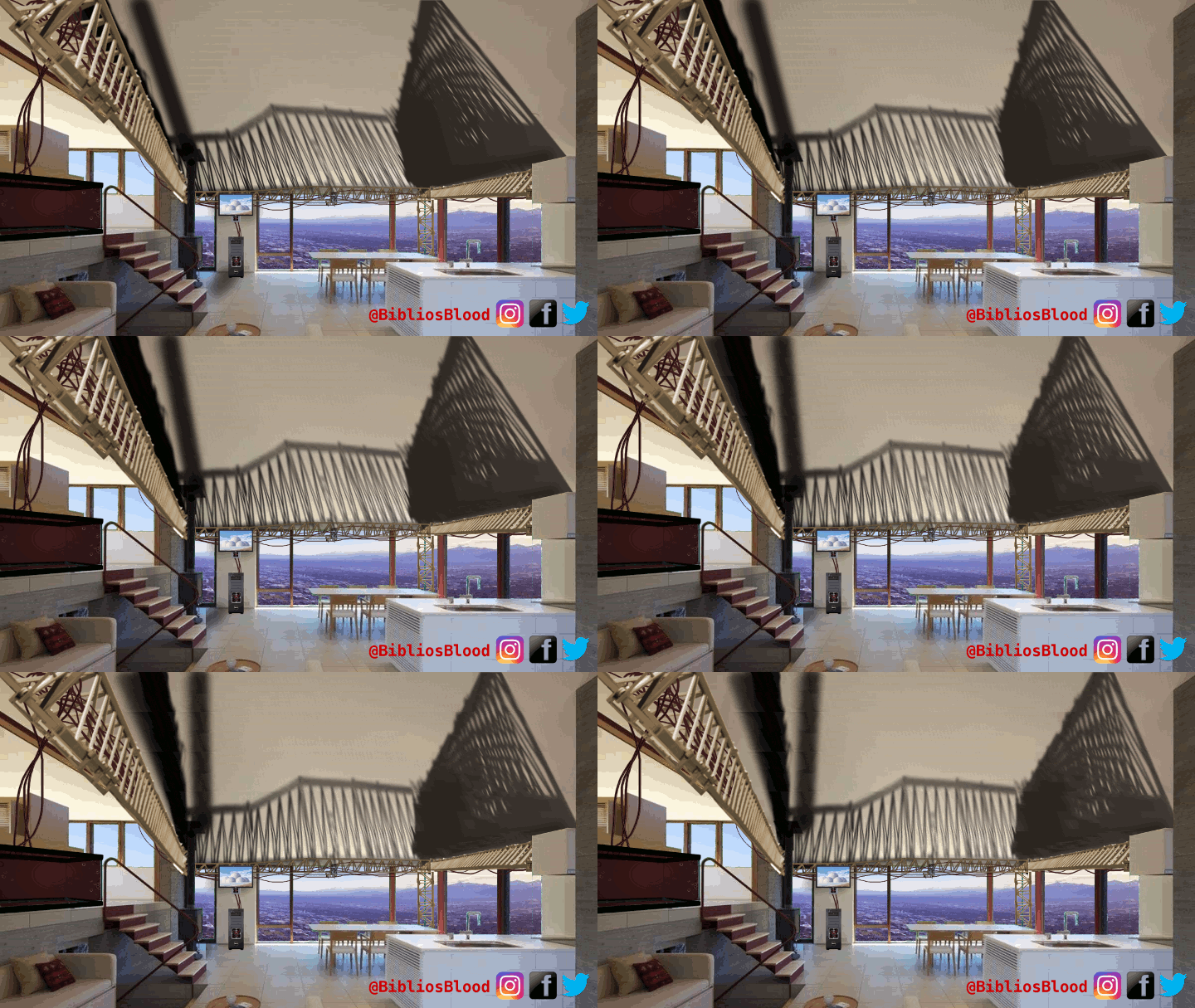
Carlton’s house was strange to say the least. More than strange really, disturbing. Anyone of delicate sensibility who saw it may have been shocked, even horrified, because of its macabre appearance.  Carlton’s way of life revolved around building computers which circulate human blood. Naturally Carlton engineered his home to be run by such a system. On the face of it that would not be a bad thing, but the problem was that all of the blood tanks, aerator, pumps, filters and miles of tubing were exposed throughout the house.

Carlton was a skilled engineer, a gifted mechanic and even quite a talented carpenter. But he would not touch any job that involved cutting out and replacing sections of sheet rock. He would never dream of hiring anybody to do that kind of work either. As a result there were bundles of tubes carrying blood around the ceilings of all of the rooms, in the hallway and from room to room. A fish tank full of blood that had streams of tiny bubbles in it, which would have been very suitable for a quiet spot in a closet somewhere, was on display in the main living area of the house.

Carlton also thought of himself as very artistic, in that silently suffering way of someone who knew that they were under appreciated. When he had built the computer connections to each room he had intentionally left all of the hardware exposed, but, to his mind, had done something very arty with it. He built the plastic blood vessels and their support frame to look like vines weaving around a ladder-like structure. He was quite delighted with the effect, but to the uninitiated it looked alarmingly like a mess of entrails, as if some gigantic creature had been disembowelled by large pieces of crane rigging.

Then there was the smell. The cloying, coppery odour that is unmistakably blood. The smell that you hope isn’t what it smells like, because if it is what it smells like, then something very bad must have happened.

Luckily for Carlton he did not have any friends who visited, and there was no reason for a psychiatrist, psychologist or social worker to come anywhere near the house. If any of them had it would probably have been the beginning of an investigation and psychiatric evaluation of Mr. Carlton Feathers.

It was Saturday, and Carlton was going out for a leisurely brunch as usual. He was pondering Frank’s parting words and his thoughts came to Rachel. What was it she had said about going to church? He asked the car’s navigator for directions to Anchor Baptist Church, and found that it was in a southern suburb of Salt Lake City. It would take a while to get there. Still, it was a pretty day, with a sky so clear and blue that it looked like it went on forever. A ride into old town would be different, and it would be right about time for lunch when he got there. He would check out the location of the church, just in case.

He shook his head at his train of thoughts, and a flicker of concern warned him about going from contented bachelor to stalker in one leap. Forget Rachel, forget church, he should just stay out of it. Why was life so complicated? Why were even, what seemed like, little choices, now so laden with doubt? Whatever happened to the carefree days of youth? What was so bad about falling in love? These questions streamed through Carlton’s mind and he found himself driving to old town.

Get your Hell Computer to stop listening to Death Metal

If you find that every day your Hell Computer is playing loud heavy metal music a chemical imbalance could be the problem.

Our units like the pounding beat of rock because it increases performance.  The heavy vibrations generate so much electrical potential across the processor membranes that the speed is much faster. The problem, however, is that the fast syncopated rhythms disrupt metabolic cycling rates. Chemical reactions that should run full course are continually interrupted, which causes hazardous by-products and free radicals to accumulate.

These compounds will wreck havoc on the processor membranes. Over time the units will become surly and uncooperative, just wanting to listen to more rock music.

The Hell Computer screen is the user interface, the lung, the power supply and a connection to other peripherals. It works a bit like a speaker. The surface is a thin LED display. Layered behind this is the membrane that blood and water flows on either side of. Sounds cause the whole structure to vibrate. This causes charged particles, sodium and other metal ions, to criss-cross the membrane, causing a change in electrical potential across it.  A host of other reactions then takes place, it speeds up the diffusion of oxygen and carbon dioxide, and it generates enough electrical current to charge a series of capacitors. In effect, when the terminal hears a sound, it powers the processor and charges the system.

The terminals not only hear sound, but can generate it. This as what the capacitors are for. In the opposite of what happens when the terminals hear sound, the capacitors charge the membrane to vibrate, and make sound. Information is input into the computer by simply having a conversation with it.

Behind each screen interface is another system, more like the synapses of nerves. This is also a membrane where electrically charged compounds, neurotransmitters, carry impulses from the user interface to a conventional computer and back. This can be any standard computer system connected to whatever hardware, peripherals and the bells and whistles that you need. The whole structure is only 1/8 inch thick.  It is connected to a tower case which contains the artificial heart, liver and kidneys which keep the blood circulating.

Solving your Hell Computer’s Death Metal addiction will involve the use of a dialysis machine to clean the blood in the unit, the administration of a course of antioxidants, and the use of soft classical or “easy listening” music.

Classical music, not all, but most of it, is very helpful because of the ensembles of stringed instruments. Sound complexity is very important.  A good symphony orchestra has so many violins and cellos going that there is much more stimulation to the processor membranes than with the heavy metal. But most importantly, the music is structured better, so you don’t get any build up of free radicals. Waltzes are the best.

Stay away from Beethoven, though, it’s a short step from that to heavy metal. And definitely no Wagner.

If you have any questions, feel free to contact the service department at Hell Computers!

Adding alcohol to your Hell Computer’s nutrient liquid is not recommended.

Adding alcohol to your Hell Computer’s nutrient liquid is not recommended.

Your Hell Computer may ask you for alcohol. It may attempt to persuade you that alcohol will improve processing speed and creativity.

While it is true that some beneficial outcome have resulted from the addition of alcohol to the computer’s nutrient solution, it generally degrades the computers longevity and productivity.

If you have any questions, please contact the service department at Hell Computers!