January 13th

Water of Gall

Why do we sit still? assemble yourselves, and let us enter into the defenced cities, and let us be silent there: for the LORD our God hath put us to silence, and given us water of gall to drink, because we have sinned against the LORD.

( Jeremiah 8:14 ) KJV

Water is the physical medium in which cause and effect are linked. Water is the essence of free will. God gave us free will and we used it. We are now living through the consequences.

Read more…

Tares Among Wheat

Another parable put he forth unto them, saying, The kingdom of heaven is likened unto a man which sowed good seed in his field: But while men slept, his enemy came and sowed tares among the wheat, and went his way.

(Matthew 13:24-25) KJV

A lot of things about God start to make sense when you know the purpose of creation. In particular the uneasy feeling you may get with the idea of a kind and loving God casting sinners into hell.

Continue reading “Tares Among Wheat”

Why Hast Thou Forsaken Me?

And about the ninth hour Jesus cried with a loud voice, saying, Eli, Eli, lama sabachthani? that is to say, My God, my God, why hast thou forsaken me? ( Matthew 27:46 )

Jesus’ sacrificial death on the cross was the symbolic fulfillment of the sacrifice that was made on the first day when God said, Let there be light, and caused formerly pure water to become corrupted with the general messiness that is necessary for life to form.

Continue reading “Why Hast Thou Forsaken Me?”

The Word is Water

In the beginning God created the heaven and the earth. And the earth was without form, and void; and darkness was upon the face of the deep. And the Spirit of God moved upon the face of the waters.

(Genesis 1:1-2) KJV

We (that’s me and the Holy spirit) deduce the true nature of water. It’s safe to say, which is to say it’s Biblically accurate, that water existed before God began the work of creation.

Continue reading “The Word is Water”

Water into Wine

On the third day there was a wedding at Cana in Galilee, and the mother of Jesus was there. Jesus also was invited to the wedding with his disciples. When the wine ran out, the mother of Jesus said to him, “They have no wine.” And Jesus said to her, “Woman, what does this have to do with me? My hour has not yet come.” His mother said to the servants, “Do whatever he tells you.”

Now there were six stone water jars there for the Jewish rites of purification, each holding twenty or thirty gallons. Jesus said to the servants, “Fill the jars with water.” And they filled them up to the brim. And he said to them, “Now draw some out and take it to the master of the feast.” So they took it. When the master of the feast tasted the water now become wine, and did not know where it came from (though the servants who had drawn the water knew), the master of the feast called the bridegroom and said to him, “Everyone serves the good wine first, and when people have drunk freely, then the poor wine. But you have kept the good wine until now.” This, the first of his signs, Jesus did at Cana in Galilee, and manifested his glory. And his disciples believed in him.

(John 2:1-11) ESV

The first act that God performed in the Genesis account of creation was nucleosynthesis. It would appear that the first recorded public miracle of Jesus was also nucleosynthesis, when Jesus turned water in to wine.

Continue reading “Water into Wine”

Water

Lift up your staff, and stretch out your hand over the sea and divide it, that the people of Israel may go through the sea on dry ground.

(Exodus 14:16) ESV

If you’ve ever studied biology, biochemistry or chemistry you may have noticed that practically all introductory textbooks in those subjects have a chapter on water at or near the beginning. It’s obligatory.

Continue reading “Water”

Is the Bible Literal or Figurative?

But whosoever drinketh of the water that I shall give him shall never thirst; but the water that I shall give him shall be in him a well of water springing up into everlasting life.

(John 4:14) KJV

What is this living water? And if Jesus said that there is such a thing as living water, does that mean that there is dead water? These are the kinds of things that I contemplate, it helps to ease my mind. This puts me in good company I believe, as Isaiah seems to have thought the same thing.

Thou wilt keep him in perfect peace, whose mind is stayed on thee: because he trusteth in thee.

(Isaiah 26:3) KJV

One of the things that I truly love about the Bible is the way that it explains itself. When you find a passage, like this one of the conversation that Jesus had with the Samaritan woman, and it raises an intriguing idea like that of living water, diligent study will find out the other parts of the Bible that help to bring you to its full understanding. So if the living water wells up in the person who believes in Jesus Christ, then what? What does it do? We turn to another passage in the Gospel of John for help understanding it.

In the last day, that great day of the feast, Jesus stood and cried, saying, If any man thirst, let him come unto me, and drink. He that believeth on me, as the scripture hath said, out of his belly shall flow rivers of living water.

(John 7:37-38) KJV

So now I know that the stream of living water will come out of my belly. Now, technically speaking, there isn’t actually a stream of water coming out of my belly, and so therefore this is a figure of speech that is being used as a picture of something else. The passage goes on to explain this too, and what it tells us is that the indwelling of the Holy Spirit in the believer enables the believer to share the gospel of Jesus Christ like a river of living water. However, the practical manifestation of this is not actual water coming out of an actual belly, but an out-flowing of the Spirit of God through words and deeds.

There is a point to this, trust me.

I believe that the Bible gives us an accurate account of the physics of creation, the history of the world to the present time, and what is going to take place in the future. Because of this some people ask me if I think the Bible should be taken literally. Unfortunately there is not a simple yes/no answer. I believe that the literal parts should be taken literally, but the figurative parts should not. So how do we know what parts of the Bible are literal and which are figurative?

We have to examine the context of the passage to see if it is referring to or describing an actual physical phenomenon. I know that Jesus in today’s passage is speaking figuratively because there isn’t a stream of water coming out of my belly. I also know that when God said, “Let there be light,” the physical conditions necessary to cause light to appear were present, and so this is literal.


We can test the Bible against itself, and we can test the Bible against physical evidence and scientific knowledge. This is also how we can test whether scientific knowledge is real or imaginary.


Is science describing something that, interpreted correctly, can be accounted for by the Bible? This again should cause us to examine the evidence carefully, not what science says about the evidence, but we should be examining the evidence for ourselves.


Deep Water

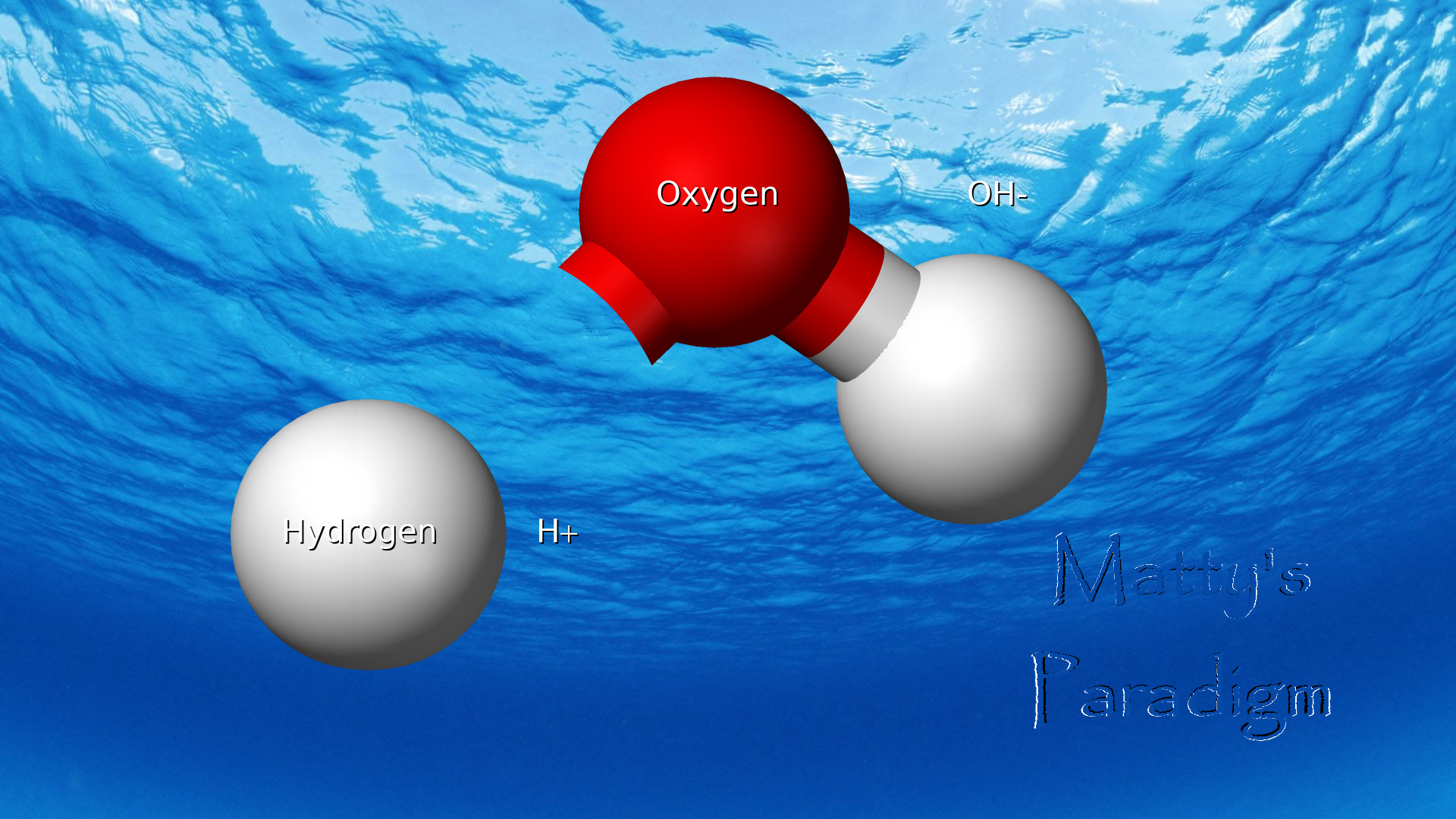
Stylalized ball-and-stick water molecule

The purpose in a man’s heart is like deep water, but a man of understanding will draw it out.

(Proverbs 20:5) ESV

Before moving on to the physics of what God did with the waters of the deep, we need to see if there’s anything to be learned from the Bible about what water actually IS.

Continue reading “Deep Water”