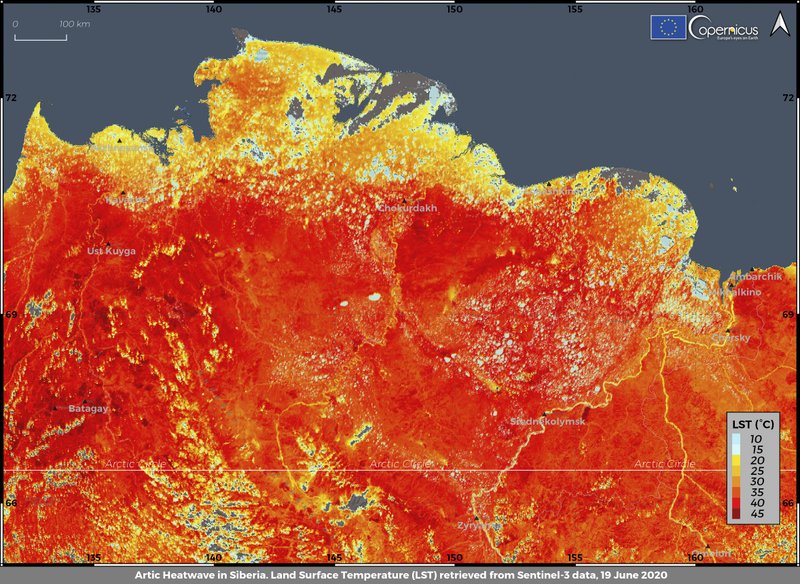
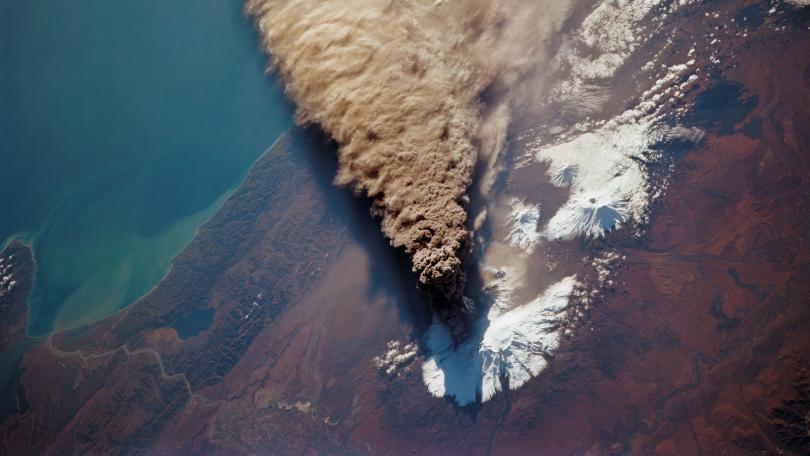
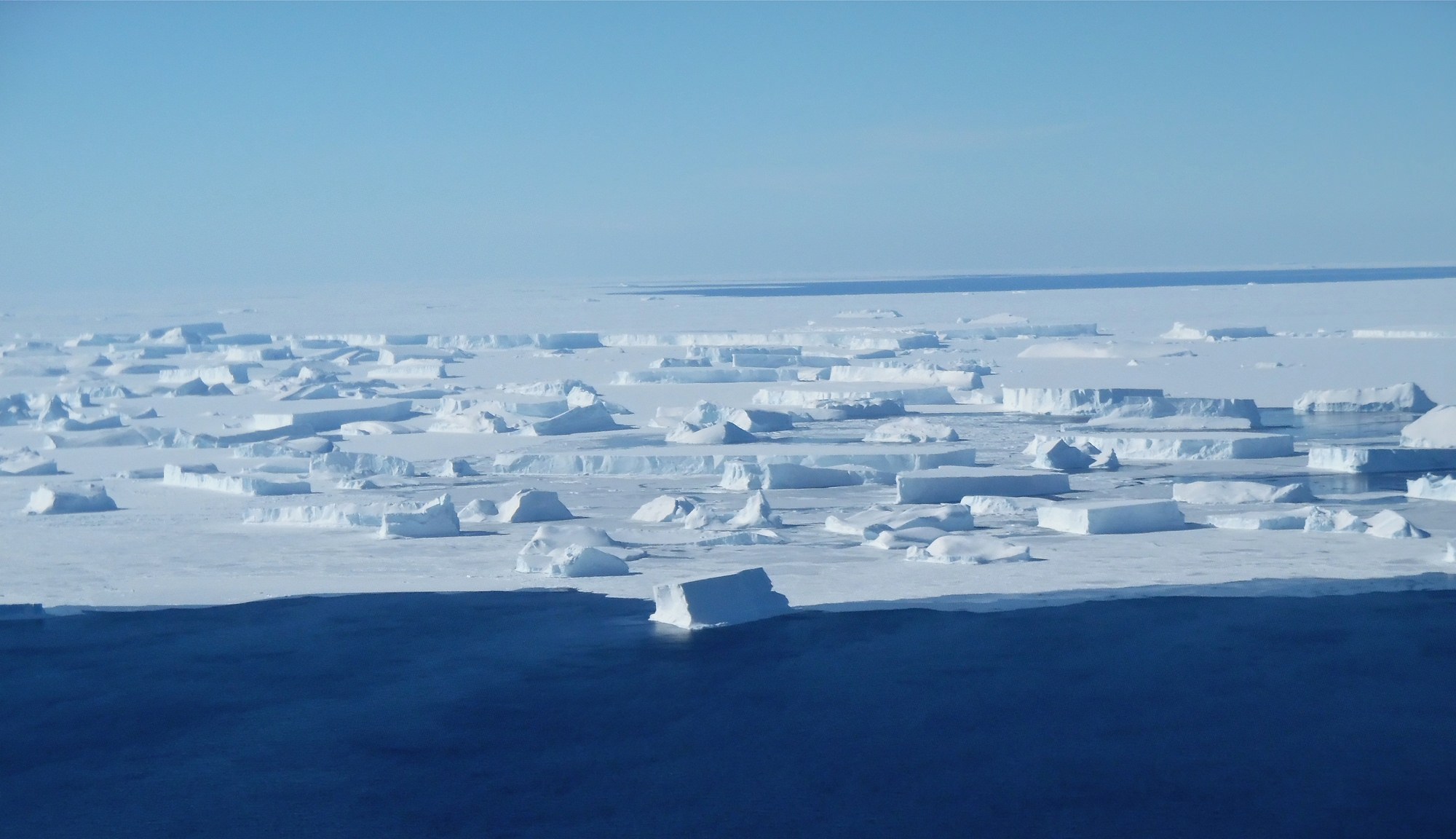
The Arctic is on fire: Siberian heat wave alarms scientists

Anytime it feels normal or unseasonably cool in the temperate zones we have to wonder: if global warming is real, where is all the heat?

We’re having a very normal and pleasant spring/early summer in the Southeastern US. That’s not the story in the Arctic.

The ice is gone so there’s nothing to ameliorate the effect of the expansion of hell on climate.

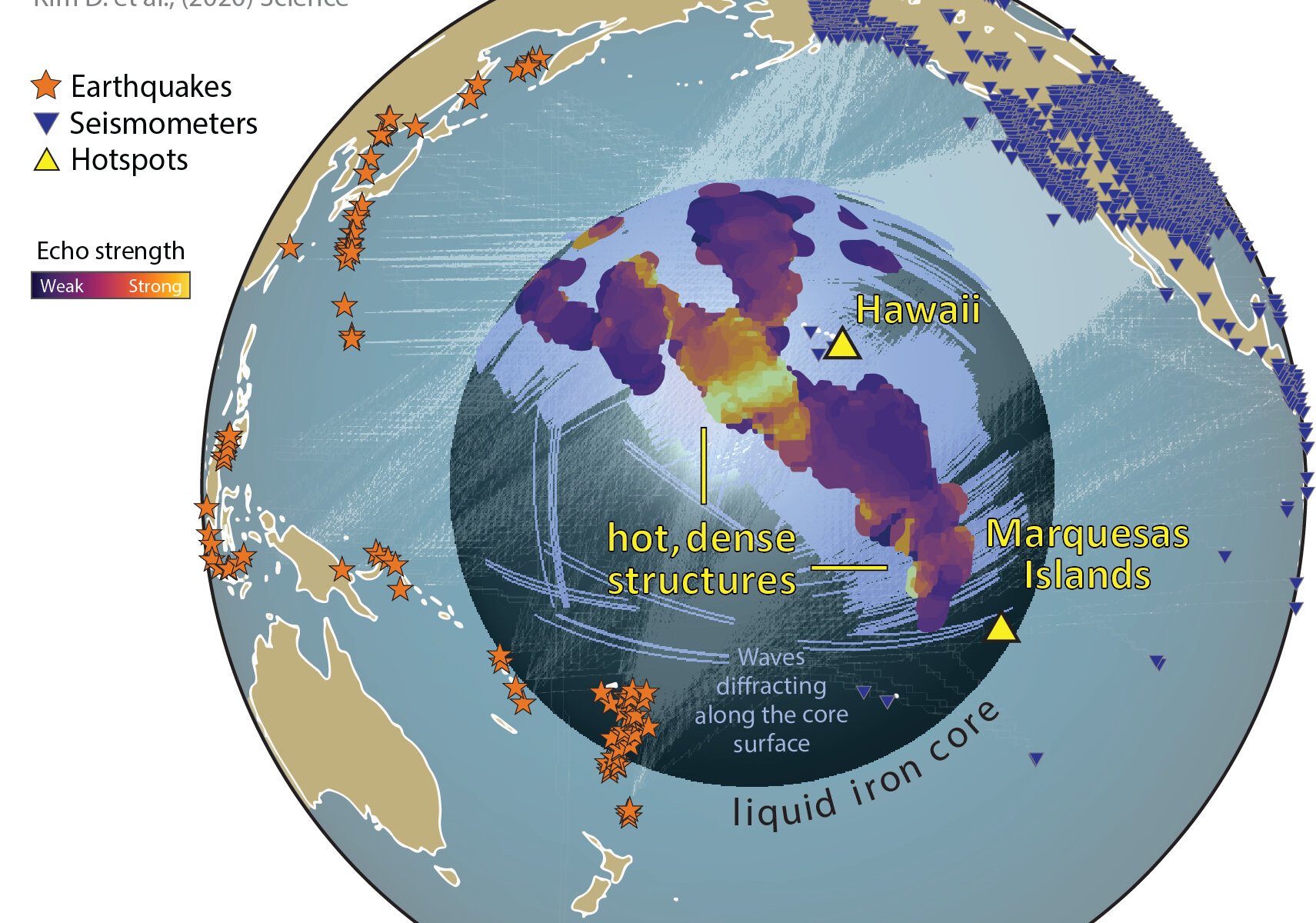
Scientists detect unexpected widespread structures near Earth’s core

This is a direct copy of a SciPop or news article preserved here because things on the internet have a bad habit of disappearing when you try to find them again. Full credit is given to the original authors and the source.

– Matty

University of Maryland geophysicists analyzed thousands of recordings of seismic waves, sound waves traveling through the Earth, to identify echoes from the boundary between Earth’s molten core and the solid mantle layer above it. The echoes revealed more widespread, heterogenous structures—areas of unusually dense, hot rock—at the core-mantle boundary than previously known.

Continue reading “Scientists detect unexpected widespread structures near Earth’s core”

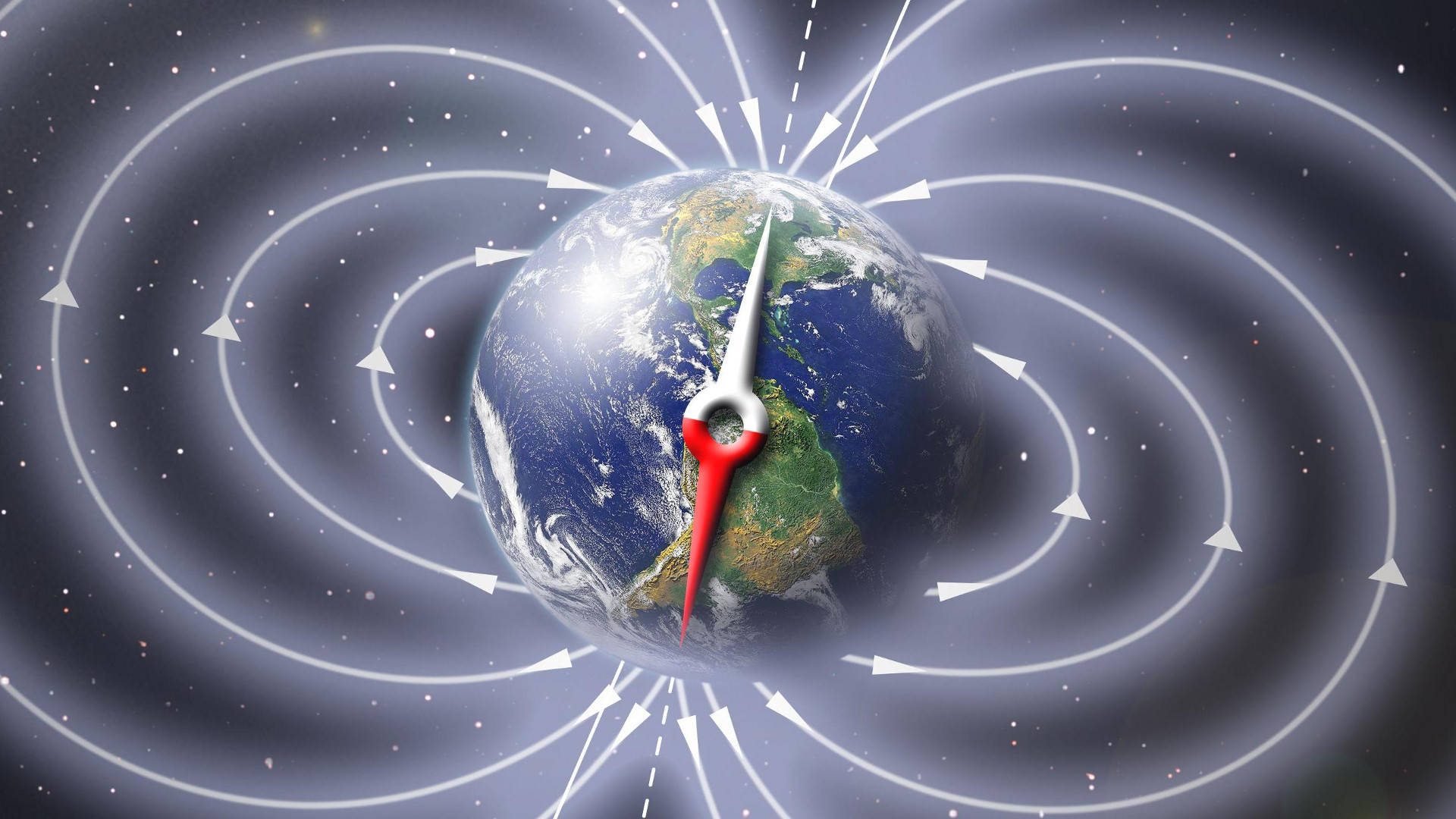
Ancient Microscopic Mineral Excavation Deepens Mystery of the Origins of Earth’s Magnetic Field

  • By Jennifer Chu, Massachusetts Institute of Technology
  • April 8, 2020
  • Original article.

This is a direct copy of a SciPop or news article preserved here because things on the internet have a bad habit of disappearing when you try to find them again. Full credit is given to the original authors and the source.

– Matty

The existence of a magnetic field beyond 3.5 billion years ago is still up for debate.

Microscopic minerals excavated from an ancient outcrop of Jack Hills, in Western Australia, have been the subject of intense geological study, as they seem to bear traces of the Earth’s magnetic field reaching as far back as 4.2 billion years ago. That’s almost 1 billion years earlier than when the magnetic field was previously thought to originate, and nearly back to the time when the planet itself was formed.

Continue reading “Ancient Microscopic Mineral Excavation Deepens Mystery of the Origins of Earth’s Magnetic Field”

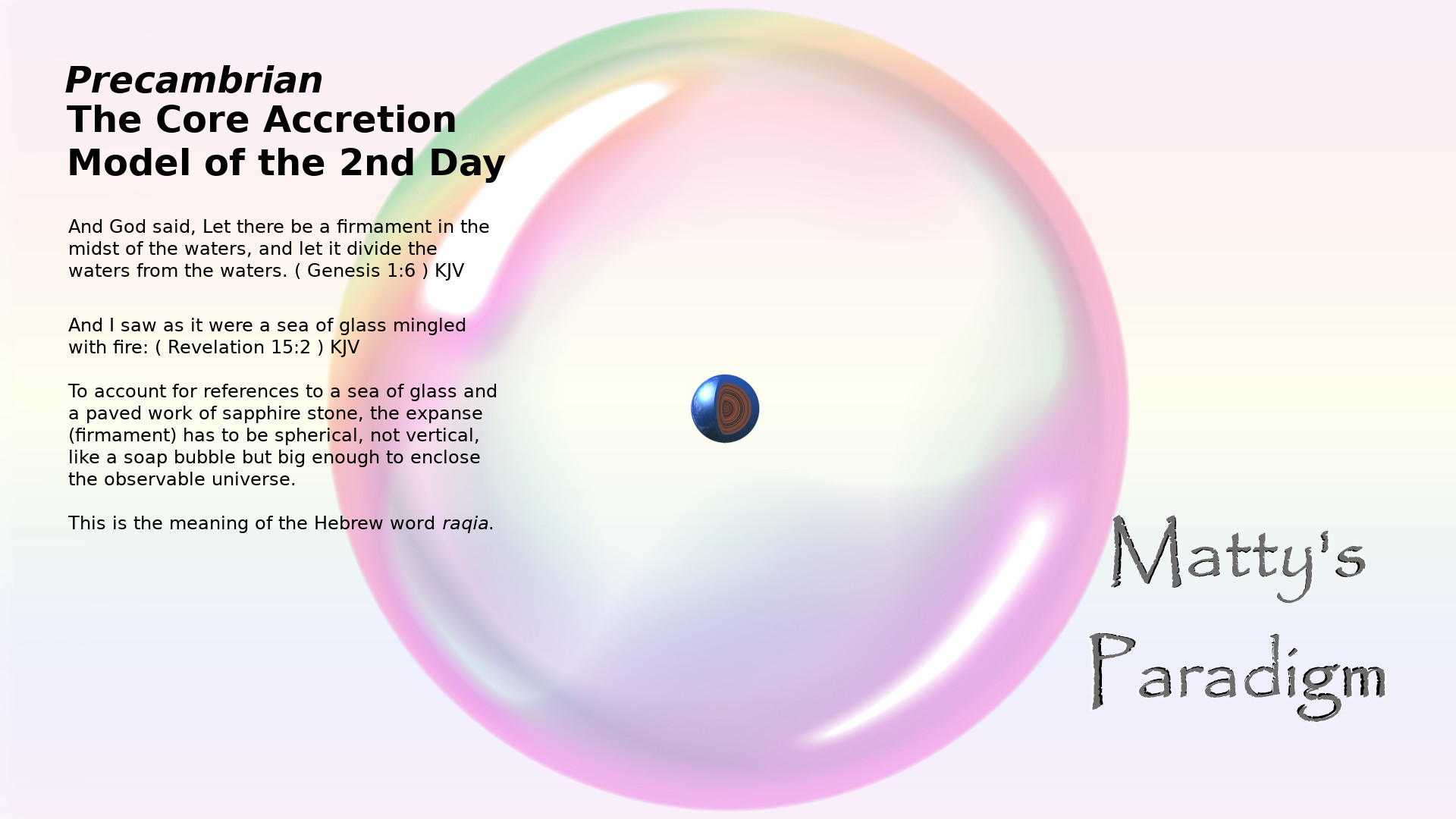
Expanding universe: We may be in a vast bubble

And they that be wise shall shine as the brightness of the firmament; and they that turn many to righteousness as the stars for ever and ever. (Daniel 12:3)

This is a direct copy of a SciPop or news article preserved here because things on the internet have a bad habit of disappearing when you try to find them again. Full credit is given to the original authors and the source.

– Matty

SciPop is getting up to speed on the idea that there’s a sphere of rigid crystal on the edge of space: the firmament.

Summary

The few thousand galaxies closest to us move in a vast ‘bubble’ that is 250 million light years in diameter, where the average density of matter is half as large as for the rest of the universe. This is the hypothesis put forward by a theoretical physicist to solve a conundrum that has been splitting the scientific community for a decade: at what speed is the universe expanding?

Continue reading “Expanding universe: We may be in a vast bubble”

Ask Ethan: It’s Absurd To Think Dark Matter Might Be Made Of Hexaquarks, Right?

This is a direct copy of a SciPop or news article preserved here because things on the internet have a bad habit of disappearing when you try to find them again. Full credit is given to the original authors and the source.

– Matty

It’s an undeniable scientific fact that dark matter must exist in order to explain the full suite of observations we have about the Universe. Despite all that we know about it, however, we have yet to identify what particle(s) actually compose it. Every single direct detection experiment we’ve ever concocted has come up empty. Although a plethora of dark matter candidates have been proposed, there’s no robust evidence in support of any of them. A new idea has been making waves this month as a dark matter candidate: a specific type of particle known as a hexaquark. Is this a viable dark matter candidate? Patreon supporter BenHead wants to know, asking:

Continue reading “Ask Ethan: It’s Absurd To Think Dark Matter Might Be Made Of Hexaquarks, Right?”

3 billion-year-old Earth had water everywhere, but not one continent, study suggests

This is a direct copy of a SciPop or news article preserved here because things on the internet have a bad habit of disappearing when you try to find them again. Full credit is given to the original authors and the source.

– Matty

Chemicals in rocks hinted at a world without continents.

What did Earth look like 3.2 billion years ago? New evidence suggests the planet was covered by a vast ocean and had no continents at all.

Continue reading “3 billion-year-old Earth had water everywhere, but not one continent, study suggests”

NASA detects glowing ‘hydrogen wall’ at edge of our solar system

This is a direct copy of a SciPop or news article preserved here because things on the internet have a bad habit of disappearing when you try to find them again. Full credit is given to the original authors and the source.

– Matty

Nearly 4 billion miles from Earth, NASA’s New Horizons spacecraft has detected evidence of a glowing wall of hydrogen at the edge of the solar system. Writing in the journal Geophysical Research Letters, the New Horizons Team says the discovery may help prove the existence of a region where the sun’s solar wind and interstellar forces interact.

Continue reading “NASA detects glowing ‘hydrogen wall’ at edge of our solar system”

Apocalyptic volcanic super eruption that could DESTROY civilisation is much closer than we thought, say experts

By Joseph Pinkstone For Mailonline

Original Article

  • An eruption would be capable of returning humanity to a pre-civilisation state
  • The mammoth explosions could release over 1,000 gigatons of ash into the air
  • Super eruptions may occur as regularly as once every 17,000 years
  • The window between super-eruptions could be as short as every 5,200 years

The next volcanic ‘super eruption’ with the power to return humanity to a pre-civilised state could be due much sooner than previously thought.

Experts have previously predicted that the massive eruptions are likely to occur roughly once every 45,000 to 714,000 years.

This assessment, made in 2004, is now being challenged by new findings which say that the most likely time frame is just 17,000 years.

Researchers also estimate the eruptions could happen as often as once every 5,200 years.

Geological records studied by researchers from the University of Bristol shows that the most recent volcanic super-eruptions occurred on Earth between 20,000 and 30,000 years ago.

They looked at a database of eruptions, called the LaMEVE database, to make the findings.

By using statistical analysis they discovered that, while large eruptions of around 100 million metric tonnes are less frequent than previously thought, the very largest eruptions of 1,000 gigatonnes or more are much more frequent. 

Jonathan Rougier, professor of statistical science at the university, said: ‘According to geological records, the two most recent super-eruptions were between 20,000 and 30,000 years ago. 

‘On balance, we have been slightly lucky not to experience any super-eruptions since then.

‘It is important to appreciate that the absence of super-eruptions in the last 20,000 years does not imply that one is overdue.

‘What we can say is that volcanoes are more threatening to our civilization than previously thought.

‘The technology and techniques used to determine the average time between super-eruptions can also be used to change the approach of seismologists looking at earthquakes.’ 

The full findings of the study were published in the journal Earth and Planetary Science Letters.  

In human history there have been thousands of sizeable eruptions, but not a genuine super eruption, at least not yet.


Volcano Super-Eruptions: How Long Before The Next One Wipes Out Civilization?

By Elana Glowatz

Earth might be due for its next volcanic super-eruption, an event that would devastate the planet and wipe out civilization.

A team of scientists looked into the average time between such monstrous eruptions of volcanoes and found that these catastrophic explosions happen more often than previous scientific estimates would indicate, according to a study in the journal Earth and Planetary Science Letters. The new research put the schedule at roughly 17,000 years after the last one, although it said super-eruptions can occur as quickly as 5,200 years or as late as 48,000 years after its predecessor.

“Volcanoes pose a larger risk to human civilization than previously thought,” the study says.

The University of Bristol explained that geological evidence shows the last two super-eruptions occurred between 20,000 and 30,000 years ago.

“On balance, we have been slightly lucky not to experience any super-eruptions since then,” researcher Jonathan Rougier said in the university statement. “But it is important to appreciate that the absence of super-eruptions in the last 20,000 years does not imply that one is overdue. Nature is not that regular.”

Previous scientific estimates have calculated a range of 45,000 to 714,000 years between eruptions.

A volcanic explosion is classified as a super-eruption when it spews more than 1,000 gigatons of material into the air and onto the planet’s surface. That’s equal to 2.2 quadrillion pounds of ash, gas and rock. It’s “enough to blanket an entire continent with volcanic ash, and change global weather patterns for decades,” the university explained. “One recent assessment described them as capable of returning humanity to a pre-civilization state.”

The new timeframe for super-eruptions comes as the public, bracing for a large eruption, has been watching Mount Agung in Indonesia spit out ash and molten rock for the last few days and as scientists have warned that glaciers melting due to climate change could change the pressure on Iceland’s icy volcanoes and cause them to explode.

Activity at Mount Agung had changed by Wednesday. While the volcano had previously been upgraded to a red alert level within the Volcano Observatory Notice for Aviation, or VONA for short, it was brought back down to an orange level alert based on information from the Agung Volcano Observatory. Emissions of ash were continuing, possibly reaching as high as 16,500 feet into the air and blowing toward the southeast. There is also seismic activity, including tremors.

When volcanoes erupt, they can kill people by spitting out projectiles or triggering tsunamis, but many die in the dark clouds of rock, ash and gas known as pyroclastic flows, which move faster than people can run or drive to flee the natural disaster.

Let’s All Calm Down and Make Sense of That Antarctic Mantle Plume

This is a direct copy of a SciPop or news article preserved here because things on the internet have a bad habit of disappearing when you try to find them again. Full credit is given to the original authors and the source.

– Matty

Three decades ago, scientists began to study the possibility that there was a plume of hot rock coming up from the mantle, heating parts of Western Antarctica. Back in September, researchers published results of a model showing how such a plume might affect the Antarctic ice sheet. Today, these headlines started to appear:

Continue reading “Let’s All Calm Down and Make Sense of That Antarctic Mantle Plume”