Earth’s mantle and crust are in a fiery battle to the death … of supercontinents

By Stephanie Pappas | LiveScience

Original Article

Earth’s hot, gooey center and its cold, hard outer shell are both responsible for the creeping (and sometimes catastrophic) movement of tectonic plates. But now new research reveals an intriguing balance of power — the oozing mantle creates supercontinents while the crust tears them apart.

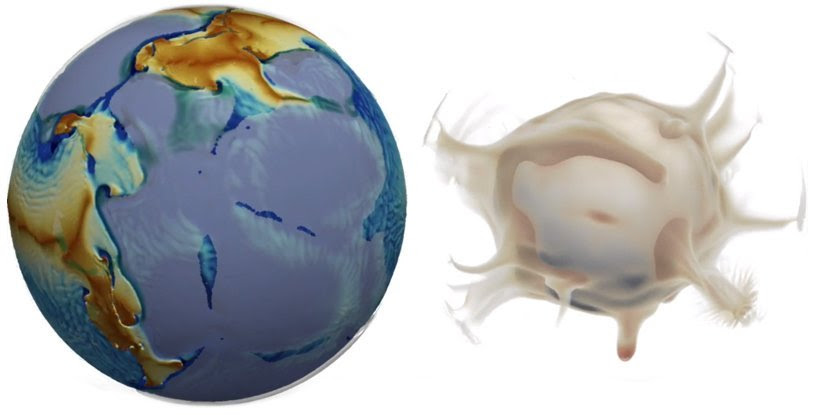
To come to this conclusion about the process of plate tectonics, the scientists created a new computer model of Earth with the crust and mantle considered as one seamless system. Over time, about 60% of tectonic movement at the surface of this virtual planet was driven by fairly shallow forces — within the first 62 miles (100 kilometers) of the surface. The deep, churning convection of the mantle drove the rest. The mantle became particularly important when the continents got pushed together to form supercontinents, while the shallow forces dominated when supercontinents broke apart in the model.

This “virtual Earth” is the first computer model that “views” the crust and mantle as an interconnected, dynamic system, the researchers reported Oct. 30 in the journal Science Advances. Previously, researchers would make models of heat-driven convection in the mantle that matched observations of the real mantle pretty well, but didn’t mimic the crust. And models of the plate tectonics in the crust could predict real-world observations of how these plates move, but didn’t mesh well with observations of the mantle. Clearly, something was missing in the way that models put the two systems together.

Crust plus mantle

Every grade-school model of Earth’s interior shows a thin layer of crust riding atop the hot, deformable layer of the mantle. This simplified model might give the impression that the crust is simply surfing the mantle, being moved this way and that by the inexplicable currents below.

But that isn’t quite right. Earth scientists have long known that the crust and mantle are part of the same system; they’re inescapably linked. That understanding has raised the question of whether forces at the surface — such as the subduction of one chunk of crust under another — or forces deep in the mantle are primarily driving the movement of the plates that make up the crust. The answer, Coltice and his colleagues found, is that the question is ill-posed. That’s because the two layers are so intertwined, they both make a contribution.

Over the past two decades, Coltice told Live Science, researchers have been working toward computer models that could represent the crust-mantle interactions realistically. In the early 2000s, some scientists developed models of heat-driven movement (convection) in the mantle that naturally gave rise to something that looked like plate tectonics on the surface. But those models were labor-intensive and didn’t get a lot of follow-up work, Coltice said.

Coltice and his colleagues worked for eight years on their new version of the models. Just running the simulation alone took 9 months.

Building a model Earth

Coltice and his team had to first create a virtual Earth, complete with realistic parameters: everything from heat flow to the size of tectonic plates to the length of time it typically takes for supercontinents to form and come apart.

There are many ways in which the model isn’t a perfect mimic of Earth, Coltice said. For example, the program doesn’t keep track of previous rock deformation, so rocks that have deformed before aren’t prone to deform more easily in the future in their model, as might be the case in real life. But the model still produced a realistic-looking virtual planet, complete with subduction zonescontinental drift and oceanic ridges and trenches.

Beyond showing that mantle forces dominate when continents come together, the researchers found that hot columns of magma called mantle plumes are not the main reason that continents break apart. Subduction zones, where one chunk of crust is forced under another, are the drivers of continental break-up, Coltice said. Mantle plumes come into play later. Pre-existing rising plumes may reach surface rocks that have been weakened by the forces created at subduction zones. They then insinuate themselves into these weaker spots, making it more likely for the supercontinent to rift at that location.

The next step, Coltice said, is to bridge the model and the real world with observations. In the future, he said, the model could be used to explore everything from major volcanism events to how plate boundaries form to how the mantle moves around in relation to Earth’s rotation.
We May Have Been Wrong About The Source of Earth’s Crust Movements, Study Reveals

MIKE MCRAE 1 NOV 2019

As solid as our planet’s crust might feel beneath our feet, we’re literally surfing mountains across a churning sea of hot minerals. For years, researchers have struggled to understand what drives the complex movements of Earth’s surface layers; now, we might be a little bit closer to the answer.  

To determine whether drifting tectonic plates stir the mantle, or the mantle’s currents are what moves the crust, scientists have now stepped back to look at the problem in a different light, treating it all as a single system. And it’s looking complicated.

An international team from École Normale Supérieure and the Université Grenoble Alpes in France, and the University of Texas at Austin in the US has come up with fresh new 3D models of an Earth-like world, complete with equations that took a supercomputer nine months to solve.

The results suggest we’ve been looking at this question the wrong way this whole time. Forget asking whether it’s the sinking of a cooling crust that pushes against the mantle, or vice-versa – both play key roles in deforming a planet’s surface as it ages.

We’ve imagined for the better part of a century that Earth’s outer coat slips around like a loose suit of armour, its plates clanking together in some parts and pulling apart in others.

Early attempts to describe such a theory of plate tectonics suggested this movement could be largely the result of convection currents in the fluid of hot, pressurised rock we call the mantle as it rises, cools, and sinks.

Since the 1950s we’ve learned a great deal about how the surface sinks in some parts and rises in others, churning out fresh new rock while melting old crust in a constant conveyer belt of destruction.

Models attempting to describe this process have inevitably run into problems trying to match the dragging and friction forces of grinding plates with the dynamics of a flowing mantle deep below.

“Results point to a prevalence of slab pull force over mantle drag at the base of plates, which suggests that tectonic plates drive mantle flow,” the researchers explain in their report.

The picture we get now suggests we’re not surfing on a flowing mantle, but sailing, with our continental ‘sailboats’ whipping up whirlpools in the molten sea below.

If these models suggest the movements of tectonic plates create currents in the mantle, we find ourselves with a chicken-and-egg conundrum of asking how currents in the mantle might push around the plates in the first place.

Metaphors of boats and suits of armour have their limits. To really understand the complex interactions between the crust and mantle we need to stop seeing them as distinct materials, argue the researchers, and come up with better descriptions.

The descriptions the team arrived at allowed them to recreate a planet like ours and watch it evolve over its first 1.5 billion years. By looking at the mantle and crust as gradients of heat and pressure, they could better understand how they each changed.

Their Earth twin revealed a rather complex dance of continent formation, drifting, and mantle flow that shifted over millions of years.

About 20 to 40 percent of the surface, they found, is indeed pulled along by the flowing guts of the planet. But that means as much as 60 percent of the surface drags on the mantle.

These patterns also change over time. The thicker chunks of continental plates are dragged along by deeper currents, until they crunch together into a supercontinent. As the supercontinent fractures and breaks apart, the sinking of plates in turn causes the mantle to flow.

The models suggest there’s a lot more going on down there than we can make out from the surface, which has made it challenging to imagine just how the mantle’s currents and the crust interact.

So much of what happens deep beneath the surface has grave repercussions for life on the surface.

From earthquakes to volcanoes, to the protective magnetic cage shielding us from blasts of high energy particles from the Sun, we’re at the mercy of geology we’re still working out.

This research was published in Science Advances.

Claim CF210: Constancy of Radioactive Decay

This is a direct copy of a SciPop or news article preserved here because things on the internet have a bad habit of disappearing when you try to find them again. Full credit is given to the original authors and the source.

– Matty

Radiometric dating assumes that radioisotope decay rates are constant, but this assumption is not supported. All processes in nature vary according to different factors, and we should not expect radioactivity to be different.

Continue reading “Claim CF210: Constancy of Radioactive Decay”

Planet is entering ‘new climate regime’ with ‘extraordinary’ heat waves intensified by global warming, study says

By Jason Samenow June 11

Original Article

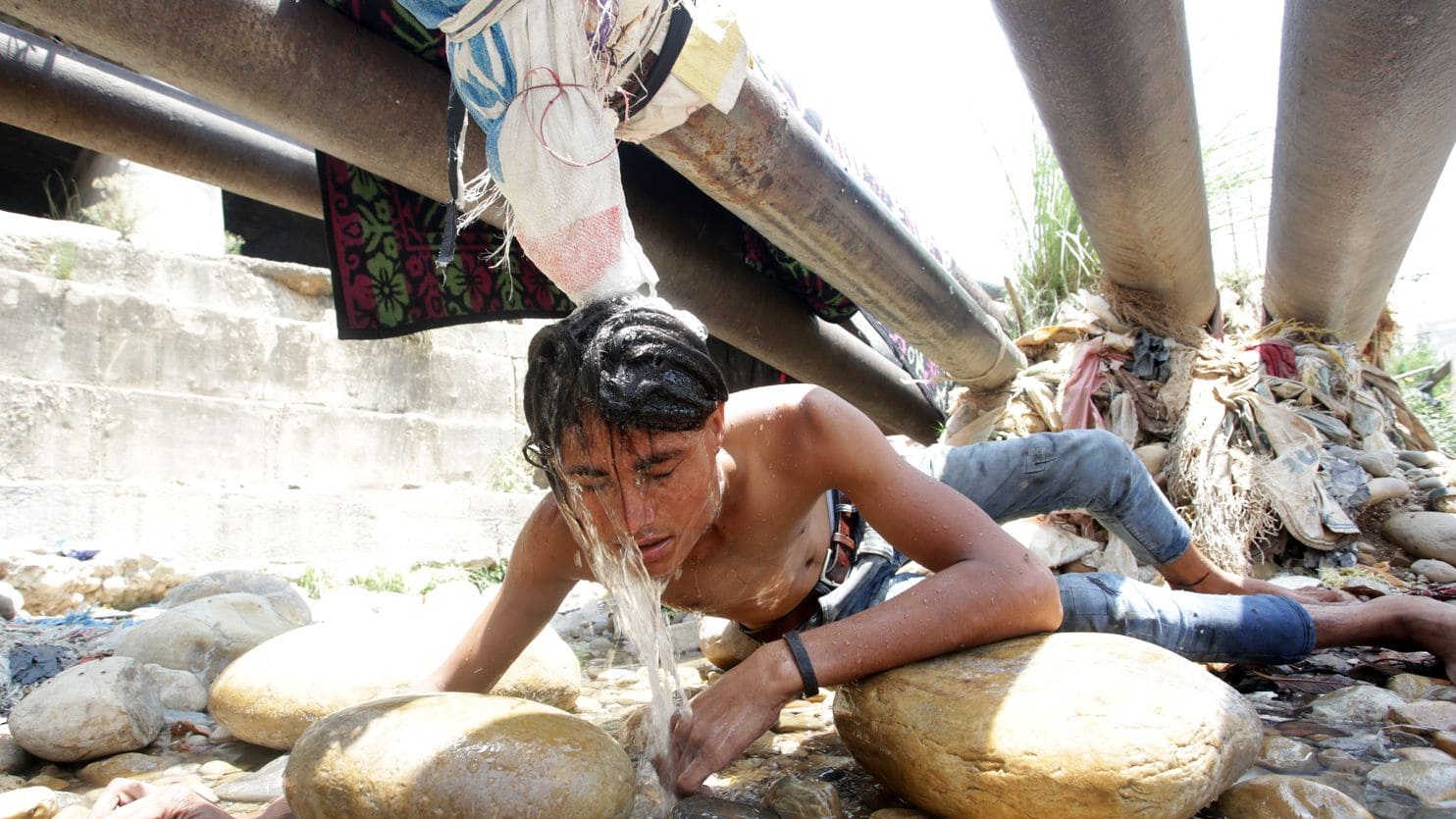
Simultaneous heat waves scorched land areas all over the Northern Hemisphere last summer, killing hundreds and hospitalizing thousands while intensifying destructive and deadly wildfires.

A study published this week in the journal Earth’s Future concludes that this heat wave epidemic “would not have occurred without human-induced climate change.”

The alarming part? There are signs record-setting heat waves are beginning anew this summer — signaling, perhaps, that these exceptional and widespread heat spells are now the norm.

In the past few days, blistering, abnormal heat has afflicted several parts of the Northern Hemisphere, including major population centers.

New Delhi, India’s capital, soared to 118.4 degrees (48 Celsius) Monday, its highest temperature ever recorded in June. Some parts of India have seen the mercury eclipse 122 degrees (50 Celsius) in recent days, not far off the country’s all-time high.

[‘It is horrid’: India roasts under heat wave with temperatures above 120 degrees]

On the other side of the hemisphere, the temperature in San Francisco shot up to 100 degrees (37.8 Celsius) Monday, its highest temperatures ever recorded in the months of June, July or August, or this early in the calendar year.

[San Francisco soars to 100 degrees as record heat wave torches California and the West Coast]

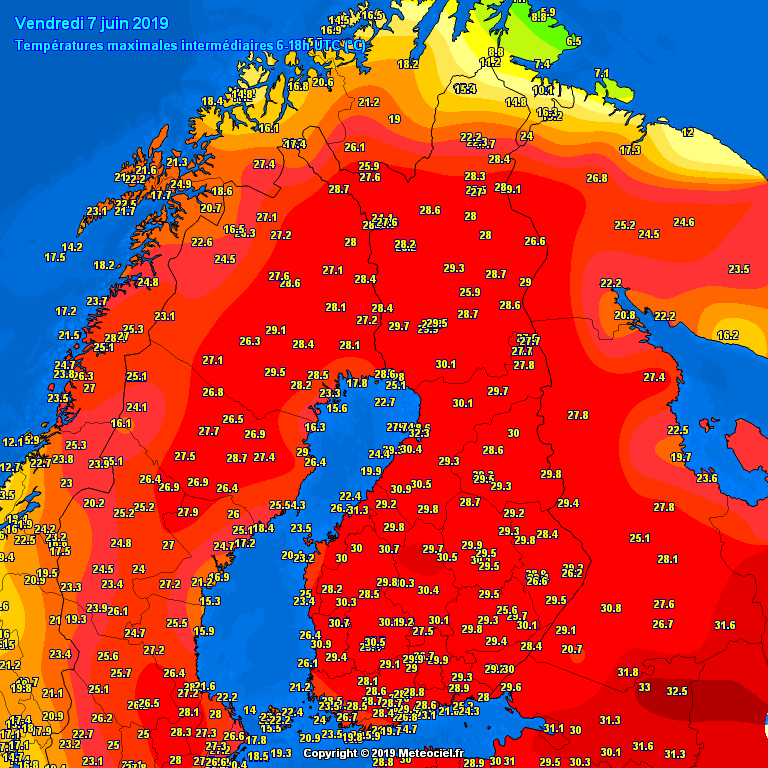
Heat spread unusually far north, even up into the northern reaches of Scandinavia. Mika Rantanen, a meteorologist at the University of Helsinki, tweeted last Friday that there “are no known cases in Finland’s climate history when it has been hotter than now so early in the summer.” Temperatures above 86 degrees (30 Celsius) penetrated inside the Arctic Circle, he noted.

A heat wave in Japan at the end of the May set scores of records, including the country’s highest temperature ever recorded in the month (103.1 degrees, or 39.5 Celsius). The oppressive conditions were blamed for five deaths and nearly 600 hospitalizations.

While some scientists hesitate to attribute individual heat spells to climate change, Daniel Swain, a climate scientist at the University of California at Los Angeles, tweeted that his research suggests that we’ve “reached the point where a majority (perhaps a vast majority) of unprecedented extreme heat events globally have a detectable human influence.”

[It was 84 degrees near the Arctic Ocean as carbon dioxide hit its highest level in human history]

Last summer, exceptional heat affected 22 percent of the populated and agricultural areas of the Northern Hemisphere between the months of May and July, the Earth’s Future study said. The contiguous United States witnessed its hottest May on record, California endured its hottest July and numerous European cities notched their highest temperatures ever recorded, while cities in Asia, the Middle East and Africa also established new heat milestones.

[Red hot planet: Last summer’s punishing and historic heat in 7 maps and charts]

(Robert Rohde/Berkeley Earth)

It remains to be seen whether heat waves this summer become as pervasive and intense as last summer. That said, the Earth’s Future study concluded we’ve entered “a new climate regime,” featuring “extraordinary” heat waves on a scale and ferocity not seen before.

The study’s modeling analysis, conducted by researchers in Switzerland and the United Kingdom, found heat events like last summer’s do “not occur in historical simulations” and “were unprecedented prior to 2010.”

As the climate warms, the study projects that the area affected by heat waves like last summer’s will increase 16 percent for every 1.8 degrees (1 Celsius) of warming.

“Heat waves will likely reach highly dangerous levels for ecosystems and societies over the coming decades,” the study said.

Heat events like those last summer are predicted to occur two every three years for global warming of 2.7 degrees (1.5 Celsius) and every year for warming of 3.6 degrees (2 Celsius).

So far, Earth has warmed by approximately 1.9 degrees (1.05 Celsius) since 1880. The goal of the Paris agreement on climate change is keep the global temperature rise to 3.6 degrees (2 Celsius) or less.

Last week, a study in the journal Science Advances found that keeping warming to 2.7 degrees (1.5 Celsius), compared with 5.4 degrees (3 Celsius), could avoid between 110 and 2,720 heat-related deaths annually in 15 different U.S. cities.

“A strong reduction in fossil fuel emissions is paramount to reduce the risks of unprecedented global-scale heat-wave impacts,” the Earth’s Future study concluded.

Jason Samenow Jason Samenow is The Washington Post’s weather editor and Capital Weather Gang’s chief meteorologist. He earned a master’s degree in atmospheric science and spent 10 years as a climate change science analyst for the U.S. government. He holds the Digital Seal of Approval from the National Weather Association. Follow

Aliens Did Not Carve Mile-High Mounds On Mars, Climate Change And Strong Winds Did

2 April 2016, 2:03 am EDT By Catherine Cabral-Isabedra Tech Times

Read original article here.

Researchers have found that mile-high mounds in Mars were created by strong winds and climate change.

Because of climate change, water on Mars dried up and allowed massive winds to carve out large mounds over a billion years, according to University of Texas researchers. The process highlighted the role of wind in creating the landscape of the red planet.

“On Mars there are no plate-tectonics, and there’s no liquid water, so you don’t have anything to overprint that signature and over billions of years you get these mounds, which speaks to how much geomorphic change you can really instigate with just wind,” said graduate student Mackenzie Day of the University of Texas at Austin Jackson School of Geosciences.

She said that the process is something that cannot occur on Earth because of other processes that overpower wind.

“Wind could never do this on Earth because water acts so much faster, and tectonics act so much faster,” Day explained.

The research was conducted in association with researchers David Mohrig and Gary Kocurek, also of the Jackson School of Geosciences, and William Anderson of the Department of Mechanical Engineering, University of Texas at Dallas. The study was publshed in the American Geophysical Union journal Geophysical Research Letters on March 31.

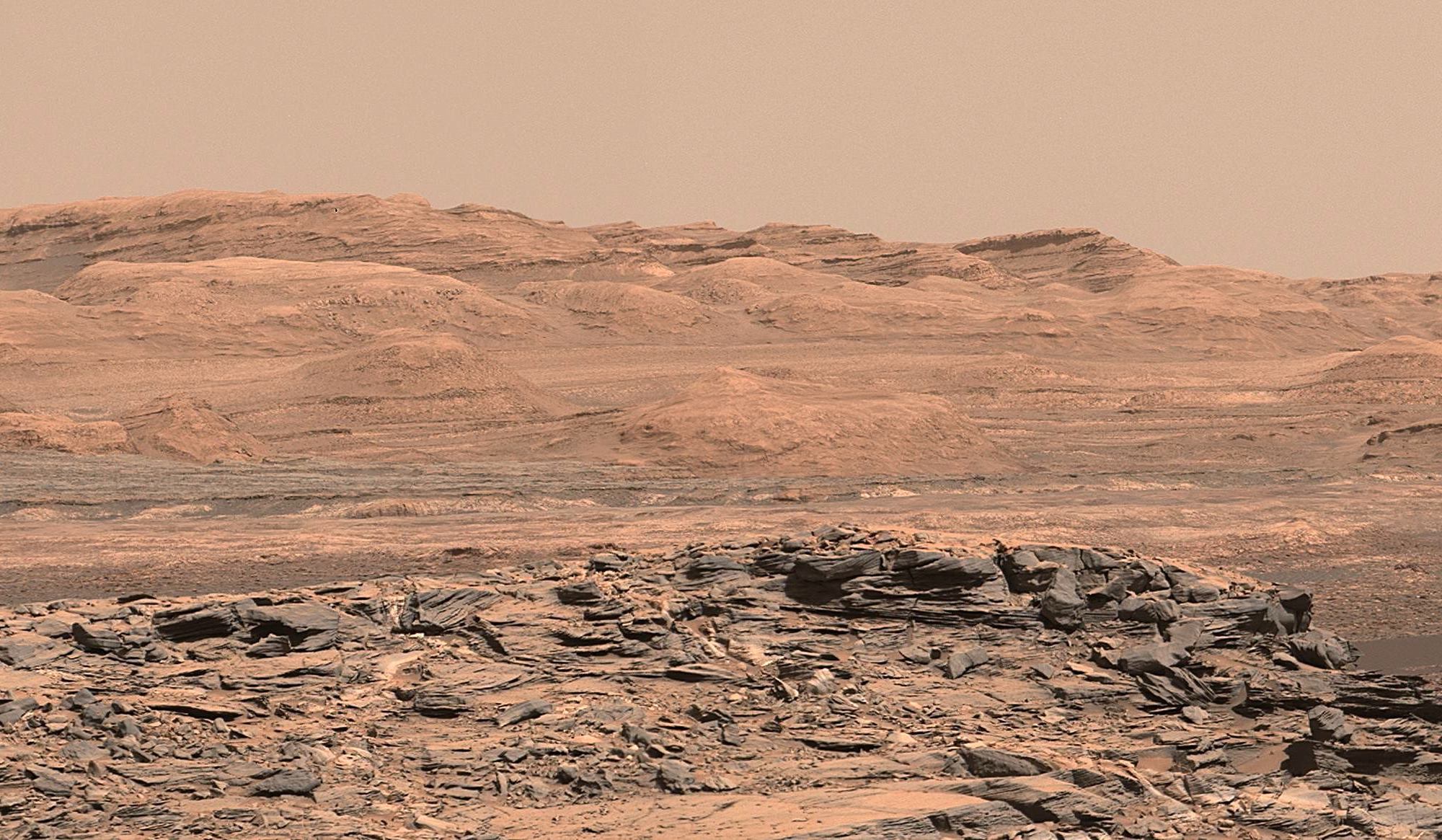
The mounds, first observed in the 1970s during NASA’s Viking program, were found to be at the bottom of Mars’ craters. An additional investigation by the Curiosity rover of Mount Sharp inside the Gale Crater showed the mounds were more than 3 miles high.

Layered sedimentary rocks make up the thickest part of the mounds, with the bottom parts showing sediments brought by water that was previously present in the crater. The top part is made up of sediments carried by wind.

The researchers are clueless about the how the mile-high mounds were able to form inside the craters considering that these were once filled with sediments. However, they are positive that they will be able to figure out the wind dynamics that made it possible.

To find out if wind could indeed form a mound, the research team created a model crater that measured 30 centimeters (11.8 inches) in width and 4 centimeters (1.5 inches) high and filled it with damp sand. They then placed the miniature crater in a wind tunnel and observed the movement of the sand.

The elevation and distribution of the sand were carefully monitored until all of it was blown away. The erosion present in the miniature crater’s sediment was found to be similar with those seen in the Martian craters. The erosion also created a moat shaped like a crescent that widened and deepened around the crater’s edge.

To get a better understanding of the wind dynamics, the study authors built a computer model that replicated the flow of wind at different phases of erosion.

The mound’s composition – bottom created during a wet period, and top created and mound shaped during a dry period – significantly helps in establishing the effects of climate change on Mars, Kocurek said.

“Overall, we are seeing the complete remaking of the sedimentary cycle on Mars to the one that characterizes the planet today,” Kocurek said.

By studying the location of more than 30 mounds and identifying them to be only present on terrain during the Noachian period, a geological era about 3.7 billion years ago, the researchers concluded that it was during this period that Mars shifted from a wet planet to a dry one.

To compare, they examined five examples of mounds in craters formed during Mars’ Amazonian period. The deposits were not similar with the sedimentary deposits, which means the erosion came from a recent activity.

The study showed that global climate change and strong winds, not some alien like the alleged giant mouse, caused the mounds on the Martian surface.

The Making of an Allosaurus Graveyard

A new analysis sets the scene for how over 46 Allosaurus came to be buried in the same place.

By Brian Switek on June 21, 2017


Scientific blindness is never so apparent as when dealing with remnants of Noah’s flood. This articles shows how the words flood, wet, catastrophe, intense, dry and drought are unavoidable.


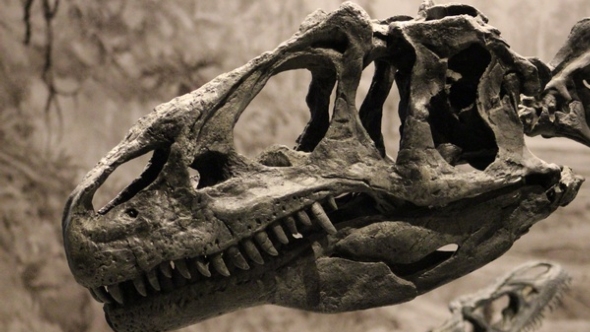
Out in Utah’s eastern desert, nestled among the purple- and red-banded hills of the Morrison Formation, there rests one of the richest dinosaur bonebeds ever found. It’s also the most mysterious. Since the site’s initial discovery over a century ago, the jumbled remains of over 46 Allosaurus – as well as the comparatively rare bones of other Jurassic dinosaurs – have been pulled from this one spot, and there’s every indication that there is more to be found than has yet been uncovered. But what brought all these dinosaurs here, and why do predators dominate this spot when almost every other bonebed of its kind has the expected array of abundant herbivores and rare carnivores?

There are almost as many takes on what created the bonebed at Cleveland-Lloyd Dinosaur Quarry as scientists who have studied it. The initial, and most obvious, idea was that this was a predator trap like the La Brea asphalt seeps. Some poor herbivore got stuck in mud, died, and its rotten stink drew scores of Allosaurus here, which became trapped in turn. But there’s no tar or other trapping mechanism to do the dirty work. This led to other suggestions – that the dinosaurs were killed by drought, that the site was a poison spring, that the dinosaurs died elsewhere and their carcasses were washed to the spot – but there was always some point that didn’t make sense or remained contentions. Where some experts saw a dry environment, others saw one that was frequently wet. Where some saw evidence of one catastrophic event, others saw multiple depositions that happened over time. 

That’s what led geoscientists Joe Peterson, John Warnock, Steven Clawson, and their colleagues to move literal tons of rock and excavate Cleveland-Lloyd anew. Not for new bones, but for the geological clues that might let the researchers more accurately envision what happened there in the days of the Late Jurassic. What they’ve found doesn’t conclusively solve the Mesozoic murder mystery, but it refines the setting where the inscrutable events took place.

Peterson and coauthors looked at the fossil assemblage from two angles – a geological technique called x-ray florescence to determine the geochemistry of the Cleveland-Lloyd rocks and a detailed analysis of bone fragments found within the quarry. Together, these two lines of evidence help outline what must have been an incredibly smelly Jurassic scene.

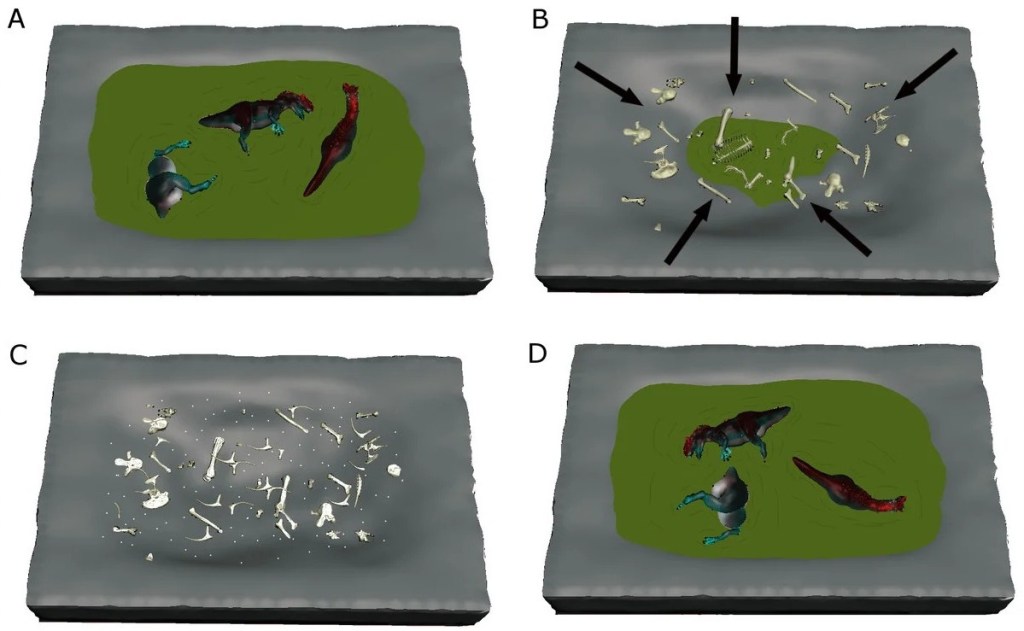
While it’s certainly dramatic to think of hundreds of dinosaurs accumulating in one spot all at once, the findings of Peterson and his colleagues suggest that Cleveland-Lloyd didn’t form in a single event. This spot in the Utah desert was once an ephemeral pond that came and went as the Jurassic seasons shifted from wet to dry. And during the wet times, local flooding transported dinosaur bodies and bones to this particular spot where they settled.


How the CLDQ bonebed was formed, starting with carcasses being washed in, bones being exposed, bones being weathered and broken into fragments, and the addition of more carcasses in the next flood stage. Credit: Peterson et al 2017

The bone fragments help tell the story. The patterns of abrasion and other details suggest that the fragments came from bones already within the pond deposit, getting jostled and reworked with the swings between the seasons. Likewise, the geochemical results supported that this was a wet spot for at least some times of the year. In fact, the analysis showed that the Cleveland-Lloyd sediments had unusually elevated levels of heavy metals compared to other bonebeds of similar age. This doesn’t mean that Cleveland-Lloyd was a poison spring – as has also been suggested to explain the carnage – but that the geochemical profile is instead a sign of rotting carcasses sitting in a standing body of water, turning the pond into an undrinkable, mineral-rich soup. And this could explain why fossils of fish, turtles, and crocodiles are rare in the quarry, as well as why bite marks and signs of scavenging are so rare. When full, this was a rank spot with foul water that was best avoided.

What the new study does is look at the environment of Cleveland-Lloyd over the span of Jurassic seasons. It sets new parameters for thinking about, and questioning, what happened there over 145 million years ago. The site was an ephemeral pond, and it didn’t come together all at once. That may sound simple, but it sets a new baseline for interpreting how such an unusual site came to be.

Plenty of questions remain. If the dinosaurs were washed in, then what killed them in the first place? And does this deposit represent especially harsh times – like intense, recurring droughts – or does it encapsulate the normal comings and goings of dinosaurs during the Late Jurassic? On top of that, we still don’t know why Allosaurus is overrepresented at this site compared to almost every other Morrison Formation bonebed of its kind.

Perhaps something unusual was happening in the vicinity that caused Allosaurus to congregate. Then again, the “different lizard” was by far the most common carnivore of the Late Jurassic west – if you find a theropod in the Morrison, nine times out of ten it’s going to be Allosaurus – and so exhuming an abundance of Allosaurus in a deposit that formed over years and years might not actually require a special explanation other than the predators were abundant at that time. In fact, a few hours away from Cleveland-Lloyd just over the Colorado border, there is another, smaller bonebed where Allosaurus dominates. Perhaps Cleveland-Lloyd represents just another slice of regular Jurassic life rather than something unusual that requires special explanation. Then again, as Peterson and colleagues write, it’s possible that the surfeit of Allosaurus at Cleveland-Lloyd is pointing towards previously-unknown aspects of their behavior – perhaps there was a breeding or nesting site nearby, or maybe these dinosaurs were brought into closer numbers in times of drought and then die as is seen with modern animals in sharply seasonal habitats.

The story of Cleveland-Lloyd is far from told. The conditions that created the bonebed, and what led to Allosaurus being buried in unprecedented numbers, are still unknown, not to mention all the other paleobiological and ecological details still embedded in bone and rock. But the new study is a significant step in reconstructing what happened during the days when dinosaurs ruled the Earth. And by starting with how they died, maybe we can learn something new about how these amazing animals lived.

Asteroid strike made ‘instant Himalayas’

By Jonathan Amos BBC Science Correspondent 18 November 2016

Read original article here.


Evidence of the rapid formation of tectonic plates during the breakup of Pangaea is described in garbled science lingo and woven into the prevailing narrative of asteroid induced mass extinction.


Scientists say they can now describe in detail how the asteroid that wiped out the dinosaurs produced its huge crater.

The reconstruction of the event 66 million years ago was made possible by drilling into the remnant bowl and analysing its rocks.

These show how the space impactor made the hard surface of the planet slosh back and forth like a fluid.

At one stage, a mountain higher than Everest was thrown up before collapsing back into a smaller range of peaks.

“And this all happens on the scale of minutes, which is quite amazing,” Prof Joanna Morgan from Imperial College London, UK, told BBC News.

The researchers report their account in this week’s edition of Science Magazine.

Their study confirms a very dynamic, very energetic model for crater formation, and will go a long way to explaining the resulting cataclysmic environmental changes.

The debris thrown into the atmosphere likely saw the skies darken and the global climate cool for months, perhaps even years, driving many creatures into extinction, not just the dinosaurs.

The team spent April to May this year drilling a core through the so-called Chicxulub Crater, now buried under ocean sediments off Mexico’s Yucatan Peninsula.

The outer rim (white arc) of the crater lies under the Yucatan Peninsula itself, but the inner peak ring is best accessed offshore

The outer rim (white arc) of the crater lies under the Yucatan Peninsula itself, but the inner peak ring is best accessed offshore
  • A 15km-wide object dug a hole in Earth’s crust 100km across and 30km deep
  • This bowl then collapsed, leaving a crater 200km across and a few km deep
  • The crater’s centre rebounded and collapsed again, producing an inner ring
  • Today, much of the crater is buried offshore, under 600m of sediments
  • On land, it is covered by limestone, but its rim is traced by an arc of sinkholes

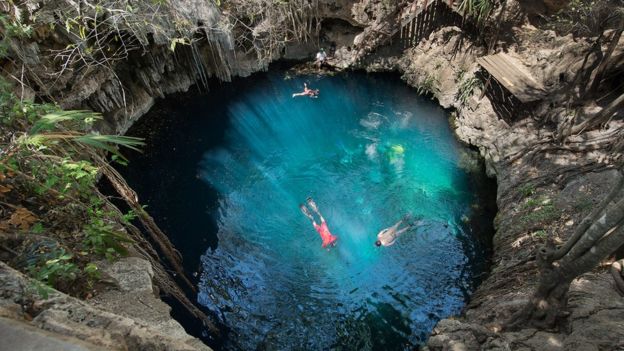
Mexico’s famous sinkholes (cenotes) have formed in weakened limestone overlying the crater

The researchers targeted a particular zone in the 200km-wide bowl known as the “peak ring”, which – if earlier ideas were correct – should have contained the rocks that moved the greatest distance in the impact. These would have been dense granites lifted from almost 10km down.

And that is precisely what the team found.

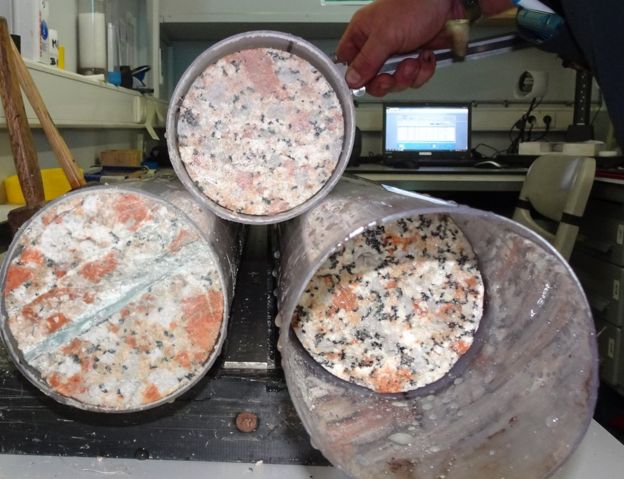
“Once we got through the impact melt on top, we recovered pink granite. It was so obvious to the eye – like what you would expect to see in a kitchen countertop,” recalled Prof Sean Gulick from the University of Texas at Austin, US.

But these were not normal granites, of course. They were deformed and fractured at every scale – visibly in the hand and even down at the level of the rock’s individual mineral crystals. Evidence of enormous stress, of having experienced colossal pressures.


The team retrieved many hundreds of metres of rock from the crater

The analysis of the core materials now fits an astonishing narrative.

This describes the roughly 15km-wide stony asteroid instantly punching a cavity in the Earth’s surface some 30km deep and 80-100km across.

Unstable, and under the pull of gravity, the sides of this depression promptly started to collapse inwards.

At the same time, the centre of the bowl rebounded, briefly lifting rock higher than the Himalayas, before also falling down to cover the inward-rushing sides of the initial hole.

“If this deep-rebound model is correct (it’s called the dynamic collapse model), then our peak ring rocks should be the rocks that have travelled farthest in the impact – first, outwards by kilometres, then up in the air by over 10km, and back down and outwards by another, say, 10km. So their total travel path is something like 30km, and they do that in under 10 minutes,” Prof Gulick told the BBC’s Science in Action programme.

Imagine a sugar cube dropped into a cup of tea. The drink’s liquid first gets out of the way of the cube, moves back in and up, before finally slopping down.

When the asteroid struck the Earth, the rocks it hit also behaved like a fluid.

“These rocks must have lost their strength and cohesion, and very dramatically had their friction reduced,” said Prof Morgan. “So, yes, temporarily, they behave like a fluid. It’s the only way you can make a crater like this.”

One of the important outcomes of the research is that it provides a useful template also to understand the surfaces of other planets.

All the terrestrial worlds and even Earth’s Moon are scarred with craters just like Chicxulub.

And knowing how rocks can move vertically and horizontally in an impact will assist scientists as they attempt to interpret similar crustal features seen elsewhere in the Solar System.

The project to drill into Chicxulub Crater was conducted by the European Consortium for Ocean Research Drilling (ECORD) as part of the International Ocean Discovery Program (IODP). The expedition was also supported by the International Continental Scientific Drilling Program (ICDP).


Schrodinger Crater on the Moon looks exactly the same as Chicxulub and would have been made – according to this analysis – in a very similar way

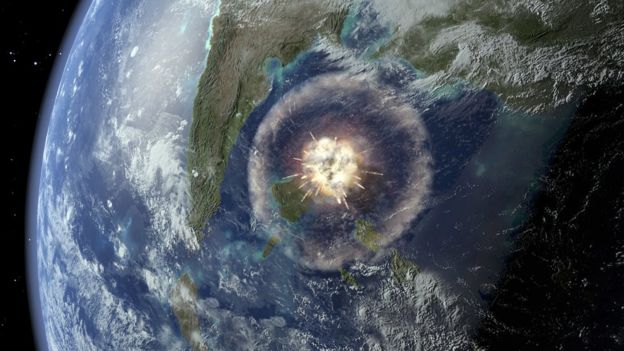
Artwork: The asteroid that made the crater was probably moving at about 20km/s when it hit the Earth

Jonathan.Amos-INTERNET@bbc.co.uk and follow me on Twitter: @BBCAmos

Radioactive Decay Rates May not be Constant After All

This is a direct copy of a SciPop or news article preserved here because things on the internet have a bad habit of disappearing when you try to find them again. Full credit is given to the original authors and the source.

– Matty

One of the first things that Physics students learn when they study radioactivity is the idea of the half-life. 

Continue reading “Radioactive Decay Rates May not be Constant After All”

America’s Epidemic of Empty Churches

This is a direct copy of a SciPop or news article preserved here because things on the internet have a bad habit of disappearing when you try to find them again. Full credit is given to the original authors and the source.

– Matty

Religious communities often face a choice: Sell off the buildings they can no longer afford, or find a way to fill them with new uses.

Continue reading “America’s Epidemic of Empty Churches”

Astronomers Find a Huge Diamond in Space

This is a direct copy of a SciPop or news article preserved here because things on the internet have a bad habit of disappearing when you try to find them again. Full credit is given to the original authors and the source.

– Matty

When choosing a Valentine’s Day gift for a wife or girlfriend, you can’t go wrong with diamonds. If you really want to impress your favorite lady this Valentine’s Day, get her the galaxy’s largest diamond. But you’d better carry a deep wallet, because this 10 billion trillion trillion carat monster has a cost that’s literally astronomical!

Continue reading “Astronomers Find a Huge Diamond in Space”