Graves and Pits

O LORD, thou hast brought up my soul from the grave: thou hast kept me alive, that I should not go down to the pit.

(Psalms 30:3) KJV

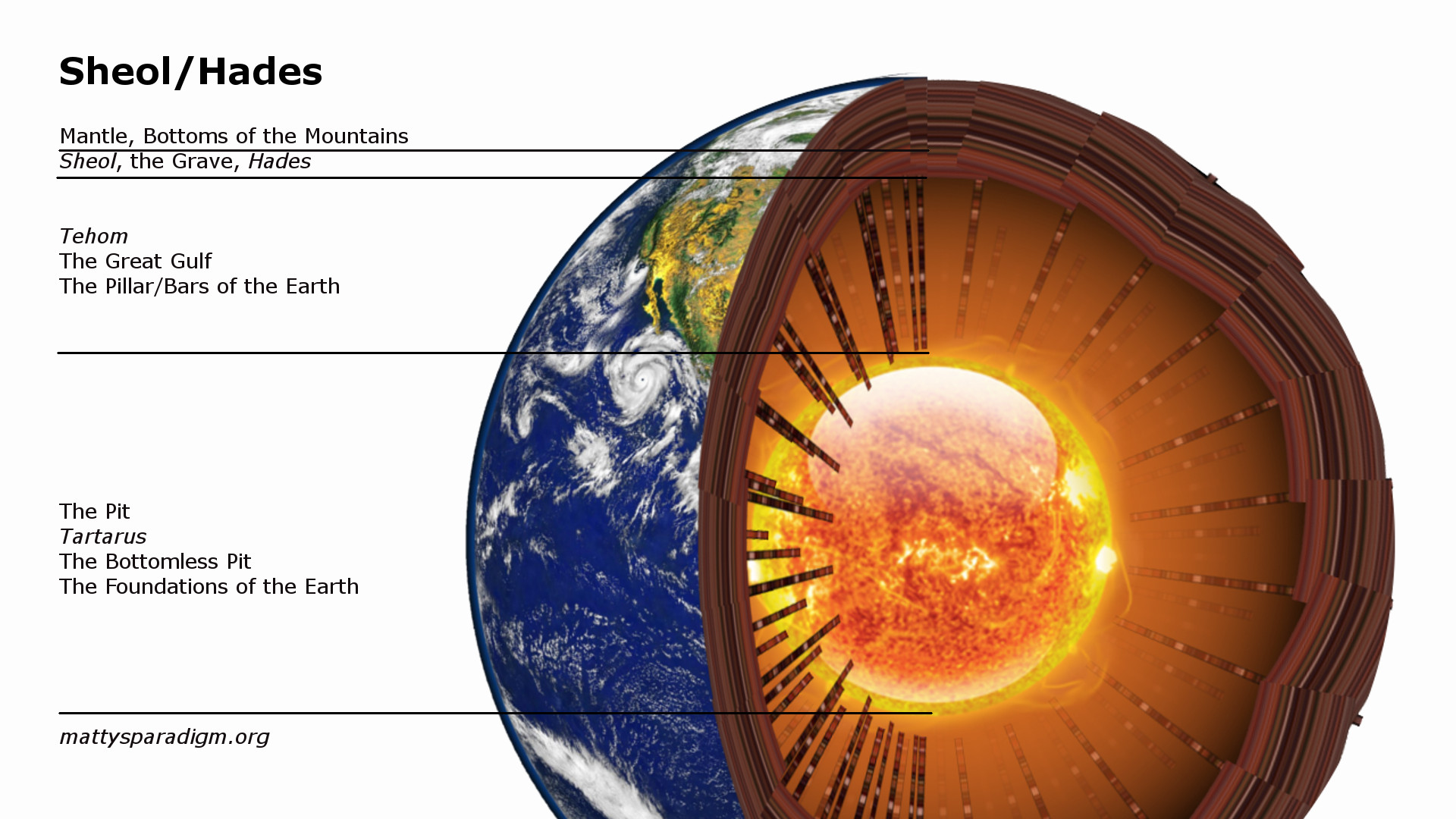
We are discussing the repercussions of the fall of man on the physical system of creation. One of the repercussions was the start of radioactive decay. This in turn is the beginning of hell, since the explosive rate of decay, concentrated at the core of the earth, caused the core to melt. This is the beginning of hell. We have now put this in the context of the rest of history with a leisurely stroll through the history of the expansion of hell over the last week or so.

We have built a very strong case for the existence of hell in the center of the earth by relating it to the major physical events in the history of the earth. This has been driven by scripture that describes these events. We start with the creation of gravity on the second day as the foundation of the earth which becomes hell. Scripture provides many clues about the changes to the earth over its history and up to the present day.

Let’s take a look at some of the scripture that describes hell and where it is as a way of confirming what is becoming a highly elaborate hypothesis for the cause of global warming. In its historical context the book of Job is the oldest book of the Bible. Genesis records for us an account of the creation, but it was written by Moses, who was many generations after the life of Job. Job was probably a contemporary of Abraham. It is clear that the people of this time had a clear concept of souls and what happens to them after the death of the body: they go to sheol. So what and where is sheol? The context of the verses below is that God has the power to keep the soul from going to sheol.

He keepeth back his soul from the pit, and his life from perishing by the sword.

(Job 33:18) KJV

In this passage we are told that the soul can go to “the pit,” and the word in the passage translated as “sword,” is elsewhere rendered as sheol. Essentially this is speaking about the pit of sheol. Pits are holes in the ground, so we are talking about someplace deep in the earth where souls go.

Yea, his soul draweth near unto the grave, and his life to the destroyers.

(Job 33:22) KJV

This time the word “grave,” is a translation of the Hebrew sheol. Graves are holes in the ground, like pits, so once again we are placing sheol deep within the earth.

Then he is gracious unto him, and saith, Deliver him from going down to the pit: I have found a ransom.

(Job 33:24) KJV

Once again a statement of God’s power to save the soul of an individual from going into sheol.

He will deliver his soul from going into the pit, and his life shall see the light.

(Job 33:28) KJV

Here the outcome of the soul going into the pit of sheol is connected with light and darkness. Sheol is darkness.

To bring back his soul from the pit, to be enlightened with the light of the living.

(Job 33:30) KJV

Here we see a statement that the Lord is able to bring back a soul from the pit of sheol. There is clearly some nuance of meaning here that may be obscured by the various references to the pit, sword, and grave which are all translations of sheol. It should be obvious that sheol is a dark pit where souls go, but some are saved from it and others are not. Not only that, but it is not always a permanent outcome since souls can be brought back from it. As confusing as this may be it is completely compatible with the Matty’s Paradigm model of the interior of the earth. There is a sheol that you can’t come back from (the pit or molten core), and there is one that you can come back from (the grave or bosom of Abraham). The difference is whether or not you are reconciled to God. If you are saved from the pit you go to the grave.


July 18th

The Age of Accountability

Behold, I was brought forth in iniquity, And in sin my mother conceived me.

(Psalms 51:5) NKJV

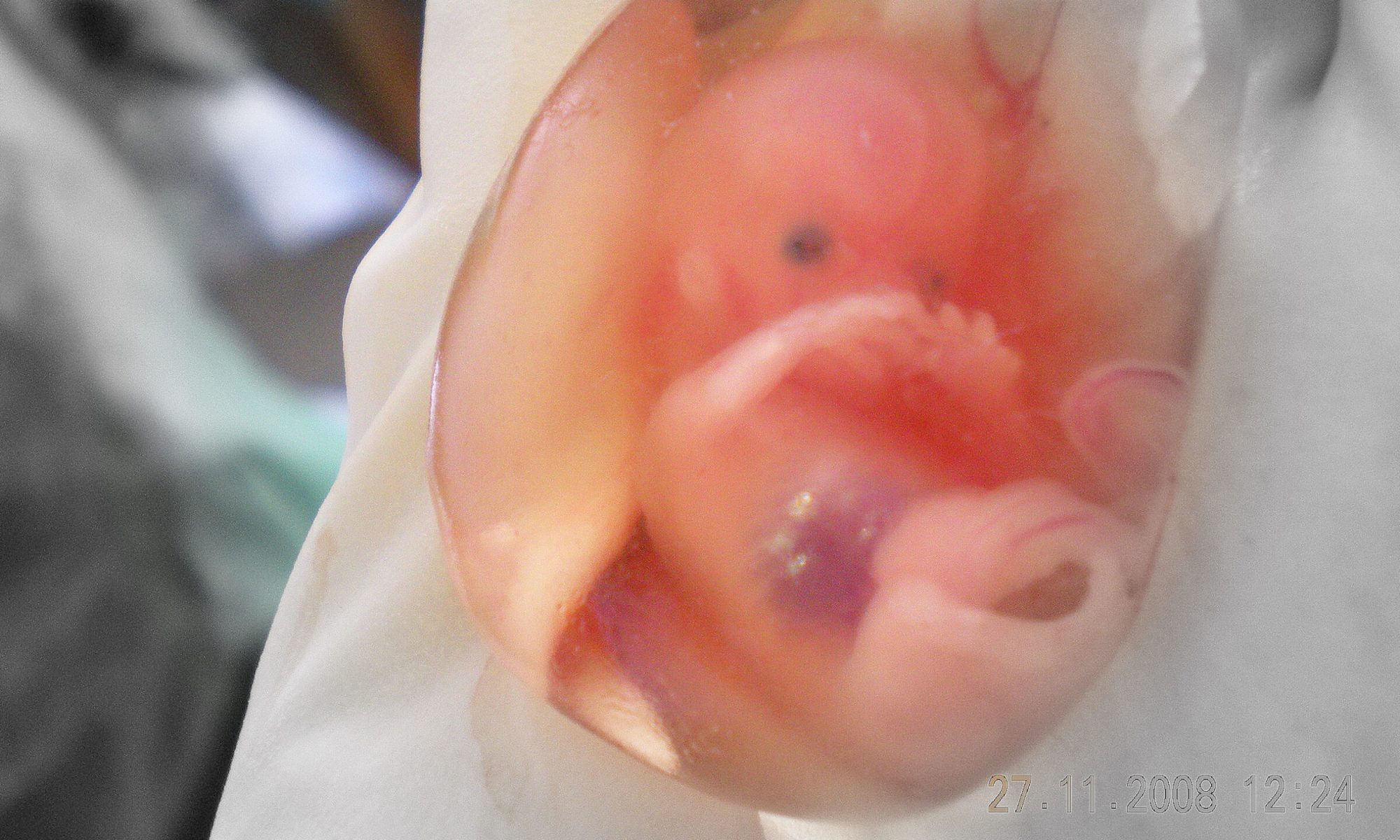
There’s no age of accountability in the Bible. Children aren’t innocent up until a certain age. The right to a legal safe abortion should be guaranteed, but each one carries with it the loss of a soul. Then we have it on our conscience.

Continue reading “July 18th”

When You Know God, and God Knows You

Danby House

Exodus 32:7-10

And the LORD said unto Moses, Go, get thee down; for thy people, which thou broughtest out of the land of Egypt, have corrupted themselves: They have turned aside quickly out of the way which I commanded them: they have made them a molten calf, and have worshipped it, and have sacrificed thereunto, and said, These be thy gods, O Israel, which have brought thee up out of the land of Egypt. And the LORD said unto Moses, I have seen this people, and, behold, it is a stiffnecked people: Now therefore let me alone, that my wrath may wax hot against them, and that I may consume them: and I will make of thee a great nation.

God blamed Moses for the sin of the Israelites.

And Moses besought the LORD his God, and said, LORD, why doth thy wrath wax hot against thy people, which thou hast brought forth out of the land of Egypt with great power, and with a mighty hand? (Exodus 32:11)

Moses turned it right back on God.

July 17th

Gravitation, Redemption and the Soul

“Behold, all souls are Mine; The soul of the father As well as the soul of the son is Mine; The soul who sins shall die.

(Ezekiel 18:4) NKJV

When we accept Jesus Christ as savior we’re quickened, [q] and the grave, Mosaic gravity [M], has no power over us. We’ll escape the gravity of Earth and go to heaven.

Continue reading “July 17th”

July 16th

Perdition

But those who desire to be rich fall into temptation and a snare, and into many foolish and harmful lusts which drown men in destruction and perdition.

(1 Timothy 6:9) NKJV

Perdition can be translated “ruin.” Perdition is a nuanced kind of destruction with eternal consequences. It’s not the end of something, as if it disappears. It’s the end of what could have been.

Continue reading “July 16th”

Antarctic Bottom Water Warming and Freshening

Abstract

Freshening and warming of Antarctic Bottom Water (AABW) between the 1980s and 2000s are quantified, assessing the relative contributions of water-mass changes and isotherm heave. The analysis uses highly accurate, full-depth, ship-based, conductivity–temperature–depth measurements taken along repeated oceanographic sections around the Southern Ocean. Fresher varieties of AABW are present within the South Pacific and south Indian Oceans in the 2000s compared to the 1990s, with the strongest freshening in the newest waters adjacent to the Antarctic continental slope and rise indicating a recent shift in the salinity of AABW produced in this region. Bottom waters in the Weddell Sea exhibit significantly less water-mass freshening than those in the other two southern basins. However, a decrease in the volume of the coldest, deepest waters is observed throughout the entire Southern Ocean. This isotherm heave causes a salinification and warming on isobaths from the bottom up to the shallow potential temperature maximum. The water-mass freshening of AABW in the Indian and Pacific Ocean sectors is equivalent to a freshwater flux of 73 ± 26 Gt yr−1, roughly half of the estimated recent mass loss of the West Antarctic Ice Sheet. Isotherm heave integrated below 2000 m and south of 30°S equates to a net heat uptake of 34 ± 14 TW of excess energy entering the deep ocean from deep volume loss of AABW and 0.37 ± 0.15 mm yr−1 of sea level rise from associated thermal expansion.

When I tell people that ocean water is warming from the bottom up a common response that I get is:


“Do you mean that the hottest waters are at the bottom?”


This is a great illustration of the intellectual bankruptcy of atheism. Atheists can’t comprehend simple logic, and one of the ways that they cope with it is to instinctively warp whatever you said into something that they can understand. Since atheists automatically assume that everyone who disagrees with them is idiotic, they intentionally misinterpret whatever you said into something idiotic.

My response is simple enough:


Water warms at the bottom, as this happens the water is displaced upward by colder water.


The article appears to confirm this. Bottom water is freshening because of an influx of water from melting polar ice. This is also driving ocean circulation.

Not only are ocean surface waters getting warmer, but so is water 1,500 feet below the surface.

This is a direct copy of a SciPop or news article preserved here because things on the internet have a bad habit of disappearing when you try to find them again. Full credit is given to the original authors and the source.

– Matty

Ocean Temperature

Warmer oceans put coastal communities at risk, increase infrastructure costs, endanger polar creatures and threaten coral reefs and fisheries. Perhaps most alarmingly, rising ocean temperatures accelerate the overall warming trend.

Continue reading “Not only are ocean surface waters getting warmer, but so is water 1,500 feet below the surface.”

Surprising Depth to Global Warming’s Effects

This is a direct copy of a SciPop or news article preserved here because things on the internet have a bad habit of disappearing when you try to find them again. Full credit is given to the original authors and the source.

– Matty

Sarah Purkey is a Ph.D. student in the University of Washington’s School of Oceanography. Gregory Johnson is an oceanographer with the National Oceanic and Atmospheric Administration (NOAA) Pacific Marine Environmental Laboratory. They contributed this article to LiveScience’s Expert Voices: Op-Ed & Insights.

Introduction

The oceans are the flywheel of the climate system. As atmospheric concentrations of greenhouse gases increase, the Earth system is warming, and over 90 percent of that increase in heat goes into the ocean. Knowing how much heat the ocean absorbs is vital to understanding sea level rise (the oceans expand as they warm), and predicting how much, and how fast, the atmosphere will warm.

Continue reading “Surprising Depth to Global Warming’s Effects”

Bottom Water Warming in the North Pacific Ocean

This is a direct copy of a SciPop or news article preserved here because things on the internet have a bad habit of disappearing when you try to find them again. Full credit is given to the original authors and the source.

– Matty

Abstract

Observations of changes in the properties of ocean waters have been restricted to surface1 or intermediate-depth waters2,3, because the detection of change in bottom water is extremely difficult owing to the small magnitude of the expected signals. Nevertheless, temporal changes in the properties of such deep waters across an ocean basin are of particular interest, as they can be used to constrain the transport of water at the bottom of the ocean and to detect changes in the global thermohaline circulation. Here we present a comparison of a trans-Pacific survey completed in 1985 (refs 4, 5) and its repetition in 1999 (ref. 6). We find that the deepest waters of the North Pacific Ocean have warmed significantly across the entire width of the ocean basin. Our observations imply that changes in water properties are now detectable in water masses that have long been insulated from heat exchange with the atmosphere.

Continue reading “Bottom Water Warming in the North Pacific Ocean”