Presented as proof of heliocentricity.
The ISS orbits the earth, so it is inherently Geocentrospheric. The eclipse was observed from the earth, so it is empirically Geocentrospheric.
This is not proof of heliocentricity.


A sheep in wolf's clothing.
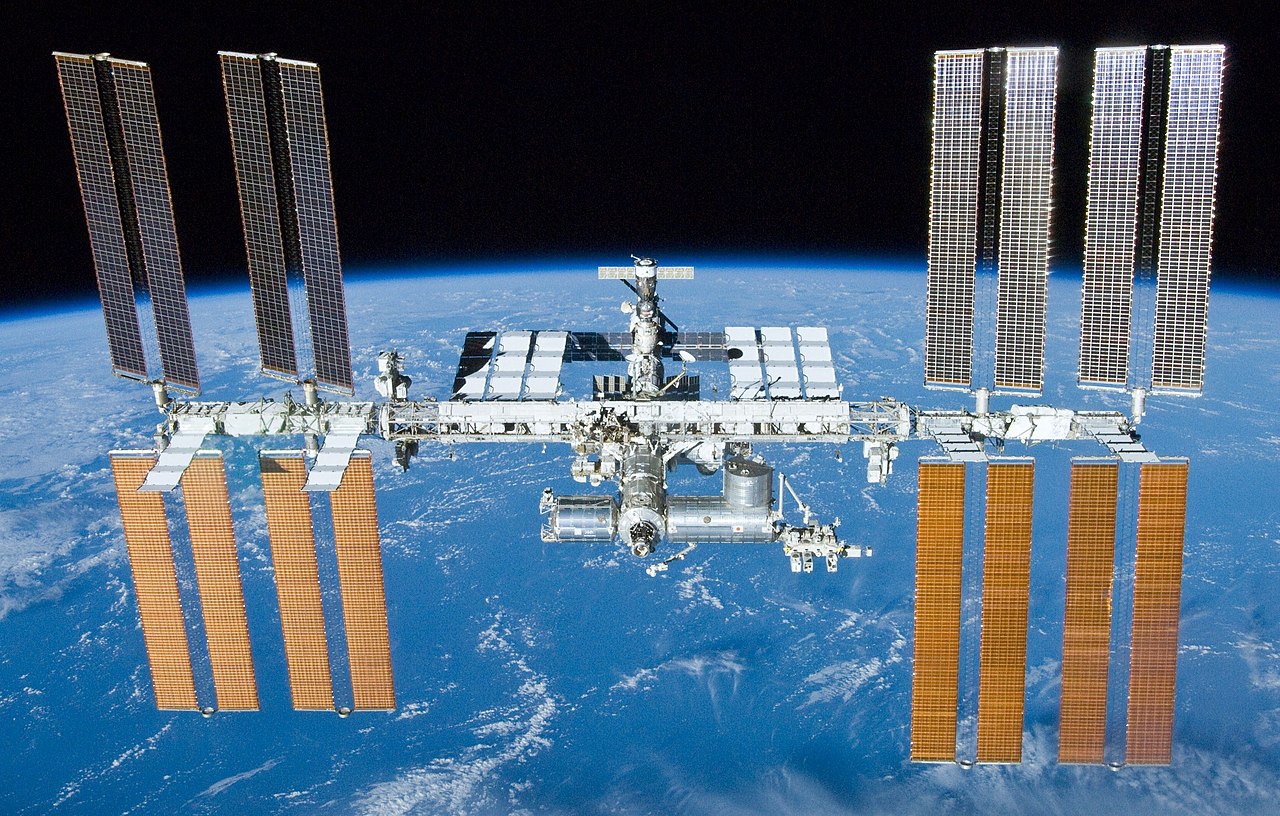
Presented as proof of heliocentricity.
The ISS orbits the earth, so it is inherently Geocentrospheric. The eclipse was observed from the earth, so it is empirically Geocentrospheric.
This is not proof of heliocentricity.
The Coriolis effect is always stated as proof that the earth is rotating. However, all it proves is that something is rotating, not what. In Heliocentricity the earth rotates every day. In the Geocentrospheric system the cosmos rotates every day. There is no observable difference between the two. Since the practical effect of the Coriolis force effect is primarily its effect on weather patterns and the movement of shipping, the effect can be caused by either interpretation of this phenomenon.
There may be other causes for the observed effect which is referred to as the Coriolis Effect, such as circulation in the magma flow in the core of the earth, part of the explanation we have deduced for GDC below.
The gravitational field of the universe is emitted from the core of the earth. This is the singularity which was created on the 2nd day. If the mode of action of gravity is the Higgs Boson, then the core of the earth is emitting the stream of Higgs Bosons which binds the universe together.
We can picture this as a silver cord connecting the core of the earth to the sun. Now imagine silver cords connecting the core of the earth to every planet, every asteroid, every comet, every star, every unidentified object in the heavens. Every particle and body in the universe is connected to the core of the earth by a silver cord.
Imagine that the cosmos is rotating. That shouldn’t be hard because it is an empirical observation. The earth is stationary but the universe with all of its planetary and stellar bodies orbits the earth everyday. The network of silver cords has to be rotating too.
Now imagine that the core of the earth is a ball of molten radioactive slag. Hell. It is interacting with this network of Higgs Boson silver cords. It is a fluid body and so over time, because of the influence of the moving network of silver cords, it begins to rotate. Eventually it is rotating at the same speed as the cosmos. Hell contains iron so it has a magnetic field. Motion in a magnetic field produces an electric charge. Hell is the source of earth’s magnetic field and its rotation causes its electric charge.
The surface of the earth is stationary, but the heavens and hell have daily rotation.
How could we test this?
It is not possible to prove that the earth is rotating. Experimental results which have formerly been used as a way to prove that the earth has daily rotation are examples of GDE on a stationary earth.
It took a thousand years and all kinds of speculation and wrangling to come up with actual proof that the earth is rotating in an orbit around the sun. That’s the rhetoric you are supposed to believe.
Supposedly, the aberration of starlight is the experimental evidence that gave the heliocentric theory a solid scientific footing.
A common analogy is to consider the apparent direction of falling rain. If rain is falling vertically in the frame of reference of a person standing still, then to a person moving forwards the rain will appear to arrive at an angle, requiring the moving observer to tilt their umbrella forwards. The faster the observer moves, the more tilt is needed.
Wikipedia
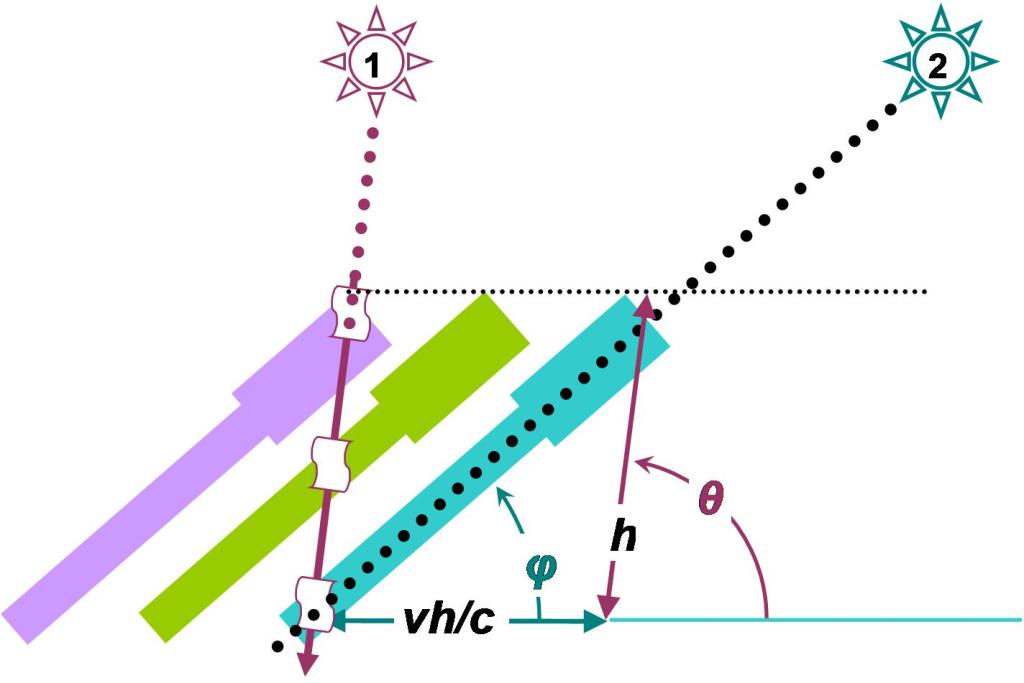
The issue is quite simply resolved as a matter of relative motion. However, the popular science explanation of the phenomenon is an example of an inductive rationalization of evidence to fit a premise, it is not a conclusion which may be deduced and it doesn’t take into account other possible causes.
it doesn’t take into account either gravitational lensing or gravitational time dilation.
Gravitational lensing is usually thought of in terms of the observed bending of light around a gravitational body such as the sun. This is Einstein’s Mirage, where circumstantial evidence is taken as proof of relativity: Einstein’s prediction that gravity bends space. However, we don’t observe the bending of space, we observe the bending of light. The largest source of gravity in the universe is the singularity at the center of the earth. How would gravitational lensing affect the path of light if the effect is stronger the closer to the earth the light gets?
Gravitational time dilation is the phenomenon that time passes more slowly the closer you are to a source of gravity. The only empirical frame of reference we have to measure this from is the earth. It’s something we have to correct for to maintain the accuracy of the GPS Navigation system.
At an orbital radius of 26,541 km above the center of the earth time passes faster on GPS satellites by 38,640 nanoseconds per day.
– GPS Time Dilation
If light speed is constant, but time isn’t, then it should appear that light travels faster the closer it gets to earth because time passes more slowly. Theoretically, light should speed up as it falls to earth. This gives us a way to resolve our aberration of light conundrum, but it also raises the question: is the speed of light variable?
Let’s remind ourselves of our definition of gravity:
Gravity (A) is a field emitted from a created instance (a singularity) which causes a body to have attractive force (p) proportional to its mass and inversely proportional to the square of its distance from the source (pG).
G is the gravitational constant. This is a general physical law derived from empirical observations by using deduction.
– Matty’s Law of Biblical Gravitation
If gravity is affecting time in a way that is proportional to the distance from the source then we can expand our definition.
Gravitational time dilation is caused by a field emitted from the singularity at the center of the Earth which causes time to pass more quickly in proportion to the square of the distance from the source.
– Gravitational Time Dilation, definition
I thought I’d throw in the inverse square law just to be on the safe side. If light is also affected because of our perception of the passage of time then we need to expand the definition again.
If time passes more slowly the closer we are to a source of gravity, but light speed is constant, we will perceive light speed as variable because the passage of time is changing. If we can’t measure any variation in the speed of light, but we can measure variation in the passage of time, then light speed is variable and proportional to gravity.
This becomes very similar to how relative motion works. We can’t actually prove if the earth is stationary and the cosmos rotates or if the cosmos is stationary and the earth rotates. It’s dependent on our frame of reference.
The relationships we have to resolve are between gravity, time and light.
So let’s think about time. Gravity was created on the 2nd day but time was already passing. Or was it? Before creation began God existed as a Trinity which included the body of water known as the deep. Presumably time existed but was it passing in a linear sequence as we observe it? On the 1st day God said let there be light. Light existed before gravity. We have deduced that light was generated by the process of nucleosynthesis, which is a strictly sequential ordering of matter and energy based on using Hydrogen atoms to construct the periodic table. Time was definitely passing and it was linear.
A day passed. The time it took to complete the process was the amount of time that God chose to call a day. God created gravity on the 2nd day, firstly to begin the process of separating light from darkness, but we have now deduced a secondary purpose: to permanently establish the length of day as directly proportional to the gravitation field he created. Gravity maintains consistency in the passage of time on earth.
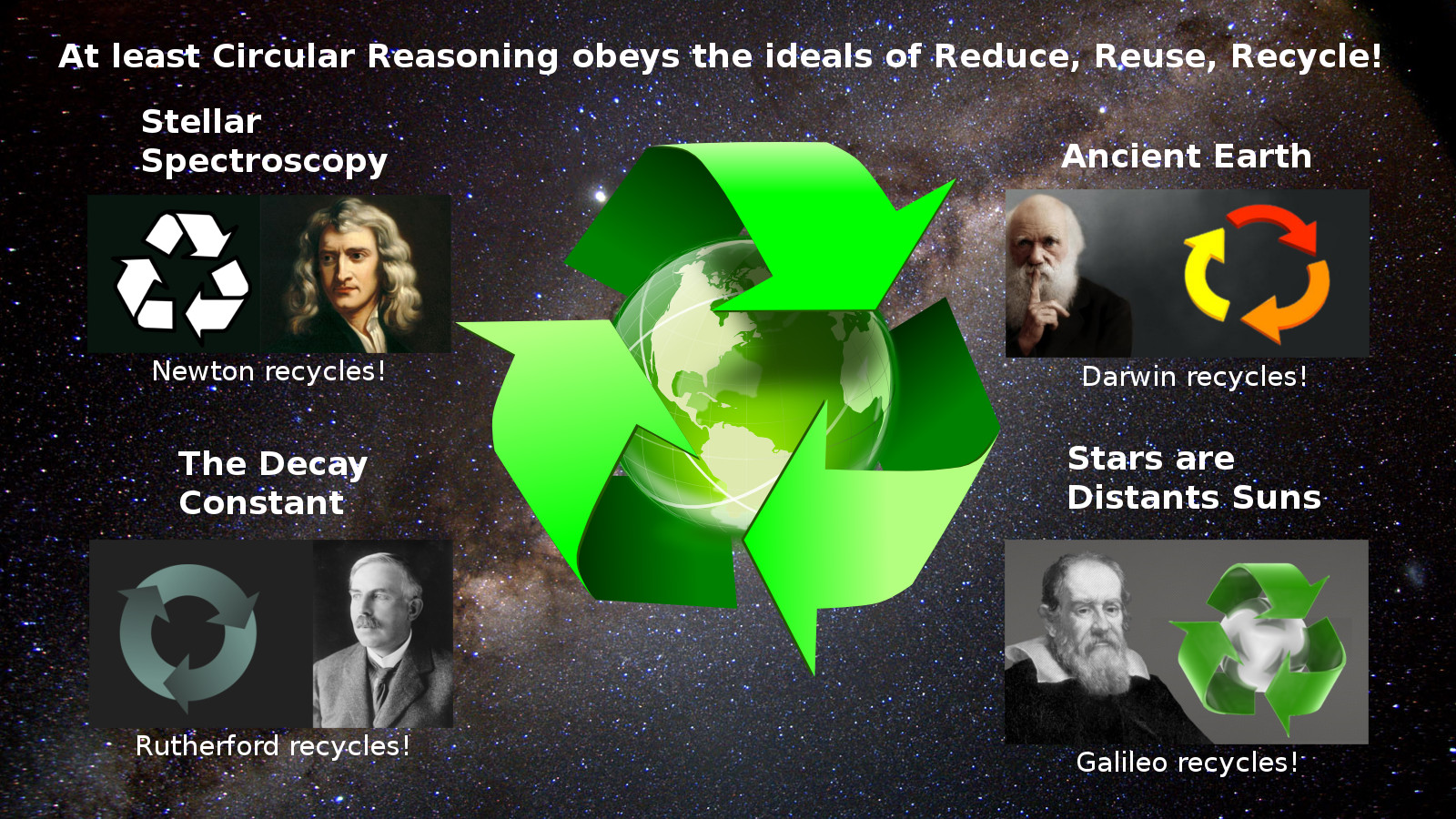
Stellar spectroscopy conveniently ignores the possibility that stars are reflecting sunlight and incorporates itself into one of the most intricate examples of circular reasoning ever devised.
Continue reading “Stellar Spectroscopy”
By Jason Samenow June 11
Simultaneous heat waves scorched land areas all over the Northern Hemisphere last summer, killing hundreds and hospitalizing thousands while intensifying destructive and deadly wildfires.
A study published this week in the journal Earth’s Future concludes that this heat wave epidemic “would not have occurred without human-induced climate change.”
The alarming part? There are signs record-setting heat waves are beginning anew this summer — signaling, perhaps, that these exceptional and widespread heat spells are now the norm.
In the past few days, blistering, abnormal heat has afflicted several parts of the Northern Hemisphere, including major population centers.
New Delhi, India’s capital, soared to 118.4 degrees (48 Celsius) Monday, its highest temperature ever recorded in June. Some parts of India have seen the mercury eclipse 122 degrees (50 Celsius) in recent days, not far off the country’s all-time high.
[‘It is horrid’: India roasts under heat wave with temperatures above 120 degrees]
On the other side of the hemisphere, the temperature in San Francisco shot up to 100 degrees (37.8 Celsius) Monday, its highest temperatures ever recorded in the months of June, July or August, or this early in the calendar year.
[San Francisco soars to 100 degrees as record heat wave torches California and the West Coast]
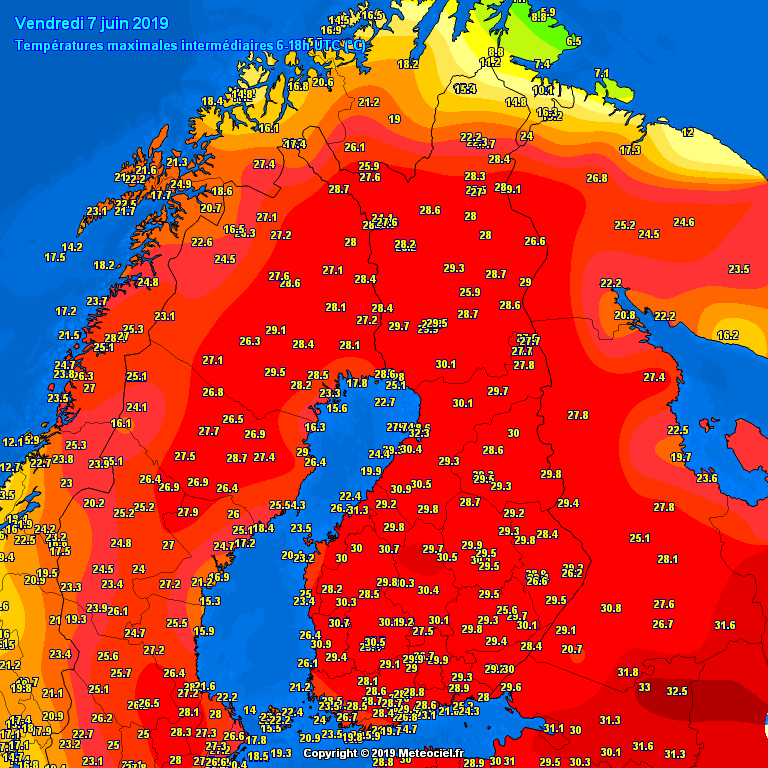
Heat spread unusually far north, even up into the northern reaches of Scandinavia. Mika Rantanen, a meteorologist at the University of Helsinki, tweeted last Friday that there “are no known cases in Finland’s climate history when it has been hotter than now so early in the summer.” Temperatures above 86 degrees (30 Celsius) penetrated inside the Arctic Circle, he noted.
A heat wave in Japan at the end of the May set scores of records, including the country’s highest temperature ever recorded in the month (103.1 degrees, or 39.5 Celsius). The oppressive conditions were blamed for five deaths and nearly 600 hospitalizations.
While some scientists hesitate to attribute individual heat spells to climate change, Daniel Swain, a climate scientist at the University of California at Los Angeles, tweeted that his research suggests that we’ve “reached the point where a majority (perhaps a vast majority) of unprecedented extreme heat events globally have a detectable human influence.”
[It was 84 degrees near the Arctic Ocean as carbon dioxide hit its highest level in human history]
Last summer, exceptional heat affected 22 percent of the populated and agricultural areas of the Northern Hemisphere between the months of May and July, the Earth’s Future study said. The contiguous United States witnessed its hottest May on record, California endured its hottest July and numerous European cities notched their highest temperatures ever recorded, while cities in Asia, the Middle East and Africa also established new heat milestones.
[Red hot planet: Last summer’s punishing and historic heat in 7 maps and charts]

It remains to be seen whether heat waves this summer become as pervasive and intense as last summer. That said, the Earth’s Future study concluded we’ve entered “a new climate regime,” featuring “extraordinary” heat waves on a scale and ferocity not seen before.
The study’s modeling analysis, conducted by researchers in Switzerland and the United Kingdom, found heat events like last summer’s do “not occur in historical simulations” and “were unprecedented prior to 2010.”
As the climate warms, the study projects that the area affected by heat waves like last summer’s will increase 16 percent for every 1.8 degrees (1 Celsius) of warming.
“Heat waves will likely reach highly dangerous levels for ecosystems and societies over the coming decades,” the study said.
Heat events like those last summer are predicted to occur two every three years for global warming of 2.7 degrees (1.5 Celsius) and every year for warming of 3.6 degrees (2 Celsius).
So far, Earth has warmed by approximately 1.9 degrees (1.05 Celsius) since 1880. The goal of the Paris agreement on climate change is keep the global temperature rise to 3.6 degrees (2 Celsius) or less.
Last week, a study in the journal Science Advances found that keeping warming to 2.7 degrees (1.5 Celsius), compared with 5.4 degrees (3 Celsius), could avoid between 110 and 2,720 heat-related deaths annually in 15 different U.S. cities.
“A strong reduction in fossil fuel emissions is paramount to reduce the risks of unprecedented global-scale heat-wave impacts,” the Earth’s Future study concluded.

Jason Samenow Jason Samenow is The Washington Post’s weather editor and Capital Weather Gang’s chief meteorologist. He earned a master’s degree in atmospheric science and spent 10 years as a climate change science analyst for the U.S. government. He holds the Digital Seal of Approval from the National Weather Association. Follow
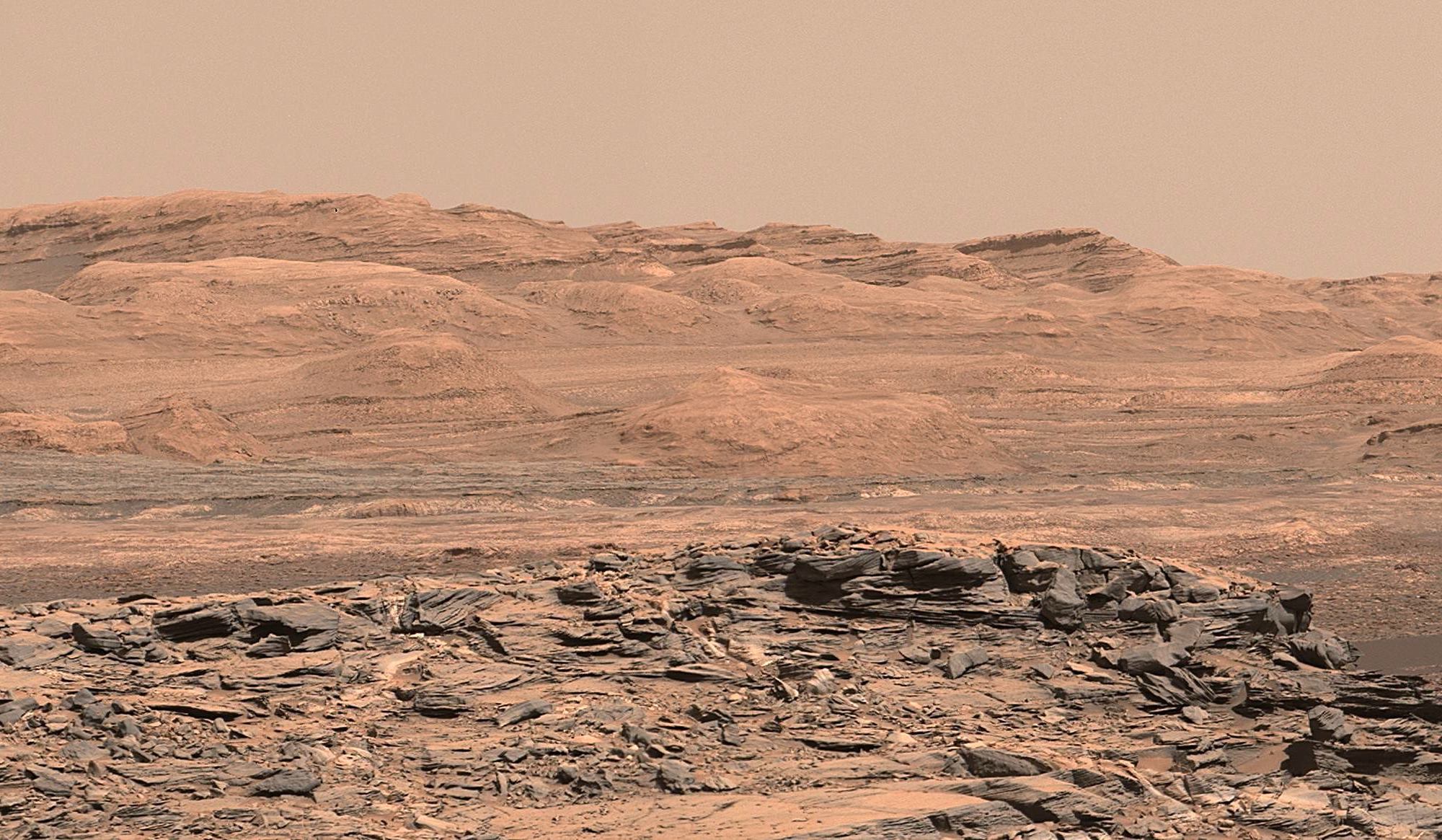
Researchers have found that mile-high mounds in Mars were created by strong winds and climate change.
Because of climate change, water on Mars dried up and allowed massive winds to carve out large mounds over a billion years, according to University of Texas researchers. The process highlighted the role of wind in creating the landscape of the red planet.
“On Mars there are no plate-tectonics, and there’s no liquid water, so you don’t have anything to overprint that signature and over billions of years you get these mounds, which speaks to how much geomorphic change you can really instigate with just wind,” said graduate student Mackenzie Day of the University of Texas at Austin Jackson School of Geosciences.
She said that the process is something that cannot occur on Earth because of other processes that overpower wind.
“Wind could never do this on Earth because water acts so much faster, and tectonics act so much faster,” Day explained.
The research was conducted in association with researchers David Mohrig and Gary Kocurek, also of the Jackson School of Geosciences, and William Anderson of the Department of Mechanical Engineering, University of Texas at Dallas. The study was publshed in the American Geophysical Union journal Geophysical Research Letters on March 31.
The mounds, first observed in the 1970s during NASA’s Viking program, were found to be at the bottom of Mars’ craters. An additional investigation by the Curiosity rover of Mount Sharp inside the Gale Crater showed the mounds were more than 3 miles high.
Layered sedimentary rocks make up the thickest part of the mounds, with the bottom parts showing sediments brought by water that was previously present in the crater. The top part is made up of sediments carried by wind.
The researchers are clueless about the how the mile-high mounds were able to form inside the craters considering that these were once filled with sediments. However, they are positive that they will be able to figure out the wind dynamics that made it possible.
To find out if wind could indeed form a mound, the research team created a model crater that measured 30 centimeters (11.8 inches) in width and 4 centimeters (1.5 inches) high and filled it with damp sand. They then placed the miniature crater in a wind tunnel and observed the movement of the sand.
The elevation and distribution of the sand were carefully monitored until all of it was blown away. The erosion present in the miniature crater’s sediment was found to be similar with those seen in the Martian craters. The erosion also created a moat shaped like a crescent that widened and deepened around the crater’s edge.
To get a better understanding of the wind dynamics, the study authors built a computer model that replicated the flow of wind at different phases of erosion.
The mound’s composition – bottom created during a wet period, and top created and mound shaped during a dry period – significantly helps in establishing the effects of climate change on Mars, Kocurek said.
“Overall, we are seeing the complete remaking of the sedimentary cycle on Mars to the one that characterizes the planet today,” Kocurek said.
By studying the location of more than 30 mounds and identifying them to be only present on terrain during the Noachian period, a geological era about 3.7 billion years ago, the researchers concluded that it was during this period that Mars shifted from a wet planet to a dry one.
To compare, they examined five examples of mounds in craters formed during Mars’ Amazonian period. The deposits were not similar with the sedimentary deposits, which means the erosion came from a recent activity.
The study showed that global climate change and strong winds, not some alien like the alleged giant mouse, caused the mounds on the Martian surface.

And God made two great lights; the greater light to rule the day, and the lesser light to rule the night: he made the stars also.
( Genesis 1:16 )

Clouds and darkness are round about him: righteousness and judgment are the habitation of his throne.
( Psalms 97:2 )
God covered the proof of his presence as part of the plan of redemption. God gave us free will so that believing in Him is a choice. If proof of God was in plain sight there is no free will.
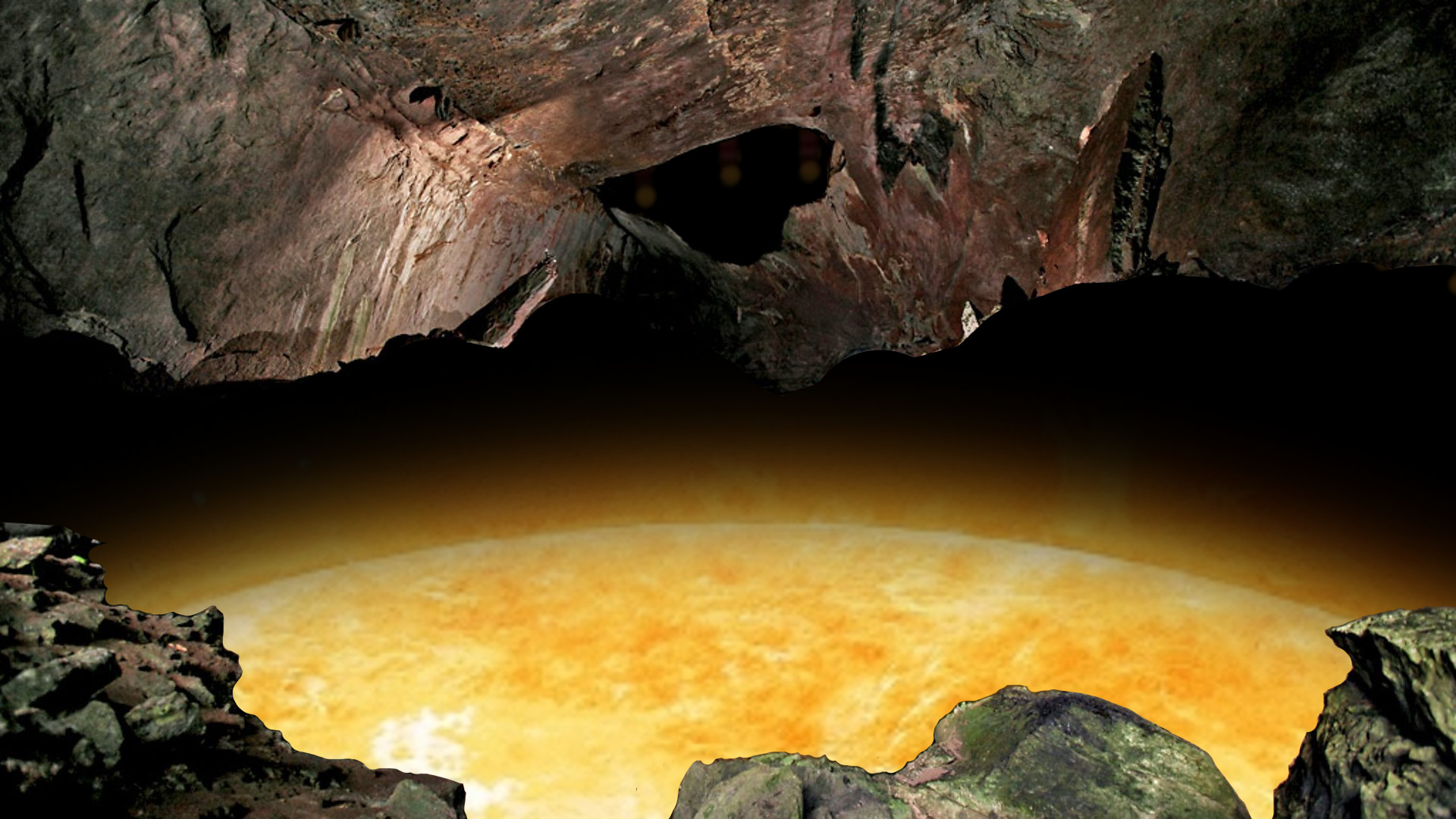
For a fire is kindled in mine anger, and shall burn unto the lowest hell, and shall consume the earth with her increase, and set on fire the foundations of the mountains.
( Deuteronomy 32:22 )
The pit, the pit of corruption, and the lowest hell are the same thing: the molten core of the earth from which there is no return. The grave, on the other hand, in the mantle, you can be brought up from.
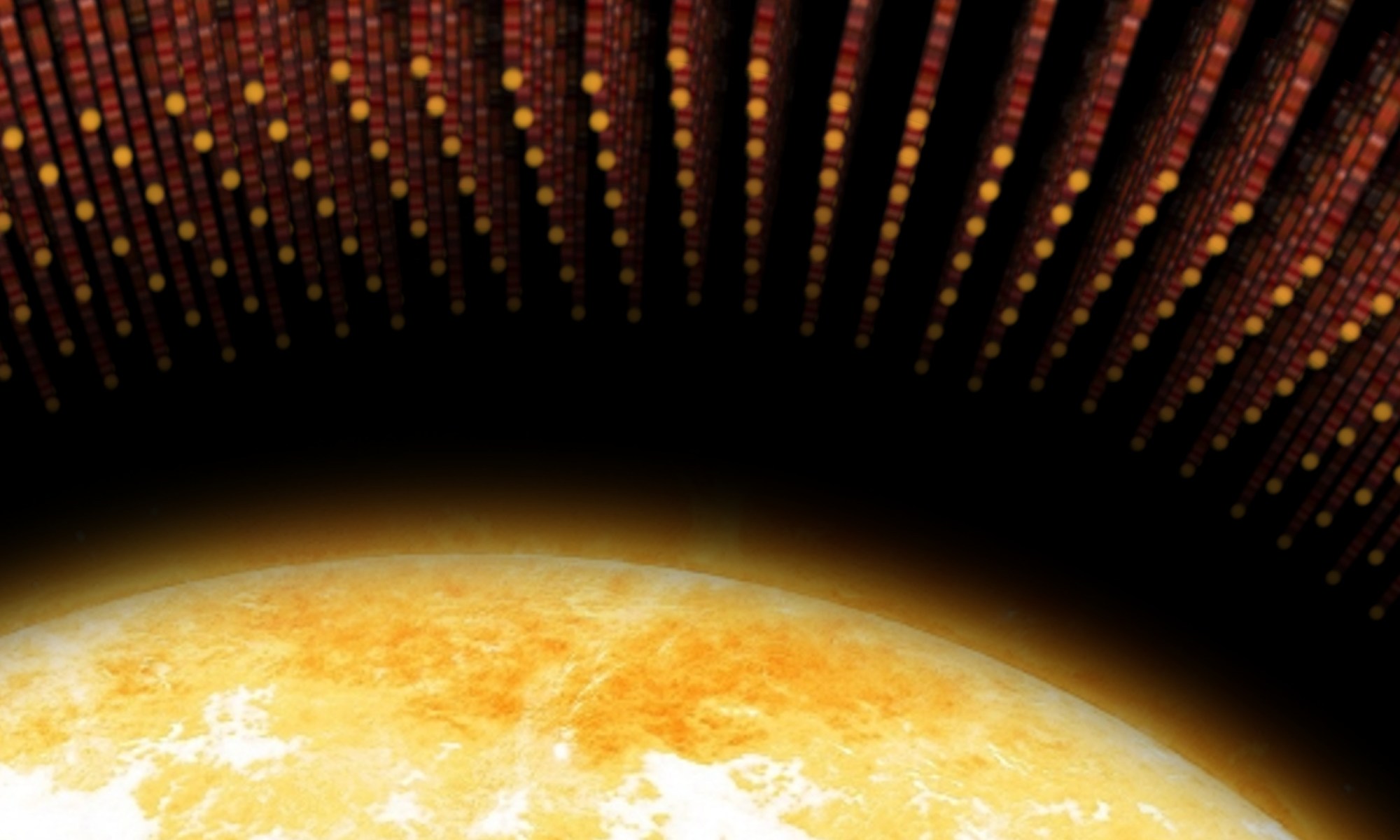
Behold, for peace I had great bitterness: but thou hast in love to my soul delivered it from the pit of corruption: for thou hast cast all my sins behind thy back.
For the grave cannot praise thee, death can not celebrate thee: they that go down into the pit cannot hope for thy truth.
( Isaiah 38:17-18 )
Our spherical hollow earth model (SHEM) is compatible with everything the Bible says pertaining to how its form fits its function. The function of the pit is to hold the souls of the lost until the final judgement.
 Matty (Headwind)