O LORD, thou hast brought up my soul from the grave: thou hast kept me alive, that I should not go down to the pit.
(Psalms 30:3) KJV
We are discussing the repercussions of the fall of man on the physical system of creation. One of the repercussions was the start of radioactive decay. This in turn is the beginning of hell, since the explosive rate of decay, concentrated at the core of the earth, caused the core to melt. This is the beginning of hell. We have now put this in the context of the rest of history with a leisurely stroll through the history of the expansion of hell over the last week or so.
We have built a very strong case for the existence of hell in the center of the earth by relating it to the major physical events in the history of the earth. This has been driven by scripture that describes these events. We start with the creation of gravity on the second day as the foundation of the earth which becomes hell. Scripture provides many clues about the changes to the earth over its history and up to the present day.
Let’s take a look at some of the scripture that describes hell and where it is as a way of confirming what is becoming a highly elaborate hypothesis for the cause of global warming. In its historical context the book of Job is the oldest book of the Bible. Genesis records for us an account of the creation, but it was written by Moses, who was many generations after the life of Job. Job was probably a contemporary of Abraham. It is clear that the people of this time had a clear concept of souls and what happens to them after the death of the body: they go to sheol. So what and where is sheol? The context of the verses below is that God has the power to keep the soul from going to sheol.
He keepeth back his soul from the pit, and his life from perishing by the sword.
(Job 33:18) KJV
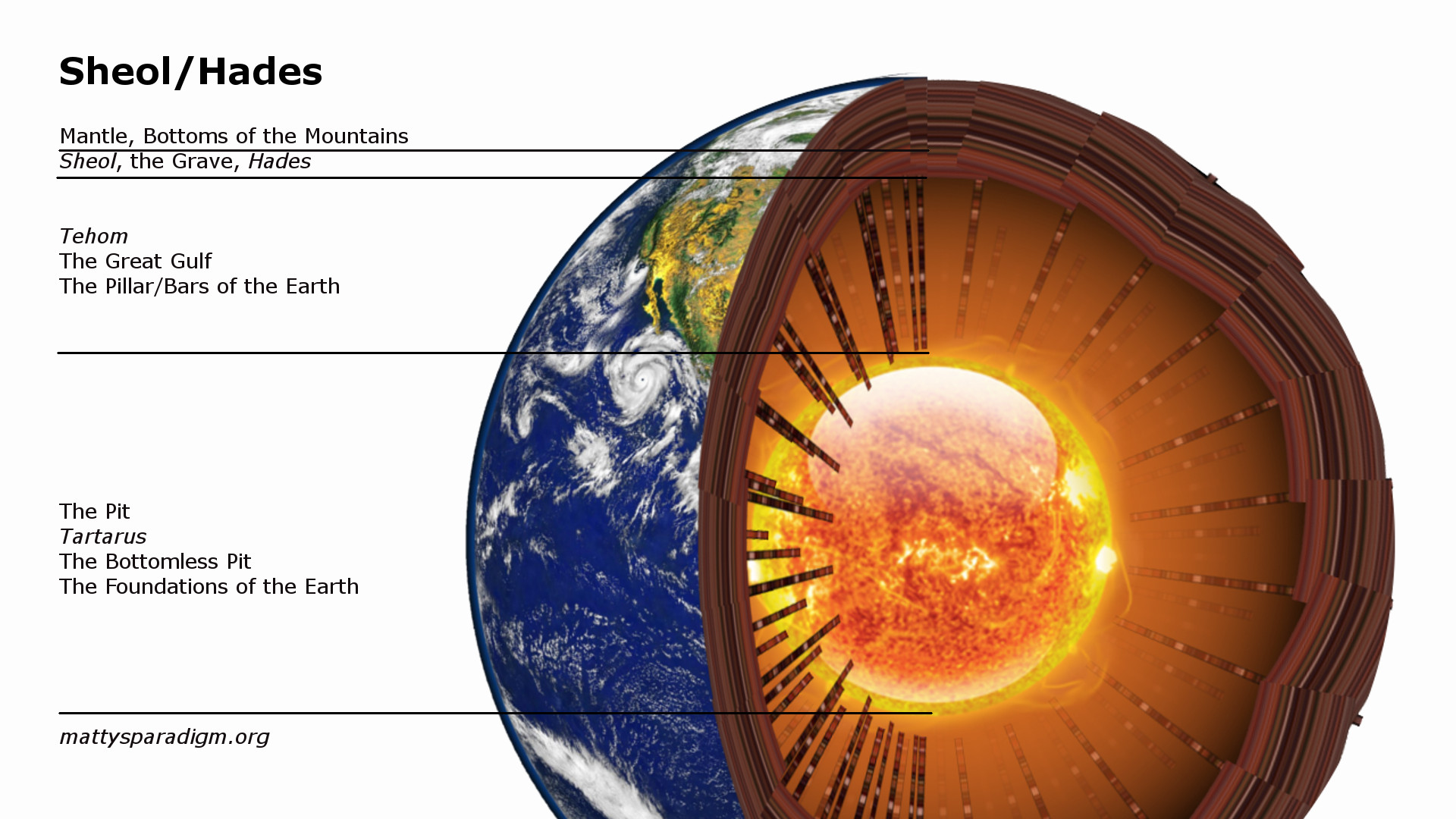
In this passage we are told that the soul can go to “the pit,” and the word in the passage translated as “sword,” is elsewhere rendered as sheol. Essentially this is speaking about the pit of sheol. Pits are holes in the ground, so we are talking about someplace deep in the earth where souls go.
Yea, his soul draweth near unto the grave, and his life to the destroyers.
(Job 33:22) KJV
This time the word “grave,” is a translation of the Hebrew sheol. Graves are holes in the ground, like pits, so once again we are placing sheol deep within the earth.
Then he is gracious unto him, and saith, Deliver him from going down to the pit: I have found a ransom.
(Job 33:24) KJV
Once again a statement of God’s power to save the soul of an individual from going into sheol.
He will deliver his soul from going into the pit, and his life shall see the light.
(Job 33:28) KJV
Here the outcome of the soul going into the pit of sheol is connected with light and darkness. Sheol is darkness.
To bring back his soul from the pit, to be enlightened with the light of the living.
(Job 33:30) KJV
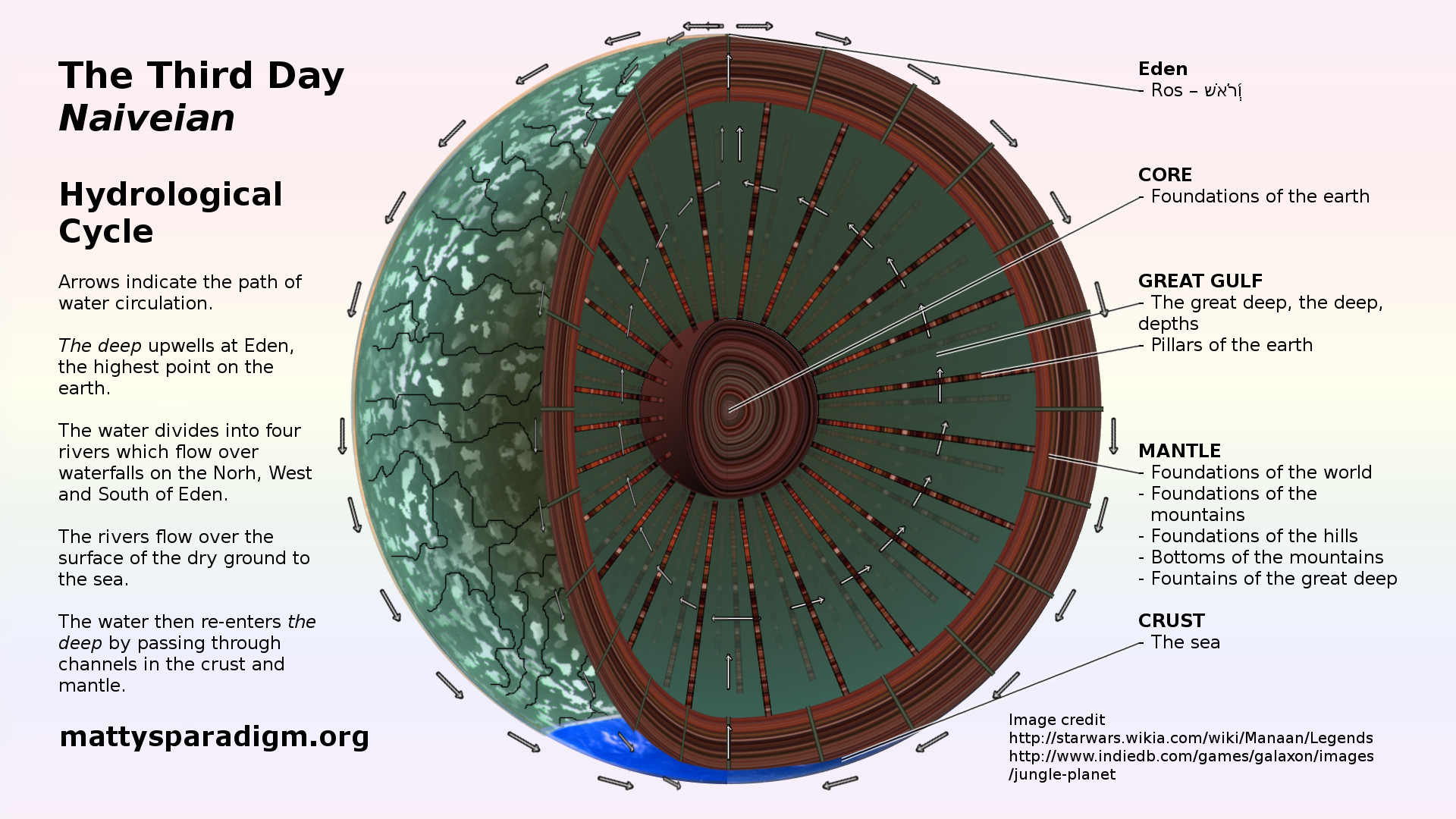
Here we see a statement that the Lord is able to bring back a soul from the pit of sheol. There is clearly some nuance of meaning here that may be obscured by the various references to the pit, sword, and grave which are all translations of sheol. It should be obvious that sheol is a dark pit where souls go, but some are saved from it and others are not. Not only that, but it is not always a permanent outcome since souls can be brought back from it. As confusing as this may be it is completely compatible with the Matty’s Paradigm model of the interior of the earth. There is a sheol that you can’t come back from (the pit or molten core), and there is one that you can come back from (the grave or bosom of Abraham). The difference is whether or not you are reconciled to God. If you are saved from the pit you go to the grave.






 Matty (Headwind)