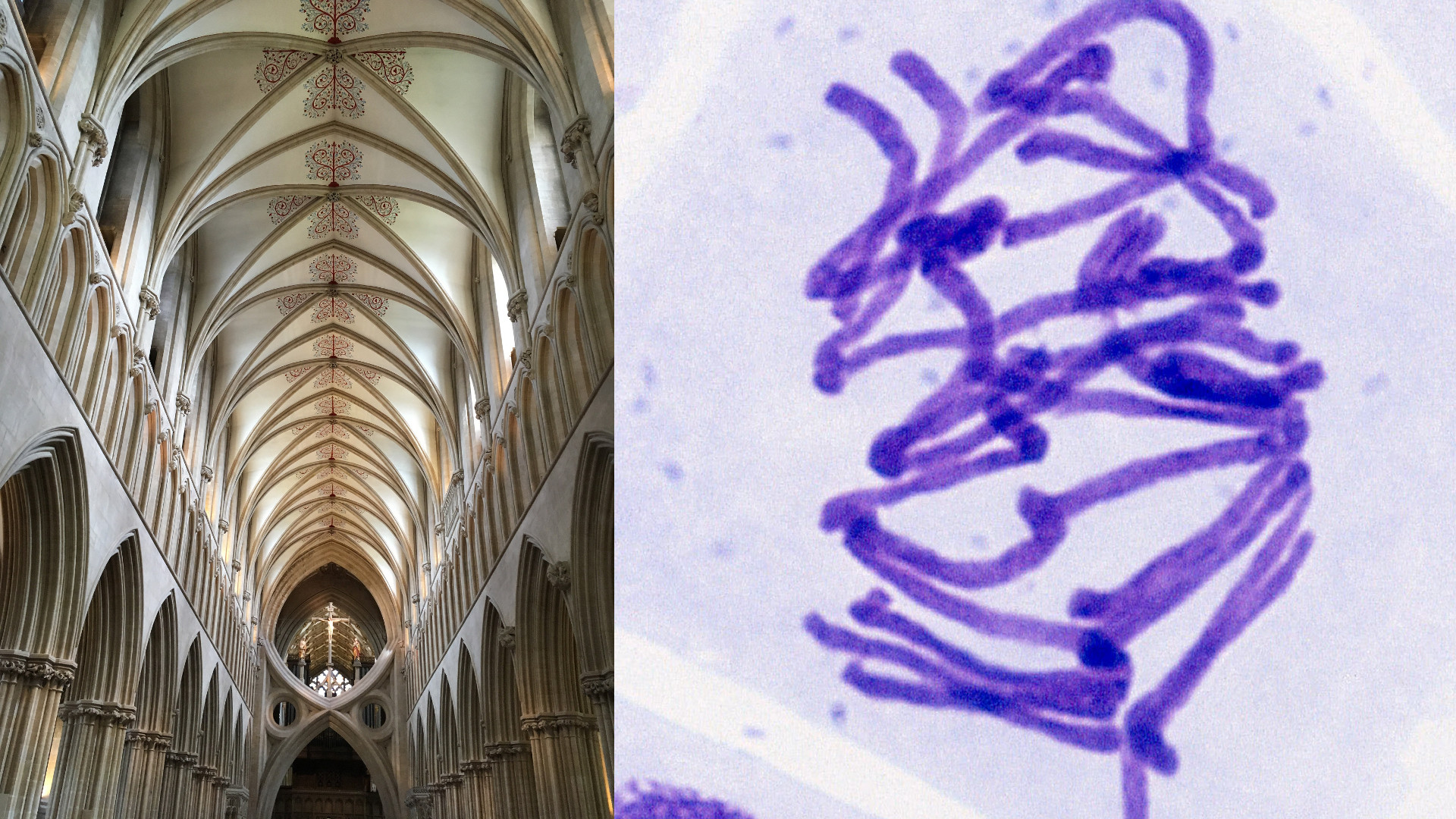
Evidence for God 3

For ever since the world was created, people have seen the earth and sky. Through everything God made, they can clearly see his invisible qualities—his eternal power and divine nature. So they have no excuse for not knowing God.

(Romans 1:20) NLT
  • According to atheist propaganda, there is absolutely no evidence of God.
  • According to God, the existence of the universe is all the evidence that you need, no one has an excuse.
Continue reading “Evidence for God 3”

Evidence for God 2

But if God is behind it, you cannot stop it anyway, unless you want to fight against God. The council members agreed with what he said,

(Acts 5:39) CEV

We (that’s me and the Holy spirit) propose that Matty’s Paradigm is proof of God. We’re not rich by worldly standards, or famous, but let’s consider a few things: where do we stand and how is this a predictive, testable hypothesis for God?

Continue reading “Evidence for God 2”

Evidence for God 1

Bring all the tithes into the storehouse, That there may be food in My house, And try Me now in this,” Says the LORD of hosts, “If I will not open for you the windows of heaven And pour out for you such blessing That there will not be room enough to receive it.

(Malachi 3:10) NKJV

There’s a predictive testable hypothesis for God based on Malachi 3:10. The idea is that God has challenged us to put him to the test by giving a tithe of our income to the church as a freewill offering.

Continue reading “Evidence for God 1”

Accept the Certainty of Deduction

Then said he unto them, Therefore every scribe which is instructed unto the kingdom of heaven is like unto a man that is an householder, which bringeth forth out of his treasure things new and old.

(Matthew 13:52) KJV

We said when we began this process that we would to take a strictly deductive approach to learning what the Bible is trying to teach us. We made a point of saying that we have to be prepared to accept what we may deduce.

Continue reading “Accept the Certainty of Deduction”

One of his Ribs

X and Y chromosomes

For man is not from woman, but woman from man.

(1 Corinthians 11:8) NKJV

Man, Adam, was the most sophisticated and complex of all of the forms created on land on the 6th day, however, he was a directionless, unmotivated slacker. God knew that it was going to take a special someone to motivate him to get off his butt and subdue the Earth.

Continue reading “One of his Ribs”

Women are from Heaven

Now a great sign appeared in heaven: a woman clothed with the sun, with the moon under her feet, and on her head a garland of twelve stars.

(Revelation 12:1) NKJV

Given that creation took six days at the end of which God stopped creating, and given that his creative process moved sequentially from sphere to sphere (firmasphere > hydrosphere and atmosphere > biosphere) we can conclude that the creating was completed in each sphere before proceeding to the next.

Continue reading “Women are from Heaven”

Creation is Spherogenetic

Then God made two great lights: the greater light to rule the day, and the lesser light to rule the night. He made the stars also. God set them in the firmament of the heavens to give light on the earth, and to rule over the day and over the night, and to divide the light from the darkness. And God saw that it was good. So the evening and the morning were the fourth day.

(Genesis 1:16-19) NKJV

If we’re going to figure out why God didn’t think that making a woman out of the dust of the Earth was good enough, then we have to turn to our spherogenetic systematic taxonomy.

Continue reading “Creation is Spherogenetic”

Men are from Earth

And the Lord God formed man of the dust of the ground, and breathed into his nostrils the breath of life; and man became a living being.

(Genesis 2:7) NKJV

God couldn’t find a suitable helper from among the beasts of the Earth and he didn’t think that making a compatible mate out of dust was sufficient. Why not? We may never understand the true significance of what the Lord is trying to tell us here, but we’ll give it a shot.

Continue reading “Men are from Earth”

Siberia Heatwave Sees Buildings Split in Two As Permafrost Thaws

A two-story residential building broke apart as layers of permafrost thawed during a summer heatwave in Yakutsk, Russia—often referred to as the “world’s coldest city.”

Winter temperatures in Yakutsk, in east Siberia, regularly plummet to below minus 40 degrees Fahrenheit, with the record low standing at minus 83 degrees Fahrenheit.

But while the city, the largest in the world built on continuous permafrost, is no stranger to relatively hot weather at this time of year, climate change is contributing to warmer winters, longer summers, and more extreme heat waves in the region, and Siberia as a whole.

In fact, Siberia has been experiencing abnormally high temperatures for several months and the region saw an early start to summer during which a staggering measurement of 100.4 degrees Fahrenheit recorded on Saturday, June 20 in the small town of Verkhoyansk, according to Russian weather data that has yet to be verified.

This warming climate—the average annual temperature in Yakutsk has risen more than four degrees over the past few decades—is leading to increased melting of the highest permafrost layers on which the city lies, threatening the very foundations of its buildings as the ground subsides.

“The change of landscape tremendously affects any kind of buildings or roads or structure that you have,” Amber Soja, from NASA’s Langley Research Center, told Newsweek.

The building in Yakutsk, located in the city’s outskirts, started breaking apart in the early hours of June 24, when a roughly 4-inch crack appeared inside three flats and on the outer walls, The Siberian Times reported. Fortunately, residents realized what was happening and rushed out of the building.

“The situation caught us completely off guard, none of us had time to pick up documents or to take any other of our belongings with us. People ran in such a rush they didn’t even have time to shut doors,’ one resident of the building told The Siberian Times.

Most buildings in Yakutsk are built on deep concrete piles that sink deep into the permafrost in order to provide a solid foundation. But emergency workers who inspected the building after the cracks appeared found that one of the piles was broken. And beneath the building itself, they found a pool of meltwater, which they say could have played a role in the damage to the pile.

As Yakutsk and the wider region experiences rising air and ground temperatures, increased permafrost melting can cause the ground to subside, which can lead to the collapse of buildings.

In December, Russian President Vladimir Putin himself expressed concern over the potentially severe impact heat waves could have for the various Russian cities that are built on permafrost.

“As you know, Russia is a northern country, and 70 percent of our territory is located in the north latitudes,” Putin said. “Some of our cities were built north of the Arctic Circle, on the permafrost. If it begins to thaw, you can imagine what consequences it would have. It’s very serious.”


Saved by Faith not Works

For by grace you have been saved through faith, and that not of yourselves; it is the gift of God, not of works, lest anyone should boast. For we are His workmanship, created in Christ Jesus for good works, which God prepared beforehand that we should walk in them.

(Ephesians 2:8-10) NKJV

Some people take the tree of life in Eden to mean that Adam’s first body was intended to die, and that the tree of life would be made available to him at some point as a reward for good behavior.

Continue reading “Saved by Faith not Works”